The modern armored vehicles of the Armed Forces of Ukraine represent a combination of Soviet machines, Western combat platforms, and new Ukrainian developments. Today, American M2 Bradleys and Swedish CV90s provide fire support for mechanized units, armored personnel carriers transport infantry, while wheeled MRAP-class vehicles help deliver personnel, evacuate the wounded, and operate on routes with a high mine threat.
The full-scale war has changed the requirements for armored vehicles. In addition to armor thickness and firepower, mine protection, the ability to carry out field repairs, countermeasures against FPV drones, and ease of dismounting have all become important factors.
In this review, we have compiled ten armored vehicles that are in service with Ukraine’s Defense Forces or for which there is confirmed information about their use by Ukrainian units. The selection covers various vehicle classes — from heavy infantry fighting vehicles to armored evacuation vehicles.
Disclaimer: this is not a ranking. We used publicly available information for the review, and the decision to include a particular model was made independently.
1. M2A2 Bradley ODS: The American IFV Battle-Tested by War
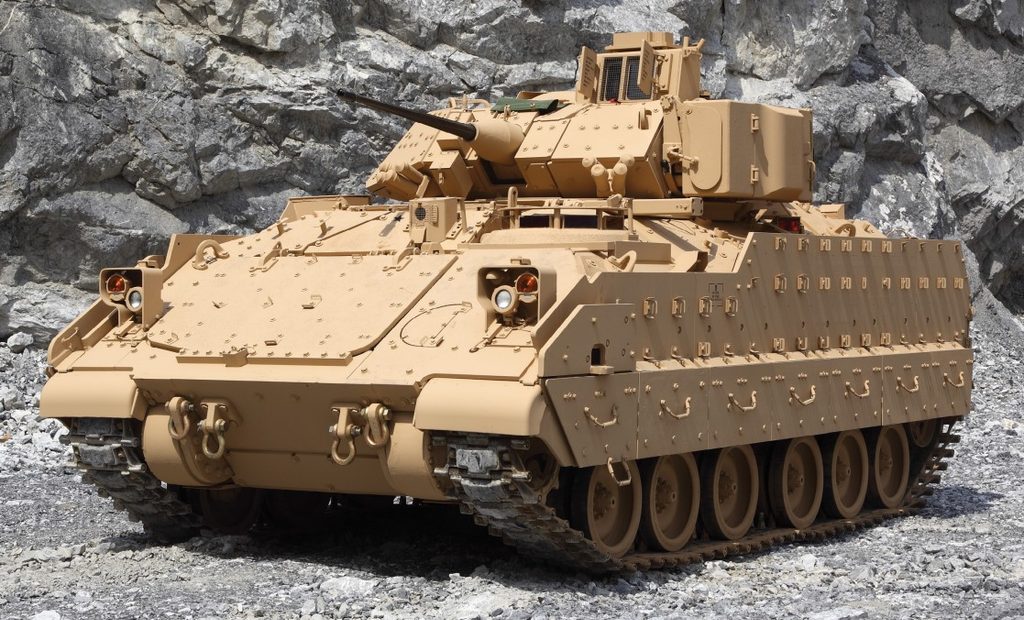
The American M2 Bradley has become one of the most prominent Western combat vehicles in Ukrainian mechanized units. Its purpose is to deliver infantry to the battlefield, provide fire support, engage lightly armored targets, and counter heavier equipment.
Ukraine began receiving Bradley IFVs in 2023 as part of US military aid. The first shipment of more than 60 vehicles departed the US on January 25, 2023. On January 6, the Pentagon announced the transfer of 50 Bradleys, and on January 19 — an additional 59 vehicles. They were used, among others, by the servicemembers of the 47th Separate Mechanized Brigade.
Technical Specifications of the M2A2 Bradley ODS
| Parameter | Specification |
| Type | Tracked IFV |
| Combat weight | Approximately 28–30 t, depending on configuration |
| Crew | 3 personnel |
| Troops carried | Up to 6 soldiers |
| Main armament | 25 mm M242 Bushmaster cannon |
| Secondary armament | 7.62 mm machine gun; TOW ATGM on applicable variants |
| Maximum speed | Approximately 61 km/h |
| Protection | Multi-layer armor; additional protection kits on certain vehicles |
Parameters are given for the Bradley family and common ODS configurations. They may vary between vehicles.
Advantage. The stabilized cannon allows for aimed fire on the move. TOW anti-tank missiles extend the vehicle’s capability to engage armor. Additional protection on certain vehicles increases the crew’s and troops’ chances of surviving a hit.
The Bradley’s strength lies in its combination of mobility, firepower, and protection. At the same time, the vehicle requires specialized maintenance, appropriate ammunition, and trained crews.
2. CV9040C: The Swedish IFV with a 40 mm Cannon
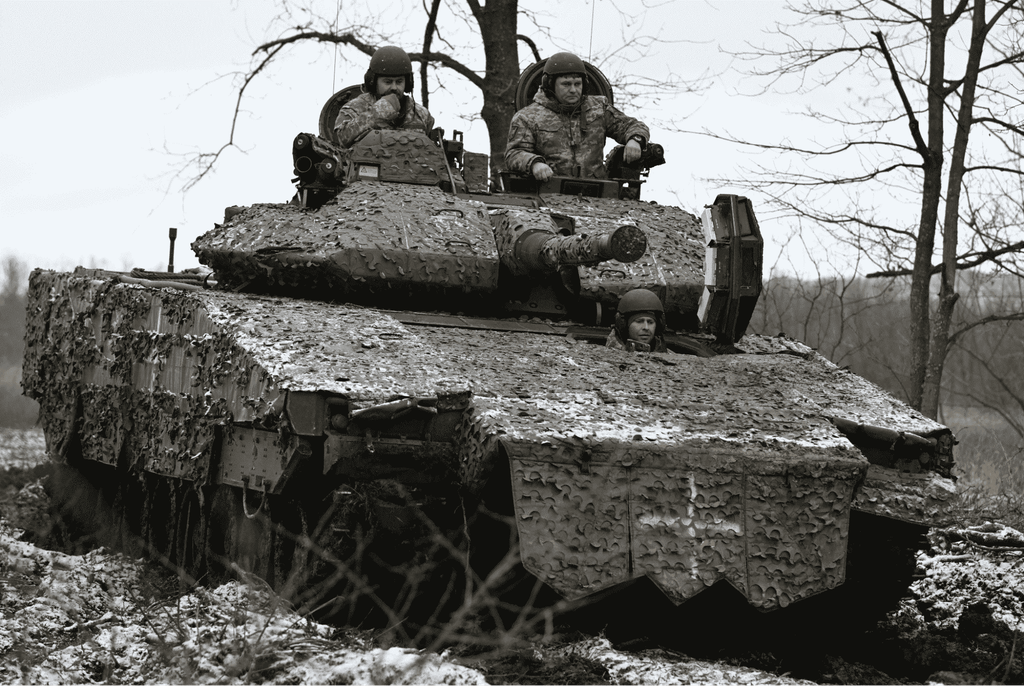
The Swedish CV90 is another Western platform that has reinforced Ukrainian mechanized units. Ukraine employs, among others, the CV9040C variant, armed with a 40 mm Bofors automatic cannon. The vehicles are in service with the 21st Separate Mechanized Brigade. Crews note the combination of armor protection, maneuverability, and the powerful 40 mm Bofors cannon. The Barracuda camouflage system, which reduces the vehicle’s thermal signature, is cited as a separate advantage. According to military personnel, the CV90 withstood hits from FPV drones and munitions, including 120 mm mortar rounds.
Technical Specifications of the CV9040C
| Parameter | Specification |
| Type | Tracked IFV |
| Combat weight | Approximately 28 t |
| Crew | 3 personnel |
| Troops carried | 6–8 personnel depending on configuration |
| Main armament | 40 mm Bofors cannon |
| Maximum speed | Approximately 70 km/h |
| Running gear | Tracked |
| Features | Stabilized sighting systems; armored hull |
Advantage. The 40 mm cannon provides powerful high-explosive fragmentation effect and allows the use of various ammunition types. The CV90 is also known for its well-thought-out ergonomics, optics, and observation systems.
Limitation. Complexity of design, the need for spare parts, and specialized repairs remain important factors. Like other tracked vehicles, the CV90 requires appropriate recovery support, especially after damage to the running gear.
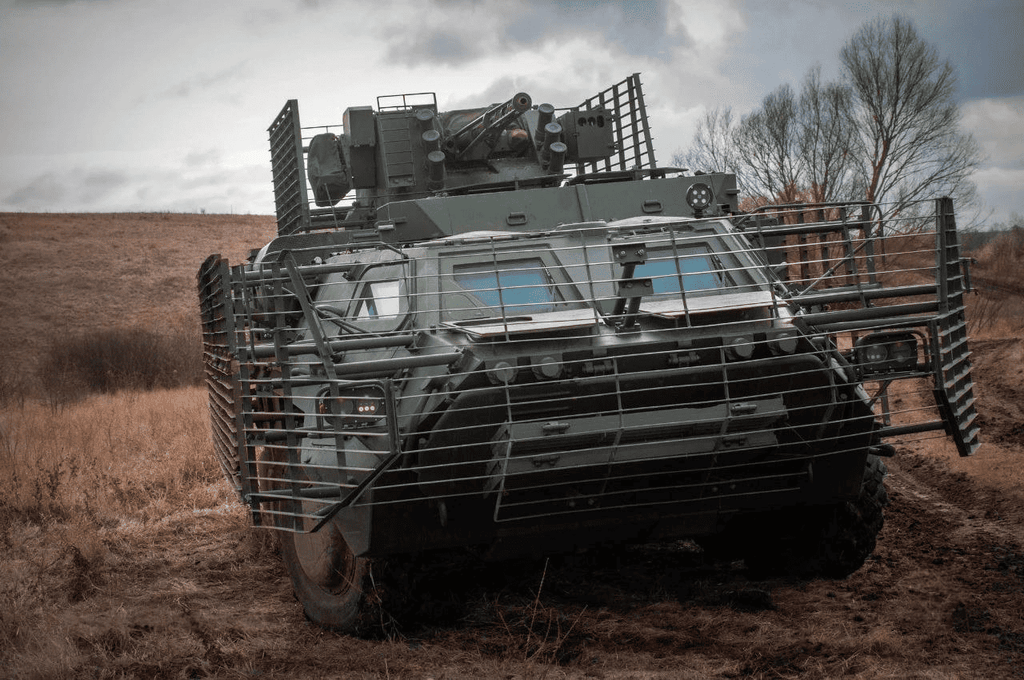
3. BTR-4E “Butsefal”: A Ukrainian Platform with Powerful Armament
The BTR-4E “Butsefal” is one example of Ukrainian armored vehicle production. It is a wheeled armored personnel carrier designed for transporting infantry, providing fire support, and operating as part of mechanized units.
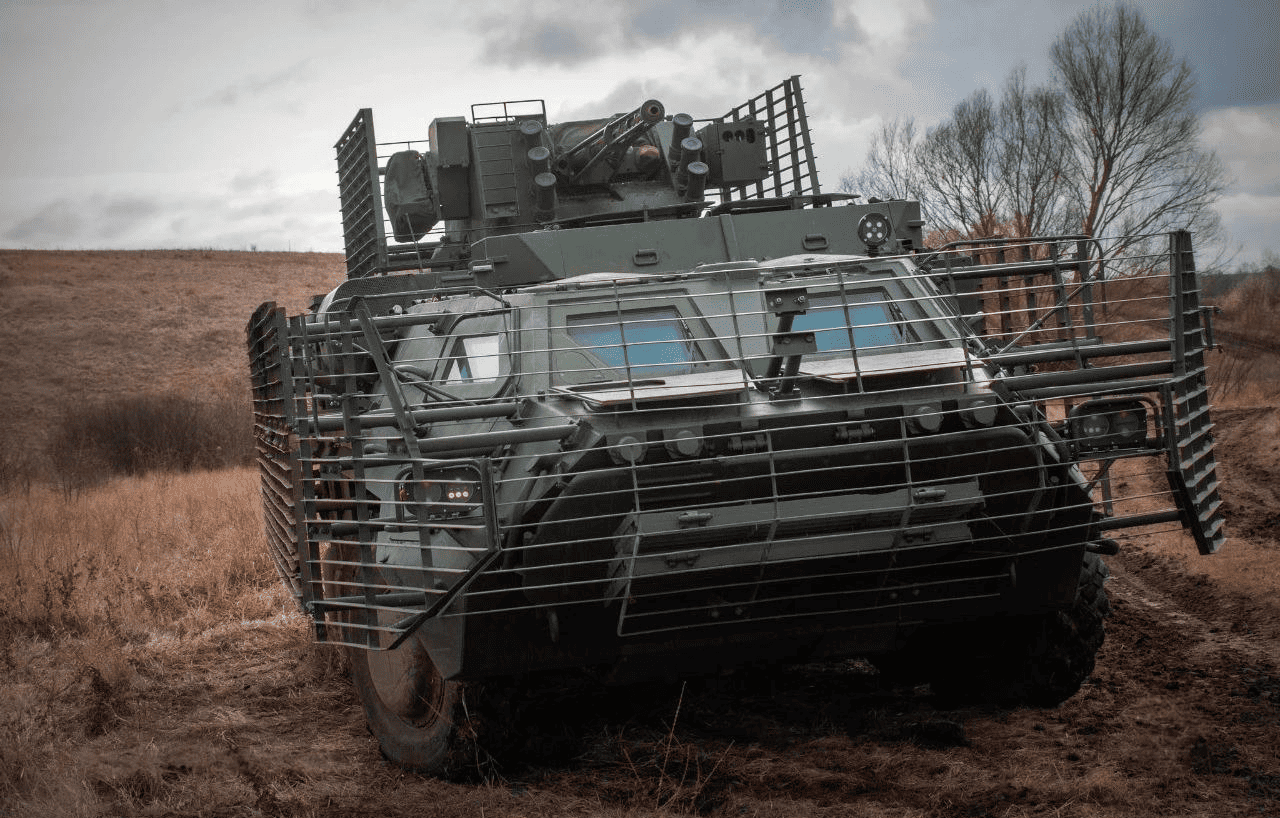
In September 2026, the Kharkiv Morozov Machine Building Design Bureau presented the updated BTR-4E at the MSPO exhibition in Poland. The vehicle received the BM-11 “Topaz” combat module, a rear ramp, additional anti-drone protection elements, and an EW system.
Technical Specifications of the BTR-4E
| Parameter | Specification |
| Type | Wheeled APC 8×8 |
| Combat weight | Approximately 17.5–26 t depending on version and additional protection |
| Crew | Typically 3 personnel |
| Troops carried | Up to 7 soldiers |
| Main armament | 30 mm automatic cannon on applicable combat modules |
| Secondary armament | Machine gun, grenade launcher, and ATGM — depending on module |
| Maximum speed | Up to 100–110 km/h on road for applicable configurations |
| Wheel configuration | 8×8 |
Advantage. The BTR-4E combines wheeled mobility with powerful armament. The vehicle can transport infantry and provide fire support, while various combat module options allow the configuration to be adapted to the unit’s needs. The rear ramp on the new exhibition variant is intended to facilitate troop dismounting.
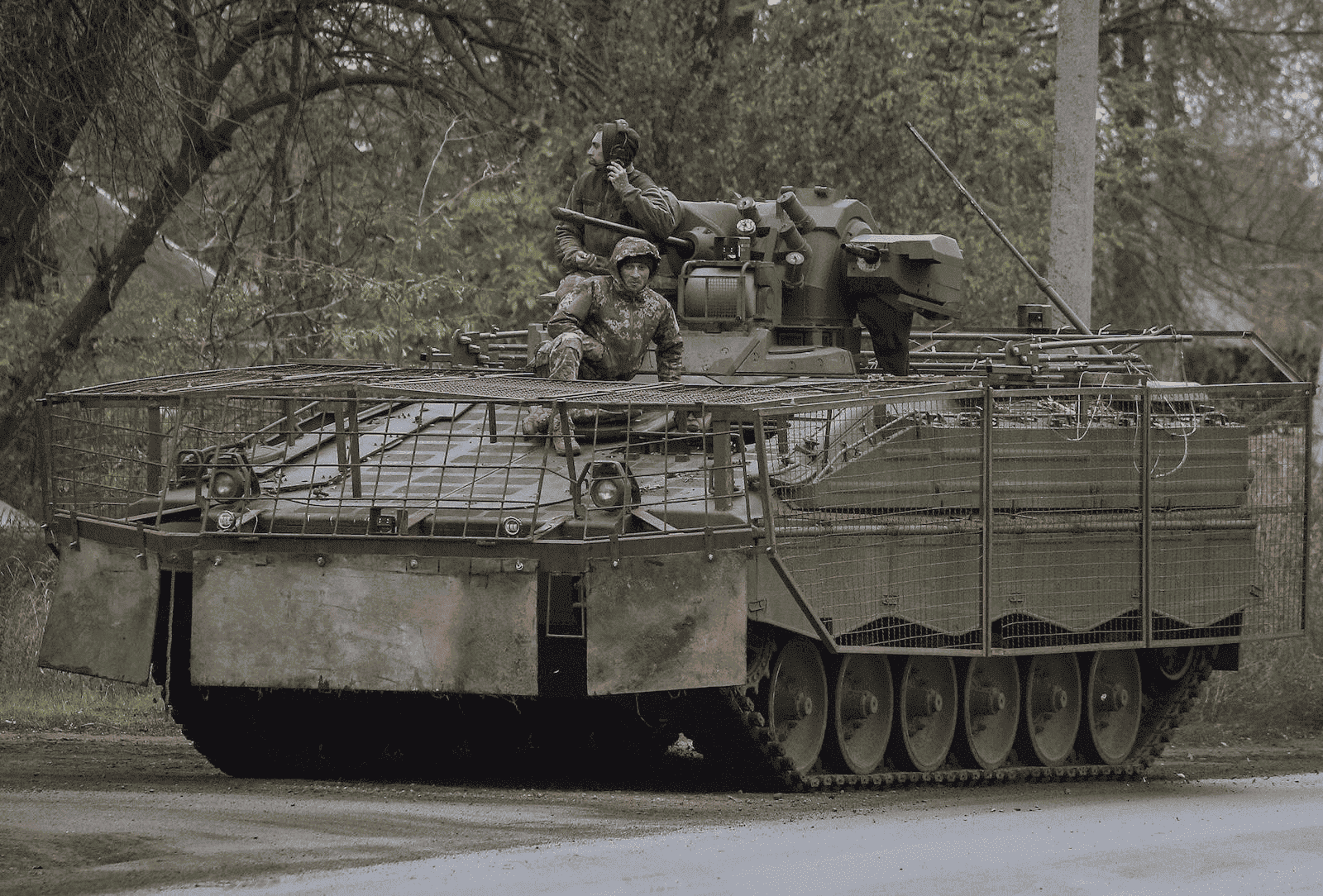
4. Marder 1A3: The “German School”
The German Marder 1A3 is a tracked infantry fighting vehicle that served in the Bundeswehr for many years. The transfer of these vehicles to Ukraine in March 2023 allowed mechanized units to be reinforced with Western equipment of proven design.
Technical Specifications of the Marder 1A3
| Parameter | Specification |
| Type | Tracked IFV |
| Combat weight | Approximately 33 t |
| Crew | 3 personnel |
| Troops carried | Up to 6 soldiers |
| Main armament | 20 mm Rh 202 automatic cannon |
| Secondary armament | 7.62 mm machine gun; Milan ATGM on certain variants |
| Maximum speed | Approximately 65 km/h |
| Features | Tracked chassis, armored hull, observation equipment |
Advantage. The Marder was designed for mechanized units that move alongside tanks and provide infantry with protection and fire support. The tracked running gear helps traverse difficult terrain, and the cannon is designed to engage infantry and lightly armored targets.
Limitation. The Marder is a previous-generation platform. Its effectiveness therefore depends on technical condition, additional protection, and tactics employed.
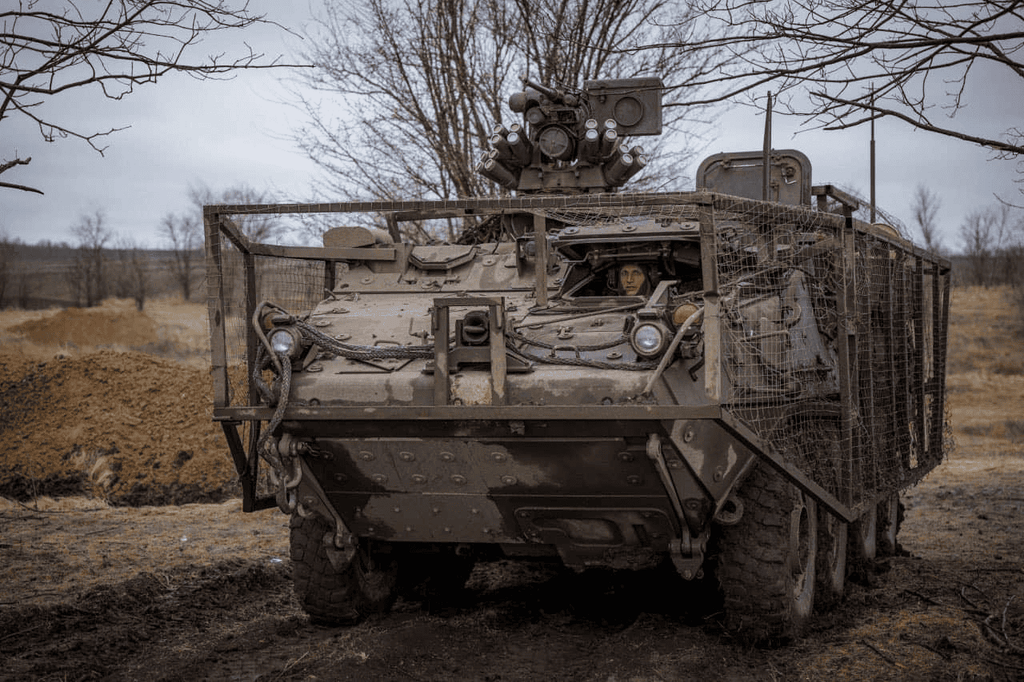
5. M1126 Stryker: The Fast Wheeled Armored Personnel Carrier
The American M1126 Stryker belongs to the Stryker family of wheeled combat vehicles. Unlike the Bradley, its primary purpose is the rapid movement of infantry with armored protection.
Strykers arrived in Ukraine as part of American military aid. These vehicles are used by Ukrainian units to transport soldiers and carry out tasks as part of mechanized formations.
Technical Specifications of the M1126 Stryker
| Parameter | Specification |
| Type | Wheeled APC |
| Wheel configuration | 8×8 |
| Combat weight | Approximately 18–20 t depending on configuration |
| Crew | 2 personnel |
| Troops carried | Up to 9 soldiers |
| Main armament | Typically a 12.7 mm machine gun or other armament depending on configuration |
| Maximum speed | Approximately 97 km/h |
| Range | Approximately 500 km |
Advantage. Eight drive wheels provide good road mobility, and the powerful diesel engine allows rapid movement between operational areas. The large troop compartment allows infantry to be transported with their equipment.
Limitation. The base M1126 lacks significant firepower. Additional armor affects weight and cross-country mobility.
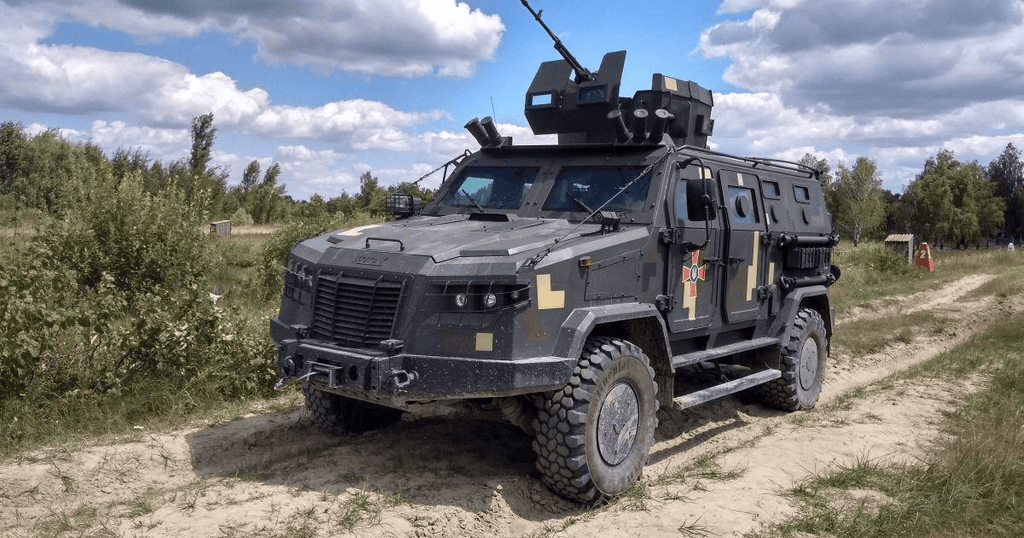
6. “Kozak-2M1”: A Ukrainian Armored Vehicle for Dangerous Routes
The “Kozak-2M1” is a Ukrainian-made armored vehicle developed by the NVO “Praktika” enterprise. It is used for transporting personnel, patrolling, escort duties, and missions where standard transport provides insufficient protection.
In September 2026, the 110th Separate Mechanized Brigade reported receiving a new batch of “Kozak” armored vehicles.
Technical Specifications of the “Kozak-2M1”
| Parameter | Specification |
| Type | Armored vehicle |
| Wheel configuration | 4×4 |
| Combat weight | Approximately 14 t |
| Crew and troops | Typical configuration — 2+8 |
| Engine | Iveco F1C diesel |
| Power | Approximately 280 hp for the applicable variant |
| Main armament | Depends on the installed combat module or turret |
| Features | Monocoque armored hull, independent suspension, mine protection |
Advantage. The “Kozak-2M1” is designed as a specialized armored vehicle. The monocoque hull and floor design are aimed at increasing occupant protection during mine strikes and fire. The vehicle can perform a wide range of transport and support tasks. Versatility is important for brigades that need to deliver soldiers and equipment without deploying heavy tracked vehicles for every mission.
Limitation. An armored vehicle does not replace an IFV in mechanized combat.
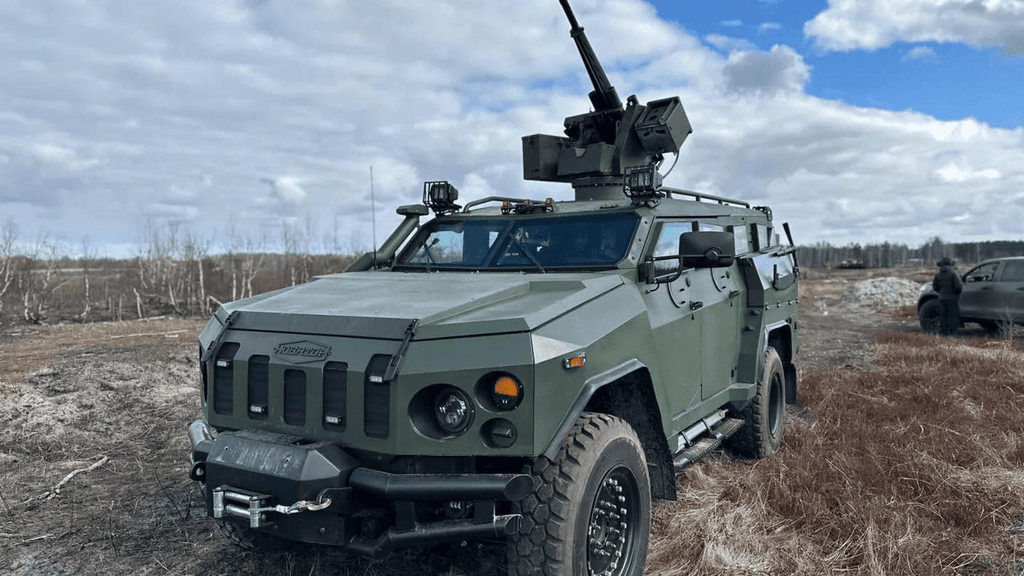
7. “Novator-2”: A Modular Platform of Ukrainian Production
The “Novator-2,” produced by “Ukrainska Bronetekhnyka,” is a development of the original “Novator” armored vehicle. One of the key changes is an increase in internal space and a transition to a closed armored capsule, enabling more soldiers to be transported.
Particularly significant is the “Novator 2S” medical variant, which the company presented in September 2026. It can carry up to four casualties on stretchers or up to six seated. It is distinguished by a specially designed medical compartment layout, wider rear doors, and equipment for medics to work inside.
Technical Specifications of the “Novator-2”
| Parameter | Specification |
| Type | Armored vehicle |
| Wheel configuration | 4×4 |
| Gross weight | Approximately 12 t |
| Crew and troops | 2+8 |
| Engine | Ford V8, 6.7 L |
| Power | Approximately 330 hp |
| Transmission | Automatic |
| Maximum speed | Depends on variant and load; up to 120 km/h and above claimed for certain configurations |
| Features | Armored capsule, reinforced chassis, RunFlat inserts |
Advantage. The vehicle can be adapted to various tasks: troop transport, command-and-staff operations, or medical evacuation. In the case of the “Novator 2S,” the manufacturer specifically emphasizes the reinforced running gear. This is logical: a medical vehicle must carry the wounded and equipment, travel on damaged roads, and retain the ability to continue moving after a tire is damaged.
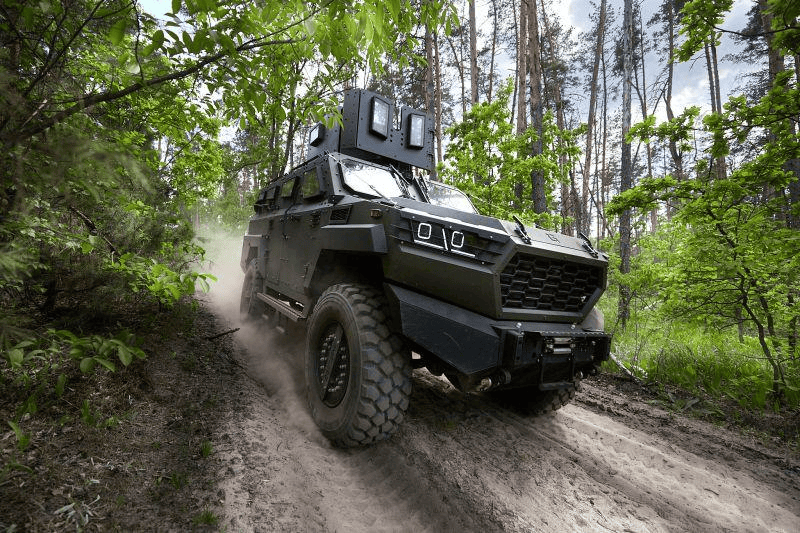
8. Inguar-3: An MRAP with a Modular Design
The Inguar-3 is a Ukrainian MRAP-class armored vehicle developed by Inguar Defence. This vehicle uses a purpose-designed platform.
In October 2026, the AFU Support Forces received Inguar-3 armored vehicles from the Demining Capabilities Coalition. The equipment is intended, among other uses, for engineer units operating in areas with a high mine hazard.
Technical Specifications of the Inguar-3
| Parameter | Specification |
| Type | MRAP-class armored vehicle |
| Wheel configuration | 4×4 |
| Gross weight | Approximately 15 t |
| Crew and troops | Typical configuration — 2+8 |
| Engine | Deutz turbodiesel |
| Power | Approximately 356 hp according to manufacturer data |
| Transmission | Automatic, 6-speed |
| Ballistic protection | STANAG 4569 Level 3 according to manufacturer data |
| Mine protection | STANAG 4569 Level 3a/3b according to manufacturer data |
Advantage. MRAP stands for Mine-Resistant Ambush Protected — a vehicle with enhanced mine protection. The hull and floor design is intended to reduce the effect of blast waves on occupants. The modular design allows transport, specialized, medical, and engineering variants to be created on a common platform.
Limitation. High weight and a high center of gravity also affect the vehicle’s behavior off-road.
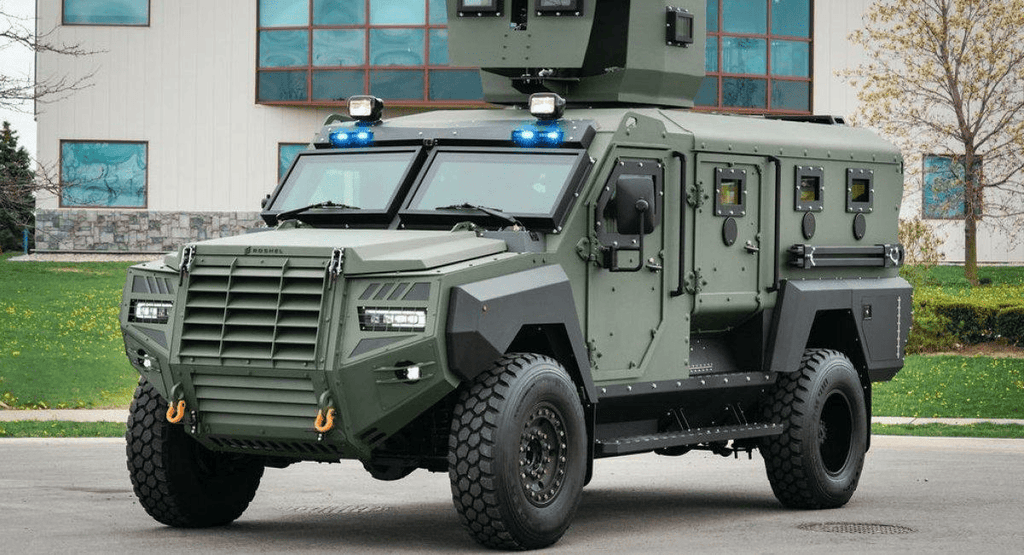
9. Roshel Senator: The Canadian Armored Vehicle
The Canadian Roshel Senator has become one of the prominent vehicles in the transport segment of Ukraine’s Defense Forces. It is used for personnel transport, patrolling, security, and other tasks where protecting people from small arms fire and fragmentation is paramount. The vehicles were purchased from Roshel through the Canadian Commercial Corporation as part of a military aid package, with deliveries completed in the summer of 2023.
Technical Specifications of the Roshel Senator
| Parameter | Specification |
| Type | Armored vehicle |
| Wheel configuration | 4×4 |
| Base chassis | Ford F-550 in common configurations |
| Engine | Diesel, depending on modification |
| Crew and passengers | Depends on variant and layout |
| Armament | No standard heavy-caliber weapon in the base transport version |
| Primary role | Protected transport, patrolling, and support tasks |
Advantage. The Senator enables rapid expansion of the protected transport fleet thanks to serial production.
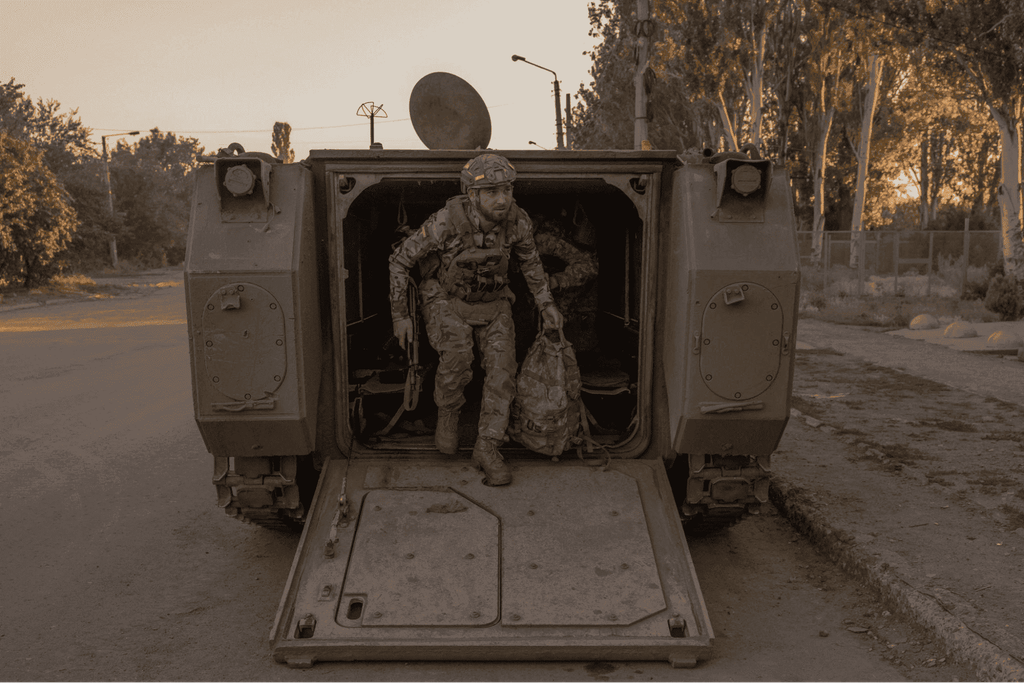
10. M113: The Versatile APC with a Long Service History
The American M113 is one of the most well-known armored transport platforms in the world. The vehicle was developed in the 20th century, yet its design proved so versatile that the M113 continues to be used in many armies.
Ukraine received M113s from several partners. The vehicles are used to transport infantry and in specialized roles: including medical evacuation and support tasks.
Technical Specifications of the M113
| Parameter | Specification |
| Type | Tracked APC |
| Combat weight | Approximately 11–13 t depending on modification |
| Crew | 2 personnel |
| Troops carried | Up to 11 soldiers |
| Main armament | Typically a 12.7 mm machine gun |
| Maximum speed | Approximately 64 km/h on land |
| Running gear | Tracked |
| Features | Large internal volume, simplicity of design, and a wide variety of modifications |
Advantage. The M113 does not have the firepower of a modern IFV, but its primary role is transport. The tracked chassis and relatively light weight compared to heavy Western IFVs make the platform useful for many tasks. An additional plus is its ease of maintenance and extensive international servicing experience.
Limitation. The aluminum armored hull and basic armament do not provide the same level of protection and fire support as modern IFVs. Therefore, the M113 should be considered primarily as a transport platform.
Comparison of AFU Armored Vehicles: Specifications and Roles
| Armored Vehicle | Class | Main Armament | Primary Role |
| M2A2 Bradley ODS | Tracked IFV | 25 mm cannon | Fire support and mechanized combat |
| CV9040C | Tracked IFV | 40 mm cannon | Infantry support, armor engagement |
| BTR-4E | Wheeled APC 8×8 | 30 mm cannon in applicable configuration | Infantry transport and fire support |
| Marder 1A3 | Tracked IFV | 20 mm cannon | Mechanized combat |
| M1126 Stryker | Wheeled APC 8×8 | Machine gun armament | Mobile infantry transport |
| “Kozak-2M1” | Armored vehicle 4×4 | Depends on configuration | Protected transport and patrolling |
| “Novator-2” | Armored vehicle 4×4 | Depends on configuration | Transport and specialized tasks |
| Inguar-3 | MRAP 4×4 | Depends on configuration | Transport under mine threat conditions |
| Roshel Senator | Armored vehicle 4×4 | Depends on variant | Protected transport |
| M113 | Tracked APC | Typically 12.7 mm machine gun | Transport and support tasks |
Armament, armor, weight, and seating capacity may vary depending on modification.
How Ukrainian Armored Vehicles Are Evolving
The experience of the full-scale war has shown that a modern armored vehicle must not only be protected but also adapted to the constantly changing conditions on the battlefield. Several trends can be identified.
1. Enhanced Anti-Drone Protection
Anti-drone nets, cage armor, and electronic warfare systems have become important additions to armor. In September 2026, the updated BTR-4E showcased a combination of cage screens, chain curtains, metal bars, and EW systems.
2. Development of Ukrainian MRAPs
Ukrainian manufacturers are working on platforms with enhanced mine protection, modular layouts, and specialized variants. The Inguar-3, “Novator-2,” and new models from the “Varta” family demonstrate different approaches to this challenge. For example, in September 2026, “Ukrainska Bronetekhnyka” presented the “Varta-3” with a remotely operated Tavria combat module.
3. Specialization Instead of Universality
Rather than using one vehicle for all tasks, units receive different platforms for different roles. An IFV is needed for mechanized combat, an APC for infantry delivery, an MRAP for operating under mine threat, and a medical evacuation vehicle for transporting the wounded with the ability to work inside an armored compartment.
4. Localization of Production and Repair
Ukraine’s defense-industrial complex is developing its own platforms and cooperating with Western manufacturers.
For example, Rheinmetall announced in January 2026 a contract for the first five Lynx KF41 IFVs for Ukraine, with delivery planned for early in the year. The company also stated the prospect of further procurement and production in Ukraine.
Frequently Asked Questions About AFU Armored Vehicles
Which armored vehicle is the best in service with the AFU?
There is no universal leader. The M2A2 Bradley combines armor protection and powerful armament, the CV9040C has a 40 mm cannon, the BTR-4E provides mobility and fire support, and the M1126 Stryker is suited for rapid infantry transport. The choice depends on the mission, terrain conditions, crew training, and the availability of repair and spare parts.
Which AFU armored vehicles are produced in Ukraine?
Ukrainian developments include the BTR-4E “Butsefal” APC, the “Kozak-2M1,” “Novator-2,” and Inguar-3 armored vehicles. They are designed for various tasks — from transporting soldiers and patrolling to protected transportation of personnel in dangerous areas.
What is the difference between an APC and an IFV?
An armored personnel carrier (APC) is primarily designed for the protected transport of soldiers. An infantry fighting vehicle (IFV) typically has more powerful armament and is designed to support infantry in combat.
Which AFU armored vehicles have the most powerful armament?
Among the vehicles on this list, the standouts are the CV9040C with its 40 mm Bofors cannon, the M2A2 Bradley with its 25 mm automatic cannon and TOW anti-tank missiles on applicable variants, and the BTR-4E with its 30 mm cannon in configurations equipped with the appropriate combat module.
Do armored vehicles protect against drones?
Armor provides protection against certain types of bullets, fragmentation, and explosions, but does not guarantee safety against modern FPV drones and other strike systems. To improve survivability, vehicles are equipped with anti-drone screens, additional structures, and electronic warfare systems. The effectiveness of such protection depends on the type of threat and the specific vehicle configuration.
Why does the AFU use Soviet, Ukrainian, and Western armored vehicles simultaneously?
Due to the need to rapidly replenish the vehicle fleet during wartime. Western partners transfer various types of vehicles, Ukrainian enterprises produce their own models, and Soviet-origin equipment remains available for certain tasks. This diversity allows different capabilities to be utilized, but complicates logistics, repair, spare parts supply, and crew training.
Why does the AFU use old M113 APCs?
The M113 is a tracked APC that, thanks to its simple design and the large number of available vehicles, remains useful for transporting personnel, evacuating the wounded, and support tasks. It is inferior to many modern combat vehicles in terms of armament and protection level, but can perform important work where powerful fire support is not required.
Does greater weight mean better protection for an armored vehicle?
Not necessarily. Weight depends on design, armor, armament, and equipment. The type of armor, mine and blast protection, internal layout, and additional safety systems are also important. A heavier vehicle may offer better protection under certain conditions, while simultaneously being inferior to a lighter one in cross-country mobility, overall mobility, or ease of maintenance.
What matters more for an armored vehicle — armor, speed, or armament?
These characteristics work in combination. Protection helps the crew and troops survive, mobility allows for faster repositioning, and armament allows the unit to be supported. For casualty evacuation, priorities will differ from those of an infantry fighting vehicle. Therefore, armored vehicles should be evaluated not only by their specification tables, but also by their role and operational experience.