In the early hours of August 1, Russia once again attacked Kyiv with Iskander-M ballistic missiles, hypersonic Zircons, and modified S-400 missiles. Due to the high speed and maneuverability of the targets, as well as a shortage of Patriot interceptors, Ukraine’s air defense manages to destroy only a portion of them.
This is not the first such attack: throughout July, the occupiers fired 218 missiles at Kyiv and the surrounding region, with nearly half of them being Iskander-M ballistic missiles — a number that set a record for such a short period. In the massive strikes of recent months, Russia is increasingly combining ballistic missiles with cruise missiles and hundreds of drones. In this DefPulse article, we examine the challenges of defending against the enemy’s ballistic attacks and the technologies available to counter them.
Why does the enemy use ballistic missiles specifically?
A ballistic missile is essentially an unguided (or partially guided) projectile that, during the terminal phase of flight, falls on its target at several times the speed of sound. For the Russian Iskander-M, this is approximately 2–2.5 km per second, while some systems like the Zircon can accelerate even faster.
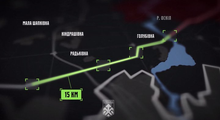
The challenge for air defense lies in the combination of speed and a very short reaction time. If the launch platform is located 350–400 kilometers from Kyiv (as is currently the case with Zircons, after some launchers were relocated from Crimea to the Kursk region), the missile’s flight time can be as little as 2–3 minutes. In that window, air defense operators must detect the target, calculate its trajectory, and make a launch decision for an interceptor. The maneuverability of ballistic missiles adds to the difficulty. The Iskander-M actively maneuvers during the terminal phase of flight, making it harder to predict the intercept point. This is not always feasible even when using modern PAC-3-class missiles.
Why is there no universal solution?
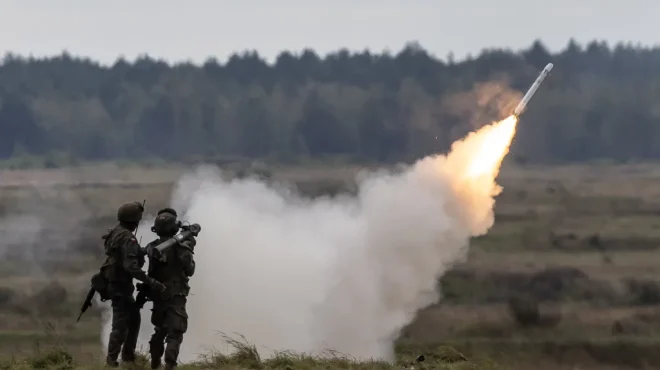
Air defense is structured as a multi-layered system, with each tier responsible for a different type of target. Small-caliber anti-aircraft weapons and man-portable systems are effective against drones and low-altitude targets. Medium-range systems such as IRIS-T or NASAMS handle cruise missiles and aircraft well. For ballistic threats — targets traveling at speeds exceeding 2 km/s that can maneuver during the terminal phase — only a select few of the most expensive and scarce systems are suitable. These are primarily the Patriot with PAC-3 missiles, and the Franco-Italian SAMP/T system.
Technologies that could change the situation
There is actually no need to invent anything new. The current challenge is to scale up the quantity and operational speed of existing technological approaches. The main ones are:
New interceptors
Alongside the American PAC-3, several alternative projects for cheaper anti-ballistic missiles are under development. A Ukrainian example is the FP-7.x by Fire Point, which is expected to cost around $700,000 compared to $3.8 million for a PAC-3. This would allow stockpiles to be built up to a level sufficient for daily use under conditions of intense attacks.
Держави програють війни на полі бою значно рідше, ніж вони програють їх у інститутах, лабораторіях та на виробництві за десять років до їх початку.
— terekh (@iraterekh) June 3, 2026
Коли країна роками недофінансовує інженерну освіту, скорочує дослідження, втрачає виробничі компетенції або звикає покладатися на… pic.twitter.com/Ti1Ayn4INf
Integrated sensor networks
Connecting radars, optical stations, and other sensors into a unified network makes it possible to track a target from the moment of launch through to interception. This principle underpins Ukraine’s FREYJA system — radar integration is planned via the Link-16 protocol in accordance with NATO standards, using the Asterix format for radar connectivity.
Artificial intelligence for data processing
When decisions must be made in seconds and a single operator cannot simultaneously analyze dozens of targets, automation of preliminary analysis becomes essential. In spring 2026, Ukraine’s Ministry of Defense launched a dedicated Defense AI Center of Excellence, which is working, among other things, on accelerating the processing of intelligence and sensor data. European developments follow the same logic. For example, in Thales’s SkyDefender concept, artificial intelligence plays the role of a “coordinator” that reduces information analysis time.
Space-based surveillance
Thermal and optical observation satellites are capable of detecting a missile launch at the very moment of liftoff — earlier than ground-based radars can pick up the target on a ballistic trajectory. This provides precious additional seconds of warning time. The European Union is preparing to launch the European Space Shield program, with its official start planned for the second quarter of 2026. It is intended to consolidate the national and commercial space assets of EU member states to protect critical infrastructure.
New radars
Detecting and tracking low-observable or highly maneuverable targets requires radars with different characteristics — capable of simultaneously tracking dozens of targets at varying altitudes and speeds, and resistant to electronic countermeasures.
Is Patriot the only option against ballistic missiles?
Despite the development of alternatives, the Patriot with PAC-3 missiles remains virtually the only effective means of countering ballistic threats. It is one of the few systems in the world capable of performing missile defense tasks of this class. At the same time, Ukraine and its allies are already facing a shortage of PAC-3 interceptor missiles. Lockheed Martin produced approximately 620 such missiles in 2025, while demand significantly exceeds production capacity. The company is therefore gradually increasing output to approximately 2,000 units per year by the end of the decade. And only a portion of these missiles may reach Ukraine — both through military aid and via purchases financed by partners.
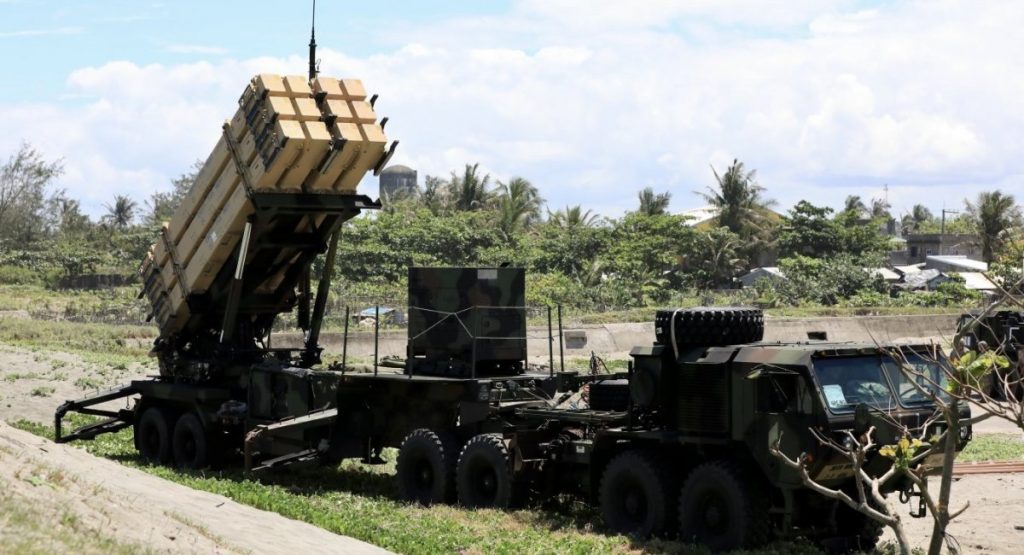
Why can’t missile production be ramped up quickly? The problem lies in an extraordinarily complex supply chain: the assembly of a single PAC-3 missile involves components from approximately 400 suppliers, and the production cycle takes 24–36 months.
On July 9, 2026, Volodymyr Zelensky announced that Ukraine would soon receive another batch of PAC-3 missiles, and the United States has initiated the process of transferring a license to Ukraine for domestic production of these missiles. However, according to experts, this is more of a strategic decision. Rapid implementation is hindered by the complex supply chain certification process, a shortage of highly specialized engineers, and the need for specific equipment.
What is being developed right now
Several areas are developing in parallel and, in the coming years, could determine how effectively Ukraine’s partners and European nations are able to counter ballistic threats.
The EU is advancing a package of flagship initiatives under its 2030 Defence Readiness Roadmap — the European Air Shield, European Space Shield, European Drone Defence Initiative, and Eastern Flank Watch. In parallel, the European Sky Shield Initiative is ongoing — a project for a ground-based integrated air defense system uniting more than twenty European nations that includes anti-ballistic capabilities.
In addition to PAC-3, Ukraine is hoping to receive authorization by the end of 2026 to produce SCALP missiles and Aster 30 missiles for the Franco-Italian SAMP/T systems — another capability that can partially counter ballistic and aero-ballistic targets.
Israel has made the most progress in this area: the ground-based Iron Beam system is already integrated into the country’s multi-layered air defense system. Meanwhile, the Pentagon is funding the development of mobile containerized laser systems that can be rapidly deployed on ground and naval platforms. That said, the effectiveness of lasers is limited, and using them against ballistic missiles is nearly impossible.
The next generation of air and missile defense is a unified digital network in which a satellite can detect a missile launch, a radar can pick up its trajectory, and artificial intelligence can instantly calculate the optimal intercept point.
No country, including the United States, has the industrial capacity to independently close the interceptor gap in the short term. As a result, an increasing number of projects are being structured as joint efforts that pool the industrial capacities of several nations simultaneously, with component production distributed among participants.
The challenge for Ukraine lies in its limited industrial capacity, which prevents it from independently closing the deficit of the most expensive interceptors. At the same time, the ballistic terror campaign against Kyiv, judging by the intensity of recent weeks, is unlikely to ease any time soon. The only way forward is deep integration into European and international missile defense networks. This takes time, but it also offers a chance to shift the balance in the technology race. How long this technology race will last also depends on when the war will end — we examine the existing forecasts separately.