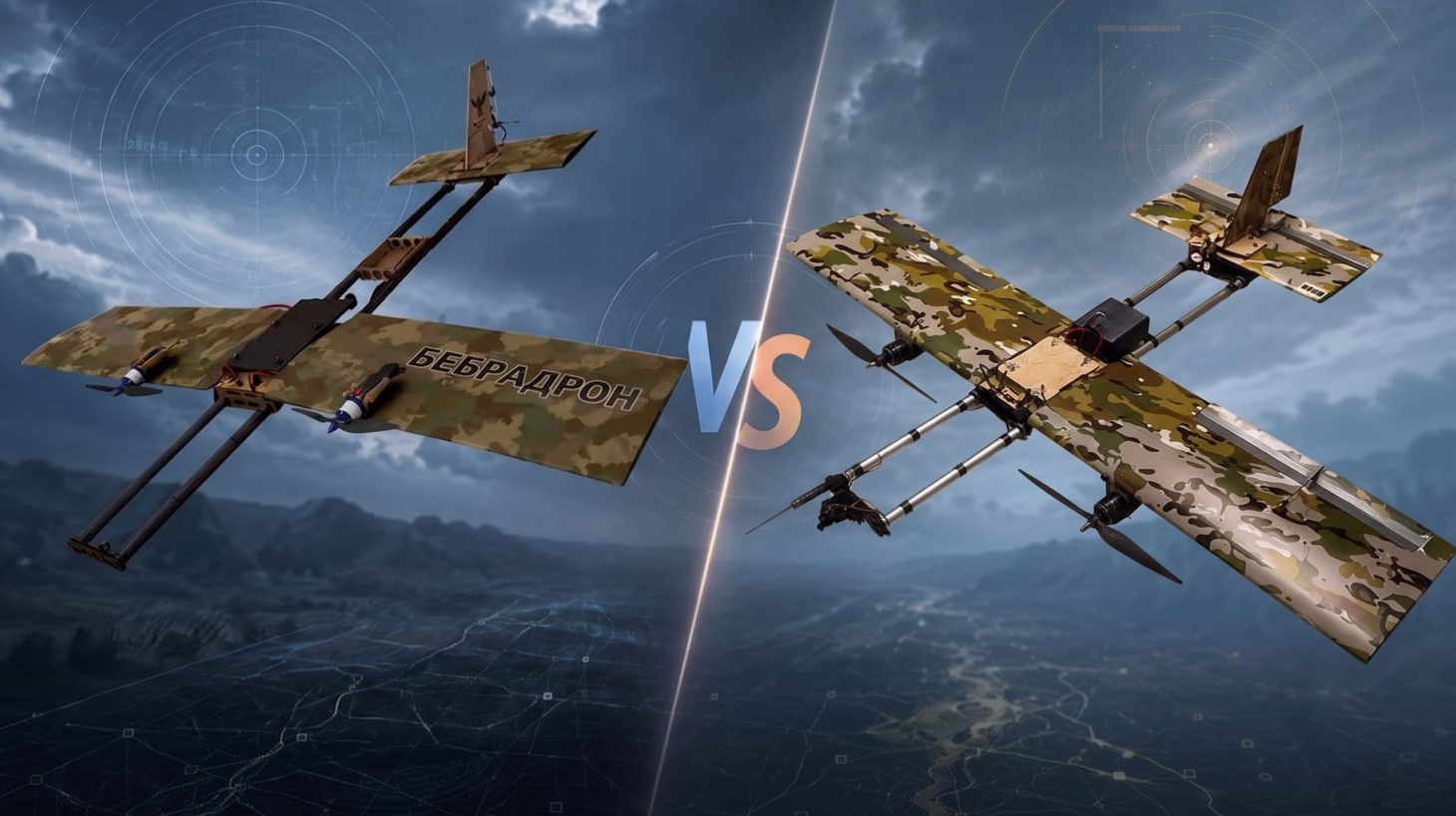
Fixed-wing strike UAVs have become one of the key elements of modern warfare, combining long flight range and effective target engagement. Among the widespread Ukrainian developments of this type are the «Bebradrone» and the «Bliskavka». Despite a similar area of application, they differ in technical capabilities and usage scenarios.
This material was prepared by BlueBird Tech for operators and technical specialists working with UAVs in real-world conditions. The article examines the features of each model, compares their key specifications, and explains how to choose a fixed-wing strike UAV.
What Are Fixed-Wing Strike UAVs?
Fixed-wing strike UAVs are unmanned aircraft with a fixed wing designed to engage targets at long range. Thanks to their aerodynamic design, they offer greater range, higher speed, and better energy efficiency than multirotor drones.
The most common application scenarios for such aircraft include:
- striking ammunition depots, command posts, and other military facilities;
- destroying enemy equipment and logistics routes;
- carrying out strike missions deep in the enemy rear;
- attacking targets at pre-defined coordinates or under operator control.
The Ukrainian strike drones «Bebradrone» and «Bliskavka» belong to this class.
Features of the «Bebradrone» UAV
«Bebradrone» is a Ukrainian fixed-wing strike UAV from BlueBird Tech, developed for tactical missions at long distances. The drone combines rapid deployment, high payload capacity, and stable flight.
Key features of the «Bebradrone»:
- payload capacity up to 7.5 kg;
- real-time video transmission;
- compatibility with existing ground infrastructure;
- equipped with a low-light camera;
- Ukrainian serial production.
These features make the «Bebradrone» UAV a versatile platform for strike missions, combining ease of operation, reliable communications, and the ability to adapt to various combat tasks.
Features of the «Bliskavka» UAV
«Bliskavka» is a fixed-wing strike UAV being scaled up in production by the Ukrainian company VYRIY. The system was created as an effective solution for engaging targets that are out of reach for most FPV drones due to range and payload limitations.
Key features of the «Bliskavka» UAV:
- payload capacity up to 8 kg;
- compatibility with relay stations;
- support for terminal guidance and automatic target lock functions;
- ability to fly through electronic warfare zones in autonomous mode.
The combination of these characteristics allows the «Bliskavka» to be used across a wide range of tactical missions.
Key Technical Differences Between the «Bebradrone» and the «Bliskavka»
Although the «Bebradrone» and «Bliskavka» perform similar tasks, their technical specifications and capabilities differ.
| Criterion | «Bebradrone» UAV | «Bliskavka» UAV |
| Maximum payload | 7.5 kg | 8 kg |
| Cruising speed | 90 km/h | 110 km/h |
| Maximum speed | 150 km/h | 140 km/h |
| Operating altitude | 200–700 m | 300–500 m |
| Flight endurance | up to 30 min | up to 60 min |
| Maximum range | 45 km | 80 km |
| Launch type | Pneumatic catapult | Pneumatic catapult |
| Price | Lower | Higher |
Both UAVs effectively carry out strike missions, but each has different strengths. The «Bebradrone» stands out for its higher maximum speed, operating altitude, and lower price, while the «Bliskavka» offers greater range and longer flight endurance.
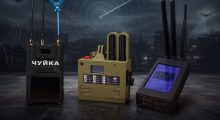
The Role of a UAV Ground Control Station
A UAV ground control station is the command center of an unmanned system, providing flight control, command transmission, and real-time telemetry and video reception. The accuracy of mission execution and the stability of communication with the UAV depend on its functionality.
The control station simplifies the operator’s work, increases mission effectiveness, and ensures reliable management of the system under various conditions.
Why the «Bebradrone» Is the Future of UAVs
The «Bebradrone» from BlueBird Tech combines an optimal range-to-payload ratio, flexible ELRS radio channel control, and compatibility with standard video transmission frequencies, making it easy to integrate into ground systems.
Quick catapult launch and auto-takeoff simplify the operator’s work, while Ukrainian serial production ensures regular deliveries and prompt technical maintenance. It is precisely this combination of reliability and practicality that makes the «Bebradrone» a promising platform for the development of Ukrainian strike UAVs.
How to Choose a Fixed-Wing UAV
When selecting a strike UAV, it is important to evaluate the drone’s capabilities and the conditions of its use.
Key selection criteria:
- suitability for the tasks for which the UAV is intended;
- ease of maintenance and operator training;
- availability of spare parts and technical support;
- scalability and the ability to rapidly replenish the UAV fleet;
- compatibility with the unit’s existing infrastructure.
A properly selected fixed-wing UAV enables more efficient use of resources and ensures quality system performance over the long term.
FAQ
How do fixed-wing strike UAVs differ from multirotor drones?
Fixed-wing strike UAVs have a fixed wing, which allows them to cover significantly greater distances with lower energy consumption than multirotor drones. The aerodynamic design enables the UAV to reach a higher cruising speed and maintain stability throughout the entire route.
This makes fixed-wing UAVs the optimal solution for strike missions deep in the enemy rear, engaging logistics routes and facilities located far from the front line, where multirotor platforms physically cannot reach.
What is cruising speed?
Cruising speed is the optimal flight speed of a UAV at which the aircraft consumes the least energy to cover a distance while maintaining stability and controllability.
Unlike maximum speed, which is used for brief acceleration, cruising speed is maintained throughout the main portion of the route. This parameter determines the actual range and flight endurance of the aircraft in combat conditions.
How does the operation of a strike UAV differ during the day and at night?
During the day, the operator relies on a standard camera and has a broader view of the terrain for navigation and target identification. At night, mission quality depends on the availability of a low-light or thermal imaging camera, which allows objects to be distinguished in low-light conditions.
Night sorties also require additional attention to landmarks along the route, as visual control becomes more difficult.
Which UAV is better: the «Bebradrone» or the «Bliskavka»?
Both aircraft are effective, but are oriented toward different mission priorities. The «Bebradrone» has an advantage in maximum speed, control flexibility, and is equipped with a low-light camera. The «Bliskavka» is more resistant to jamming, supports a terminal guidance function, and has greater range.
The final choice depends on the specific tasks of the unit and the requirements for target engagement range.
How long does it take to deploy a fixed-wing UAV in field conditions?
Deployment typically takes just a few minutes thanks to the use of a pneumatic catapult and the absence of any need for a runway. The operator mounts the aircraft on the launch rail, checks the payload balance, and puts the system into operational mode.
Deployment speed is a critical factor in combat conditions, as it reduces the time the crew spends at the position and lowers the risk of detection by the enemy.
Conclusion
The «Bebradrone» and «Bliskavka» vividly illustrate the evolution of Ukrainian fixed-wing UAVs and each offers different advantages depending on the mission. The choice of aircraft depends on mission requirements, operating conditions, and system capabilities.
The «Bebradrone» UAV from BlueBird Tech is a promising solution for units that need a reliable platform for carrying out strike missions at long distances.