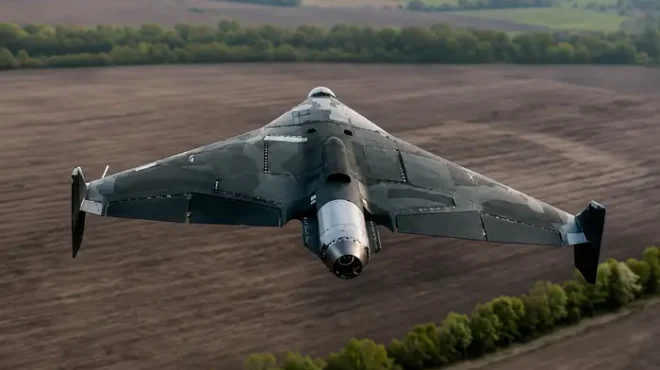
As of October 5, reactive drones have already struck two bridges across the Dnipro in the capital. Engineers say critical structural destruction is unlikely. However, the goal of attacks on the city’s transport infrastructure appears to be different — and the enemy is partly achieving it.
Between October 1 and 4, Russia for the first time since the start of the full-scale invasion systematically attacked Kyiv’s bridges. Memories of bridges in the Kyiv region destroyed at the beginning of the full-scale war are still fresh in Ukrainians’ minds. So many people saw in the footage of smoke over the Pivdennyi Bridge the beginning of a “severance” of the left bank. Experts polled by Ukrainian media are almost unanimous: such weapons cannot destroy the structures. But that does not mean the capital will not suffer.
Kyiv Bridges Under Attack by Reactive “Shaheds”: A Timeline of Strikes
The first confirmed strike occurred on October 1. Drones hit near the support section of the Pivdennyi Bridge at the very moment a metro train was crossing it. The blast wave carried dust into the carriages through the ventilation system, but the passengers and driver were unharmed.
Subsequently, a drone damaged the roadway, one of the supports, a crash barrier, and the metro’s protective concrete fencing. Over October 1–2, the Pivdennyi Bridge sustained five strikes from reactive drones.
On October 3, a reactive UAV struck the Pivnichnyi Bridge, damaging the road surface and the trolleybus network.

On October 4, the attack was repeated, leaving a large crater in the carriageway. Klitschko reported two casualties.
According to Volodymyr Zelensky, over the past week Russia deployed more than 1,900 strike drones against Ukraine, of which more than 800 were reactive. Air Force spokesman Yurii Ihnat specified that over the last two nights the Russians launched approximately 50 reactive UAVs.
What Experts Say About Bridge Resilience
Kyiv authorities have now closed the Pivdennyi Bridge for the second time, fueling residents’ fears about whether the structures can withstand drone attacks.
Dmytro Bespalov, a transport planning expert, says that a hit on the concrete section of the Pivdennyi Bridge does not threaten the structure. However, every bridge has weak nodes, and systematic strikes can disable individual elements. In his assessment, destroying the structure would require dozens or even hundreds of munitions.
Aviation expert Kostiantyn Kryvolap emphasizes that fire on a bridge does not yet mean the structure itself has been hit. The warhead of a reactive drone, he says, carries about 45 kilograms — not enough to put such a bridge out of commission. On the idea floated by Russian bloggers of repeatedly targeting the same support, he commented: “Z-bloggers understand nothing about structural strength.”
Hennadii Khazan, head of AOPA Ukraine, adds that the combat section of a reactive drone can carry up to 50 kg of explosives, which is insufficient to seriously damage a powerful bridge structure.
The situation is more complicated with newer munitions. According to Serhii “Flash” Beskrestnov, Russians have begun fitting reactive “Geraniums” with 40-kilogram shaped-charge warheads designed to destroy power line supports and steel structures. LB.ua reports the appearance of special warheads of the KRSN type (shaped-charge cutting special load).
Analysis of the strike impacts showed that the drones hit the vertical pylon holding the stay cables — that is, a structural node. Military expert Andrii Zhurets also believes the enemy is trying to damage the stay cables, but they have a significant safety margin. Cutting one or two stays will change nothing, but if more are cut and the pylon is compromised, the problems will be very severe.
According to a 2025 inspection cited by Dnipro Polytechnic professor Dmytro Kolosov, the Paton Bridge was classified as non-functional, with its residual service life assessed at “zero years” under standard methodology. The Pivdennyi Bridge, in public assessments he referenced, is described as “limitedly functional.”
The Outlook Is Not Pessimistic, But There Are Caveats
Dmytro Kolosov advises viewing these attacks in a broader context. He says the consequences depend on which specific element is damaged and whether the structure has redundant load-transfer pathways. He sees the greatest risk from repeated strikes in the accumulation of damage.
Complete destruction of a bridge by a handful of drones is unlikely. But the absence of a collapse does not mean everything is fine. A structure loses its load-bearing capacity gradually, so inspections and prompt repairs are essential to verify operational safety. That is precisely why authorities stop traffic on the bridges — to carry out structural assessments after each strike.
The Goal of Attacks on Kyiv’s Bridges: Paralyze, Not Destroy
Most analysts agree that Russia is not counting on destroying the bridges. Bespalov believes Moscow has a target list for reactive drone strikes, with the Pivdennyi Bridge a priority — it is the only bridge used by the metro during a “yellow” alert. Kryvolap sees this as part of a “winter plan”: to create harsh living conditions and push people toward protests. ISW analysts believe the Kremlin is seeking to make life in major cities unbearable.
The effect of the first planned bridge strikes is already visible: massive traffic jams, taxi fares multiplied several times over, emergency changes to bridge closure rules, and widespread public attention to the problem.

Economist Ivan Us warns that regular strikes will mean lost time for workers, falling revenues for small businesses and the city budget, and rising logistics costs. He also considers the destruction of all bridges unlikely, as major crossings are nearly impossible to demolish from the air alone without physical demolition charges.
Engineer Oleh Diorfer went further, calling rumors about “cutting off” the left bank part of an enemy information attack: in his assessment, the psychological effect and intimidation are no less important to Moscow than the actual destruction.
How the Russians Are Doing It
The tactics differ from the usual nighttime attacks. Beskrestnov is convinced that precise strikes on pylons or stay cables require online guidance right up to the moment of impact. He suggests that between one and three concealed radio relay stations are operating in Kyiv, and warns: “As long as they are there, blanketing the city with electronic warfare will not be effective.”
What Is Being Done for Defense and Stabilization?
Volodymyr Zelensky announced more than 12 automated turrets in the capital, with eight more “fifties” (for 12.7 mm caliber machine guns) planned for deployment in the Kyiv region. On October 5, Ihnat confirmed the first kills: robotic turrets equipped with machine vision and AI have already destroyed reactive “Gerani-5” drones. He admitted he had initially been skeptical.

Efforts are also being made to address the transport collapse: Ukrzaliznytsia, for instance, launched 18 additional commuter rail services between Vydubychi and Darnytsya.
Another line of defense involves backup crossings and even an underwater tunnel, discussed by some officials. However, according to Andrii Koretskyi, pontoons cannot replace bridges due to load incompatibility and a lack of shoreline infrastructure. He considers a tunnel under the Dnipro a perfectly realistic project, but one that is a matter of time and funding.
As of October 5, Kyiv is gradually recovering from the transport collapse: public transport is running across the bridges, and most of them are free of traffic jams. New restrictions apply during alerts. The Pivdennyi Bridge is closed for 15 minutes in the direction from the right to the left bank, while the Podilsko-Voskresensky Bridge is closed in both directions.
Analysis shows that at the current stage the risk lies in three factors:
- The accumulation of hidden damage on bridges that were already in a difficult condition before the attacks.
- The economic and psychological exhaustion of the city.
- Russia’s ability to shift to series of precise repeated strikes within tight timeframes, preventing repair teams from keeping up with restoration.
To thwart the enemy’s plans, the Defense Forces are working on new methods and approaches for intercepting reactive drones before they reach the capital, and are searching for relay stations in Kyiv. City authorities, for their part, must conduct regular independent engineering inspections. Official conclusions on the condition of the Pivdennyi Bridge have yet to be released: the Kyiv City Military Administration noted only that the assessment is ongoing.