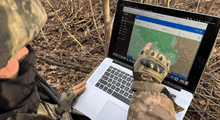
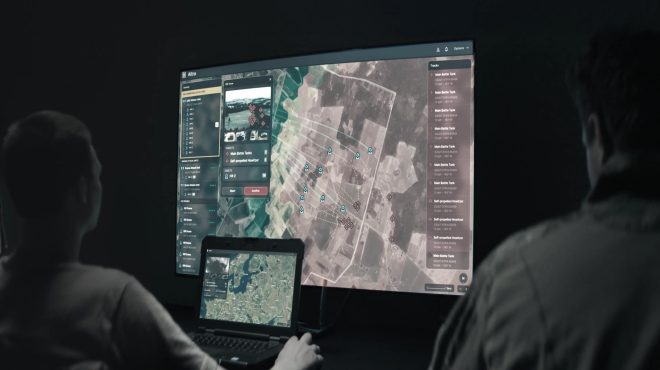
DELTA is a Ukrainian combat digital system that consolidates intelligence data, displays the operational picture on a digital map, and helps the military coordinate unit actions. Over years of development and refinement, it has evolved from a tool for working with intelligence information into a large-scale situational awareness ecosystem.
In October 2026, the system once again found itself in the spotlight following international trials at the NATO REPMUS 2026 exercises, where Ukraine demonstrated its interoperability with partners’ combat systems. DefPulse explored how DELTA works and what capabilities it gives to Ukrainian military personnel.
What DELTA Is and What It Is For
Situational awareness in military affairs is the ability to obtain current information about one’s own forces, the enemy, and the surrounding environment, correlate that information, and use it for decision-making.
In the traditional command model, intelligence information may pass through several levels of command before reaching those who need it. At every stage there is a risk of delay, loss of context, or duplication of data.
DELTA is designed to reduce this fragmentation. It forms a shared digital environment in which authorised users can see data on the operational situation available to them and work with it in accordance with their tasks.
In general, it is a complex of interconnected software tools. It encompasses:
- collection and display of information;
- its analysis;
- communication;
- support for management processes.
How DELTA Came to Be: From a Volunteer Initiative to a Combat System
The history of DELTA began in 2014, following the start of Russian aggression against Ukraine. The volunteer community “Aerorozvidka” was developing the use of unmanned aerial vehicles for surveillance and intelligence gathering. Work in the combat zone sharpened a key problem: data from various sources needed to be quickly consolidated into a single picture of the battlefield.
In 2015, the initiative received institutional formalisation with the involvement of the Ministry of Defence of Ukraine. The first working version of the DELTA software appeared in the ATO zone in 2016. From the very beginning, the system was developed taking into account the experience of the military personnel who used it directly.
2014
“Aerorozvidka” develops the use of UAVs and seeks ways to systematise intelligence data.
2016
DELTA begins to be used in the ATO zone. Further development takes place taking into account the needs of the military.
2022
The system takes on a significantly greater role in combat operations, and its cloud architecture helps ensure its availability and development.
2023
A Resolution of the Cabinet of Ministers of Ukraine dated 4 February 2023 created the legal preconditions for deploying the system in the Security and Defence Forces.
2024–2026
Artificial intelligence tools, digital recording of combat missions, and integration with international systems continue to develop.
How the DELTA System Works
At the core of DELTA lies the consolidation of data from various sources and its display in a single digital environment. That is, instead of separately reviewing video, messages, coordinates, and reports, military personnel can work with information within a single ecosystem.
In simplified terms, the operating principle can be described as a sequence of four stages:
- Collection of data from UAVs, radars, satellite imagery, sensors, and reports from authorised sources.
- Consolidation of information, its display, video analysis, and data processing.
- Display of available information on a digital map and in specialised modules.
- Situation assessment, unit coordination, planning, and recording of results.
DELTA’s Main Modules
DELTA operates as a cloud-based integration platform capable of consolidating data from sensors, radars, trackers, and satellite sources. Its architecture also provides for the ability to connect new functions without needing to rebuild the entire system each time.
DELTA is an ecosystem of interconnected tools. Among its components are the digital map mentioned above, the Vezha video platform, the Avengers target recognition system, and the Mission Control module.

Digital Map
Displays operational data, geographic objects, and available markers on the map. Helps correlate information from various sources spatially.

Vezha — Video Surveillance and Analysis
Provides video streaming from unmanned aerial vehicles and stationary cameras, voice communication, and shared viewing of video materials. This makes it possible to transmit visual information between authorised users.

Avengers — Artificial Intelligence
Uses computer vision to detect and classify military equipment in video streams. The algorithms help process large volumes of video so that operators can focus on verifying and assessing important information.

Mission Control — Combat Mission Recording
Helps record the results of completed missions so that information does not remain solely in individual unit reports.
In addition to these components, DELTA includes a secure messenger and tools for planning and synchronising tasks.
Avengers: How AI Helps Analyse Video
UAV cameras capture and transmit a large stream of video that is physically difficult to review manually in real time. Automated object detection is designed to reduce this burden.
Avengers analyses video from unmanned aerial vehicles and surveillance cameras, detects probable targets, and helps identify the type of equipment. The system processes more than 100,000 video streams monthly, and the AI detects approximately 70% of enemy targets in real time.
In August 2026, the Ministry of Defence announced the opening of access to the Avengers Labs platform for Ukrainian defence companies. It is intended for training proprietary artificial intelligence models on data related to unmanned systems.
Mission Control: From Mission Execution to Results Analysis
One of the most important areas of DELTA’s development is the digital recording of combat operations. The Mission Control module helps record mission results so that information does not remain solely in individual unit reports.
According to data from the Ministry of Defence of Ukraine dated 19 October 2026, as of 1 October more than three million missions to strike enemy targets had been recorded through Mission Control. The system also contained nearly 3.6 million reports on reconnaissance missions, more than one million logistics missions using unmanned aerial vehicles, and nearly half a million air target interception missions.
UA DroneID: How to Identify Friendly Unmanned Aerial Vehicles
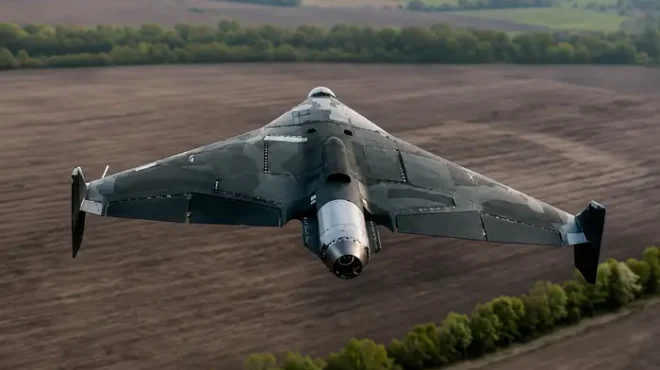
The mass use of unmanned aerial vehicles creates additional risks: aircraft from different units may be operating in the air simultaneously, and their actions are complicated by electronic warfare assets and unstable communications.
To coordinate friendly unmanned aerial vehicles, UA DroneID technology is being developed and integrated with the DELTA ecosystem. Its purpose is to transmit information about friendly aircraft, including their telemetry, to help distinguish friendly unmanned aerial vehicles from potentially enemy objects.
Interoperability with NATO Standards
Compatibility with allies’ systems is one of DELTA’s distinguishing features. For this reason, the Ukrainian team participates in international trials. These include CWIX — a NATO event dedicated to testing the interoperability of military systems. In 2024, DELTA was tested across several interoperability areas, and NATO separately noted the work of Ukrainian specialists on integrating the system into the Alliance’s environment.

A new stage was demonstrated at the REPMUS 2026 exercises. According to a statement by the Ministry of Defence of Ukraine dated 14 October, Ukrainian military personnel coordinated maritime operations through DELTA, and aerial, surface, and underwater unmanned platforms as well as radars transmitting data in accordance with NATO standard STANAG 4817 were integrated into the system. The Ukrainian team also noted the system’s stable operation under unstable communications conditions.

Cybersecurity: Protecting Data and Access
DELTA’s cloud architecture helps scale infrastructure and reduces dependence on a single local server site. Additional elements include multi-factor authentication, user rights control, device protection, and regular software audits.
In March 2026, the Ministry of Defence of Ukraine reported the results of an independent cybersecurity assessment of DELTA, including the Vezha and Avengers modules. According to official data, the audit covered more than 160 information security requirements, and experts found no deviations from the verified criteria.
DELTA and Other Digital Systems of the Ukrainian Military
DELTA operates within an environment of several defence digital solutions. Various software systems have their own tasks and areas of specialisation.
| System | Primary Purpose |
| DELTA | Situational awareness, information consolidation, and command support. |
| “Kropiva” | Tools for artillery crews and coordinate-based work. |
| “Virazh-Planshet” | Display and monitoring of the air situation. |
| Griselda | Automated processing of intelligence information. |
In October 2024, the Ministry of Defence reported that DELTA, “Kropiva,” and “Virazh-Planshet” had ranked among the three most popular combat systems based on a survey of military personnel conducted through the “Army+” application. Approximately 10,000 service members participated in the survey.
Frequently Asked Questions
What is DELTA?
DELTA is a Ukrainian digital situational awareness system that helps the military receive and consolidate data on the battlefield situation. It enables information to be displayed on a digital map and used for planning and coordinating combat operations.
How does DELTA help the AFU?
The system consolidates intelligence data and other situational information in a single digital environment. This helps the military assess the situation more quickly, coordinate units, and make decisions based on current information.
Does DELTA use artificial intelligence?
Yes, the system continues to develop AI-based tools. These can help analyse intelligence data, including information obtained from unmanned aerial vehicles. At the same time, AI does not replace military commanders, who remain responsible for decision-making.
Does DELTA work only with unmanned aerial vehicles?
No. Unmanned aerial vehicles are one of the information sources for the system, but its purpose is far broader. DELTA helps consolidate various data on the combat situation and ensures information interaction between military units.
Is DELTA compatible with NATO systems?
Ukraine is developing DELTA’s compatibility with NATO approaches and digital solutions. Such interoperability is important for data exchange and coordination with partners. At the same time, compatibility depends on specific technical standards, procedures, and use cases.
Can DELTA replace commanders on the battlefield?
No. DELTA is an information support tool, not an automated command system. It helps the military gain a more complete picture of the situation, but situational assessment and responsibility for decisions remain with people.