Modern combat operations are increasingly turning into a confrontation of technologies. One of the central places in it is occupied by unmanned systems — a tool that within a few years has become a key element of Ukrainian defense. Today, it is precisely the drones of Ukraine that ensure reconnaissance, fire correction, the engagement of the enemy’s equipment, and the execution of dozens of other combat tasks.
The Origin and Development of Ukrainian Drones in the War
The history of Ukrainian drones is a path from isolated volunteer initiatives to a full-fledged industry. At the beginning of 2014–2015, mainly civilian quadcopters for basic reconnaissance were used in the troops. Operators learned literally «in the field», and drones were often bought with volunteer funds.
After 2022, the situation changed radically. In a short time, the following appeared in Ukraine: specialized UAV units, operator training centers, hundreds of private manufacturers, state programs to support the industry, the serial production of strike and reconnaissance systems.
Today, the drone market in Ukraine covers: private technology companies, engineering startups, defense enterprises, training centers, volunteer initiatives, units for operation and maintenance. Such an ecosystem makes it possible to quickly create new models and promptly adapt them to the needs of the front.
The main feature of Ukrainian drones is that they develop not in laboratories but directly in the conditions of combat operations. Every update undergoes testing by real application, and not only by range tests.
Main Types of Drones That Ukraine Uses
Under the concept of «drones of Ukraine» today an entire lineup of different systems is understood. In practice are applied: reconnaissance quadcopters for surveillance, long-range fixed-wing UAVs, strike FPV drones, loitering munitions, maritime unmanned platforms, ground robotic complexes, communication repeaters.
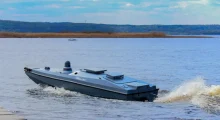
Each class performs its role. Reconnaissance drones ensure constant surveillance and the correction of artillery. FPV systems are used for the point engagement of armored vehicles and fortifications. Fixed-wing UAVs make it possible to conduct deep reconnaissance at significant distances. Maritime drones have become a separate area and have proven their effectiveness in working against ships and port infrastructure.
In real operations, these systems work in conjunction. A typical scenario looks like this: a reconnaissance drone finds a target, transmits the coordinates, after which artillery or a strike FPV works on it. It is precisely such multi-level interaction that makes drones extraordinarily productive.
Auxiliary areas are developing separately: thermal imaging cameras, munition drop systems, protected communication modules, software for the automation of flights, signal relaying assets.
Tactical Tasks of Ukrainian Drones
The functionality of modern UAVs has long gone beyond the bounds of simple surveillance. Today, drones of Ukraine perform: reconnaissance and the detection of targets, the correction of artillery fire, the guidance of precision weapons, the destruction of the enemy’s equipment, the escort of assault groups, the control of logistical routes, the monitoring of positions, the recording of strike results.
Thanks to drones, commanders gain the ability to see the situation in real time. This significantly shortens the time between detecting a target and engaging it. If earlier this could take hours, now a few minutes are often sufficient.
UAVs work especially effectively in interaction with artillery. A typical example: a small quadcopter records the movement of enemy equipment, transmits the coordinates to the crew, after which a precise strike is delivered on the target. More about such scenarios can be read in the article «Drones at the front: role, tasks», which examines practical examples of combat application.
In addition to daytime operations, drones are actively used at night with thermal imaging modules, for remote mining, as well as in difficult weather conditions, where traditional reconnaissance assets are ineffective.
How Drones Are Changing Tactics and the Course of War
The mass use of UAVs has completely changed the rules of the game on the battlefield. Modern approaches look like this: constant aerial surveillance, the minimization of large clusters of equipment, the transition to mobile small groups, the priority of point strikes, the maximum speed of decision-making, critical dependence on EW systems.
In effect, drones have turned war into a competition of the speed of information. The advantage goes to the one who first detected the target, transmitted the coordinates, and delivered a strike. Even with fewer resources, it is possible to effectively counter a more numerous enemy.
The Ukrainian experience has shown: correctly organized UAV work is able to stop an offensive, destroy logistics, and significantly reduce the enemy’s combat capabilities without large-scale ground operations.
Challenges and Limitations in the Application of Drones
Despite all the advantages, drones remain equipment with a number of vulnerabilities. The main problems today: active counteraction by EW, the jamming of control channels, the loss of GPS navigation, a limited action radius, dependence on the weather, the need for constant software updates, a shortage of experienced operators.
The most serious challenge is precisely electronic warfare. The enemy constantly builds up signal suppression capabilities, which complicates the work of reconnaissance and strike systems. In response, Ukrainian units use comprehensive solutions: dome EW systems, drone detectors, directional antennas, mobile suppression stations.
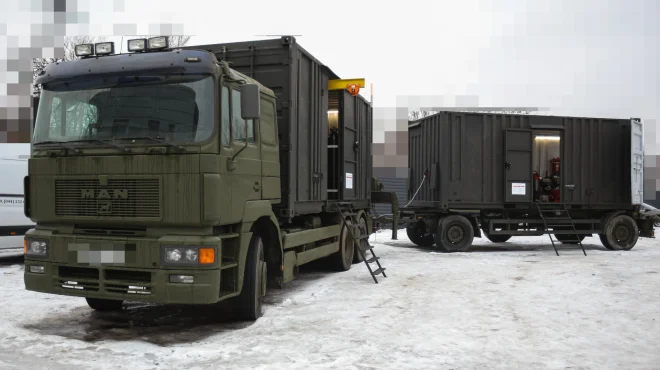
An example of a modern approach is the vehicle-mounted modular EW system “Hrets XL” — a powerful asset for countering FPV drones, which, thanks to its modular design, makes it possible to quickly select the necessary frequency modules for specific threats. Such a complex can be installed on vehicles, protect convoys of equipment, positions, or important objects, and promptly adapt to changes in the enemy’s tactics.
Thus, the effectiveness of UAVs today depends not only on the characteristics of the drone itself but also on the entire infrastructure: protected communication channels, relaying, software, and counteraction systems.
The Role of Drones of Ukraine in Strengthening the State’s Defense
Drones have become one of the main factors of the resilience of Ukrainian defense. They make it possible to: deter the enemy’s offensive, reduce risks for personnel, save expensive ammunition, control large sections of the front, increase the effectiveness of planning operations.
In addition to the purely military effect, drones gave a powerful impetus to the development of the economy and engineering thought. An entire industry has formed, which unites: software developers, manufacturers of electronics, designers, operators, service centers, and training structures.
The Ukrainian experience is already being carefully studied in the world. The methods of UAV application worked out in Ukraine are in effect forming new approaches to conducting modern wars.
Conclusions
Drones of Ukraine are not just a new type of armament. It is a technological tool that has fundamentally changed the nature of combat operations. They have made war more precise, mobile, and controllable, and decisions on the battlefield significantly faster.
The further development of unmanned systems will be one of the key factors of the state’s defense capability. The winner will be not the one who has more equipment but the one who implements new technologies faster and adapts to changes.