The Air Assault Forces are among the most mobile units and the most demanding of management within the composition of the Armed Forces of Ukraine. Their combat tasks are carried out in conditions of high dynamics, limited time for preparation, and a constant change of the operational situation. In such conditions, it is precisely the command and the management system that determine whether a unit will be able to act in a coordinated manner and carry out the set task.
The Air Assault Forces of the AFU and the Features of Their Command
The Air Assault Forces of Ukraine specialize in the quick transfer of units, the holding of key sectors, and the execution of complex combat tasks in the rear or on the flanks of the enemy. Such a nature of actions requires a special approach to command, where the speed of making decisions and the clarity of management are of decisive significance.
Command in the Air Assault Forces is oriented toward high mobility, the autonomy of units, and a readiness to act in conditions when communication or support may be limited. That is precisely why the management system is built so that each commander clearly understands their role, the limits of responsibility, and the overall plan of the operation.
The Command of the Air Assault Forces of the AFU and the Levels of Management in Combat Units
In the combat units of the Air Assault Forces, the hierarchy of management classic for the AFU operates: platoon, company, battalion, brigade. At the same time, in the Air Assault Forces, special attention is paid to the ability of commanders of lower links to act independently within the framework of the set task.
The platoon commander leads the personnel directly on the battlefield, reacts to a change in the situation, and makes decisions in real time. The company commander coordinates the actions of several platoons, distributes resources, and ensures the execution of tasks on a defined sector. The battalion level is responsible for planning, reserves, and the coordination of the actions of units, and the brigade command forms the overall plan of the operation and coordinates the battalions among themselves.
Characteristic of the Air Assault Forces is the requirement for commanders at all levels to combine the clear execution of orders with the independent making of decisions. This is conditioned by the fact that the combat situation often changes faster than clarifications arrive from the higher level of management.
How the Management of the Air Assault Forces Works in Dynamic Combat Conditions
The management of the units of the Air Assault Forces in combat conditions is based on the clear conveying of orders, the constant coordination of actions, and control over the execution of tasks. At the stage of planning, the command determines the goal of the operation, the priorities, and the limits of responsibility of the units. During the execution of the task, the ability of commanders to quickly adapt to a change in the operational situation acquires key significance.
The conveying of orders and management decisions is carried out with account for the limited time, possible interruptions of communication, and the active actions of the enemy. Therefore, management in the Air Assault Forces is built so that commanders of lower links can act autonomously within the framework of the set task, while maintaining the overall plan of the operation.
Control over execution is not limited to recording results. The command constantly assesses the situation, clarifies tasks, and adjusts the actions of units in order to maintain the initiative and minimize the risks for personnel.
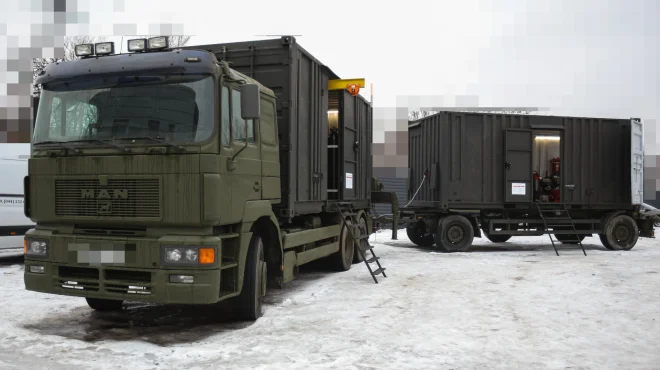
An important role in maintaining controllability in such conditions is played by technical assets that ensure stable communication and the transmission of data between command posts and tactical groups. In particular, the UAV control complex “Vishchun-K1” with a ground station and a wireless repeater makes it possible to organize the management of unmanned aerial vehicles and transmit information even in difficult conditions of coverage. Such solutions increase the situational awareness of the command, simplify the coordination of actions, and make it possible to promptly adjust the course of combat operations in real time.
The application of similar complexes in the management system of the units of the Air Assault Forces strengthens the ability of the command to maintain control over the situation and make well-grounded decisions in conditions of high dynamics and limited resources.
The Interaction of the Command of the Air Assault Forces With Other Units of the AFU
The Air Assault Forces usually act in interaction with other units of the AFU. During the execution of combat tasks, they coordinate actions with mechanized, artillery, reconnaissance, and other forces.
The command of the Air Assault Forces ensures this interaction through joint planning, the exchange of information, and the coordination of tasks. Such an approach makes it possible to avoid the duplication of efforts, reduce the risk of mistakes, and ensure the effective use of forces and assets.
The general principles of management and the making of decisions in combat units are examined in more detail in the material: «How combat units of the AFU works», which supplements this topic from a broader perspective.
Conclusion
Command in the Air Assault Forces of the AFU is a key factor of their effectiveness during the execution of combat tasks. A clear hierarchy of management, the ability of commanders to make decisions in conditions of uncertainty, and coordinated interaction with other units make it possible for the Air Assault Forces to act effectively in a complex combat environment.
The peculiarity of the Air Assault Forces lies in the fact that any mistake in management or a delay in the making of a decision can have instant consequences, therefore it is precisely the quality of command here that directly affects the result of the execution of the task.