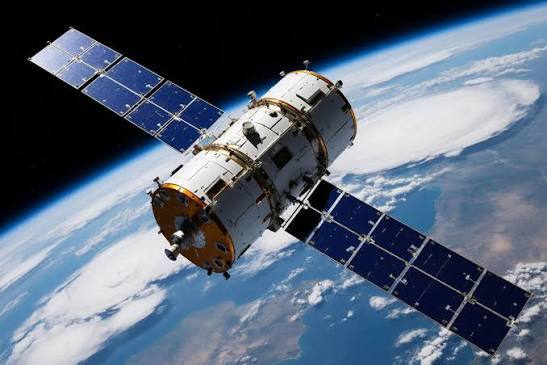
Not long ago, the phrase “Russian Starlink” was met mostly with skepticism: Roscosmos had been promising a space breakthrough for decades and failing to deliver for just as long. But after SpaceX introduced terminal “white lists” in February 2026 and effectively cut occupation forces off from unauthorized Starlink access on Ukrainian territory, the Kremlin received an expensive lesson. An army dependent on someone else’s satellite communications is a force with an off-switch in foreign hands. The response was the accelerated scaling of the “Rassvet” project — a project by the private company “Bureau 1440,” overseen by individuals with close ties to the FSB.
Half a year has passed — and there are satellites in orbit, there are first instances of the project’s logic being applied in combat, and there are Ukrainian missiles that have already reached the factory that launches those satellites. Let’s break down what this system is, how dangerous it is, and how Ukraine can respond.
Why Did Russia Take This On?
The loss of Starlink access in spring 2026, according to Western analysts, caused an immediate degradation of Russian command and control at the front — units reverted to outdated radio sets and wired communications.
Bureau 1440 (formerly “MegaFon 1440”) was elevated to the role of chief rescuer from this crisis, seizing the initiative from the state-owned corporation Roscosmos. Its own mega-program “Sfera” had previously collapsed: of the promised 600-plus satellites, only a single prototype ever reached orbit.
Russia’s federal budget has allocated 102.8 billion rubles (approximately $1.26 billion) to “Rassvet” under the national project “Data Economy.” The company promises to contribute an additional roughly $4 billion in “own funds” by 2030 — though independent auditors have found no confirmation of such capital existing. The analytics project KeepTrack estimates the program’s total cost at $5.7 billion.
Importantly, specific individuals from the security services apparatus stand behind “Bureau 1440.” The company is part of the IKS Holding conglomerate, whose first deputy director general is 29-year-old Boris Korolyov, son of the current first deputy director of the FSB, Sergei Korolyov. Retired FSB Colonel-General Andrei Fetisov is listed as an advisor to the director general, while his son Maxim heads the holding’s procurement department. The same IKS Holding controls the company “Citadel” — a monopolist in the wiretapping systems (SORM) market — and supplies equipment to Roskomnadzor used for internet blocking.
What Technology Does Rassvet Actually Have
The key distinction of “Rassvet-3” satellites from classical relay satellites — and even from early Starlink — is the so-called regenerative payload. Rather than amplifying and redirecting a signal to a ground station, each satellite carries a full-fledged 5G base station (gNB, 3GPP 5G NTN standard) on board and processes and routes data in space itself. Thanks to laser inter-satellite links (ISL), the spacecraft can transfer traffic to one another without waiting for a ground gateway. As early as May 2024, during the “Rassvet-2” mission, the adversary’s engineers conducted 14 optical communication tests at distances of 30–220 km and transferred 1.5 terabytes of data at speeds of up to 10 Gbps without packet loss.
In other words, if there is no Russian ground station above the combat zone, the satellite receives data from a Russian drone, transmits it via laser to a neighboring spacecraft above Belgorod or Moscow — and that spacecraft relays the signal to a command post. The terminals operate on active phased array antennas (APAA), enabling instant switching between satellites without mechanical pointing, while their compactness (up to 60×60 cm, less than 15 kg) theoretically allows them to be embedded in the bodies of strike drones.
The weak point is the terminals. During trials, Bureau 1440 used imported Kymeta U8 units of Israeli-American manufacture, costing approximately $25,000 per unit. For comparison, a Starlink terminal costs $350–600.
What Is in Orbit as of September 2026
Moscow’s official plans are breaking against the physics and economics of the space industry. According to documents submitted to the International Telecommunication Union, Russia promised to orbit 156 satellites by the end of 2026, 292 by the end of 2027 (marking the start of commercial operations), and over 900 by 2035.
Reality is more modest. The first production batch of 16 spacecraft launched aboard a Soyuz-2.1b rocket from the Plesetsk Cosmodrome on March 23, 2026. The second batch, also 16 satellites, followed on July 19. Together that is 32 spacecraft in orbit.
Simple math: the Soyuz-2.1b rocket can carry no more than 16 satellites at a time, and Russia’s entire space industry conducts only around 20 launches per year in total (including military reconnaissance spacecraft and cargo Progress vehicles to the ISS). Dedicating half the country’s annual launch capacity to the needs of a single private company is physically impossible. Analysts therefore assess that the schedule of “156 satellites by end of 2026” slips by at least 2–3 years.
Even worse is the situation with what has already been launched. The GCAT catalog of orbital objects (maintained by astrophysicist Jonathan McDowell), updated on September 10, 2026, records only 13 satellites from the first batch in operational positions at an altitude of 508–513 km. Two spacecraft are stuck at 350–370 km, and one (“Rassvet-3 No. 4”) burned up in the atmosphere as early as June 6.
That means fewer than 13 of the 16 satellites in the first batch are functioning normally. According to Business Insider, citing data from the US Space Force, as of September 2, not a single satellite from the second batch (launched in July) had yet reached its target orbit. Although a final verdict on the fate of that batch can only be reached 100–125 days after launch.
Ukrainian space intelligence reported already during the summer that of the 16 satellites in the second batch, some had lost altitude to critical levels of 290–340 km and were showing accelerated decay. The probable cause is dependence on low-quality Chinese commercial-grade components, due to Russia’s lack of its own production of radiation-hardened microelectronics.
Space analyst Anatoly Zak estimates the failure rate of serial Rassvet spacecraft at up to 60%, a figure he describes as catastrophic for the project’s viability.
The Ukrainian Factor
Ukraine’s Defense Forces are not waiting for the system to become operational — they are striking its ground infrastructure. As early as June 2026, drones attacked communications nodes near Moscow — the Dubna Deep Space Communications Center and the Rubin node — as well as the Space Communications Center in Vladimir.
The most high-profile strike occurred on the night of August 15, 2026: Ukrainian cruise missile-drones FP-5 “Flamingo” attacked the RCC Progress plant in Samara — the only enterprise in Russia producing the Soyuz-2.1b launch vehicles used to orbit Rassvet.
According to OSINT projects (including analysts from Astra and Cybermuka), the strike and the resulting large-scale fire hit Building 106A — where onboard electronics and cable harnesses of the rockets are assembled. Official statements from the Samara authorities described “localized damage” to industrial infrastructure. However, satellite imagery subsequently showed a large crater where one of the buildings had stood.
CEPA (Center for European Policy Analysis) analysts note that eight days after the Samara strike, on August 23, Ukrainian forces reportedly attempted to strike the Plesetsk Cosmodrome itself — the launch site for both Rassvet batches. The outcome of that strike remains unconfirmed. Propagandist outlet RT quoted an industry source who acknowledged that the adversary was “actively countering the design bureau’s work,” while insisting that the project’s viability “does not depend on a single facility.”
Should We Be Afraid?
Even 12–15 functioning satellites already create real “communication windows” over Ukraine. According to analysis by expert Volodymyr Stepanets, Russian satellites pass over Ukrainian territory approximately four times per day, with two or three of those passes providing a sufficient elevation angle for a stable session lasting anywhere from a few minutes to 1–1.5 hours. For an infantry battalion’s internet in a trench, such a regime is largely unsuitable. But Russia’s command, by all indications, is not building this system for that purpose.
President Zelensky’s advisor on defense technologies, Serhiy “Flash” Beskrestnov, articulated the essence of the threat: “We currently cannot use Starlink for online UAV control over Russia — it doesn’t work there. But the Russians will be able to attack our entire country with online-controlled drones through their own satellites.” Ukraine is constrained by Starlink’s geographic operating limitations, whereas Bureau 1440 terminals will have no geofencing whatsoever — and will function with Geran/Shahed strike drones, cruise missiles, and unmanned sea vessels.
In practical terms, this opens up the possibility for Russians to adjust a drone’s target mid-flight, conduct real-time reconnaissance deep in Ukraine’s rear, and for Russia’s General Staff to synchronize massed missile-drone strikes to coincide with a specific 1.5-hour satellite pass window over Kyiv or Lviv.
Later, in September 2026, Beskrestnov added: even the disastrous start of Rassvet’s second batch is no cause for complacency, since Russia is a “spacefaring nation,” and a single successful launch of the heavy Angara rocket could theoretically put half the planned constellation into orbit in a single flight, once the engine problems are resolved.
Tellingly, Ukraine already has a negative experience of ignoring a similar warning — regarding MESH technology. According to Beskrestnov, a year ago Ukraine underestimated the threat posed by relay radio modems that Russia installed on Shahed/Geran and “Gerbera” drones. Now such drones form an airborne “relay chain” and fly under real-time control deep behind the front line — from the north toward Kyiv, from the west toward Poltava, from the south toward Dnipro, Kryvyi Rih, Odesa, and Mykolaiv. The logic of Rassvet is analogous, except that instead of ground relay stations, space will do the job — and there will be no range limitations whatsoever.
Does Ukraine Have Anything to Counter It With?
Rassvet, like Starlink, operates in the Ku (14.0–14.495 GHz) and Ka (29.5–30 GHz) bands. “Jamming” is ineffective: the higher the frequency, the faster the signal attenuates in free space, and the narrowly focused beam of APAA antennas makes suppressing a receiver on a drone tactically near-impossible.
A far more promising target is an attack on the satellite’s own receiver (uplink). This is precisely how the existing Russian complex “Volna Kupol Garant” operates against Starlink: six trailers with 12 parabolic antennas (worth approximately $1.5 million) are simultaneously aimed at a single satellite and overload its receiver with a powerful pulse, creating a “dead zone” of roughly 2.5 km radius. According to Reuters, the system is capable of disrupting Starlink communications over an area of approximately 20 sq. km.
However, the complex can track and jam only one satellite at a time. Since the Starlink network has over 6,000 spacecraft, a Ukrainian Armed Forces terminal instantly switches to another — rendering the expensive Russian EW system practically useless.
But the Rassvet constellation numbers only 12–15 functioning satellites. There will be nowhere to switch. If one assumes that Ukraine’s defense-technology cluster Brave1 (with over 2,500 companies and more than 300 EW/SIGINT equipment manufacturers in its portfolio) can develop mobile narrow-beam Ku/Ka emitters with optical tracking and radar guidance, the Ukrainian Armed Forces could theoretically “blind” the numerically scarce Russian satellites precisely at the moment of their passes over the front line.
The challenge lies in the need to intercept and analyze the modulation of the 5G NTN protocol (including frequency-hopping algorithms), as well as avoiding interference with Ukraine’s own Starlink terminals, whose frequencies partially overlap with the Rassvet band.
CEPA analysts outline Ukraine’s counter-strategy in three points:
- Continue strikes on ground infrastructure (gateway stations, field terminals, factories producing satellites and launch vehicles).
- Build up specialized EW capabilities while the constellation is still small.
- Press on the sanctions front — the US, EU, UK, and other G7 partners must block Bureau 1440’s access to Western and Chinese microelectronics, space components, and semiconductor testing equipment. According to intelligence estimates, up to 90% of imported microelectronics for Russia’s defense-industrial complex currently flows through China. Without them, production would halt within weeks.
Ukraine’s Own “Starlink” Instead of Chasing Someone Else’s
The company Stetman, which supplies satellite equipment to the military, police, and medical services, is developing the UASAT project: its own low-Earth orbit satellite constellation in partnership with Danish firm GomSpace. The first test spacecraft, UASAT-NANO, is scheduled for launch in October 2026 — to validate technologies and the management model for the future network.
According to company CEO Kateryna Diachenko, full deployment of a constellation of 360 satellites is expected to take three years, beginning in 2027, with the first 120 spacecraft launched with the help of SpaceX.
The total cost of the project exceeds $1.1 billion; funding is not yet fully secured and will depend on several rounds of private capital attraction. Unlike Rassvet, which Bureau 1440 presents as a civilian project with a concealed military purpose, UASAT is positioned from the outset as a protected communications infrastructure for the state, security forces, and the military.
What’s the Bottom Line?
Rassvet is not a propaganda fiction in the mold of Roscosmos’s former “Sfera” program. Bureau 1440 has genuinely implemented sophisticated technology — regenerative payload, laser inter-satellite communications, and 5G NTN onboard. The realistic horizon for full operational deployment is 2028–2030.
But even in its current, incomplete form, the system poses a direct threat: episodic “communication windows” of up to one and a half hours are entirely sufficient for coordinating massed strikes and for online-controlled drones operating deep in Ukraine’s rear.
Ukraine has very little time, while the constellation has yet to reach critical mass, to build a layered defense and avoid repeating the mistake of a delayed response to MESH technology.