A Ukrainian company specializing in artificial intelligence took third place in NATO’s 19th Innovation Challenge, Persistent Airfield Denial. The challenge is aimed at finding technologies for the long-term degradation of an adversary’s ability to restore airbase operations and conduct flights.
This was announced by the organizers — NATO’s Allied Command Transformation (ACT) and the Joint Analysis, Training and Education Centre (JATEC).
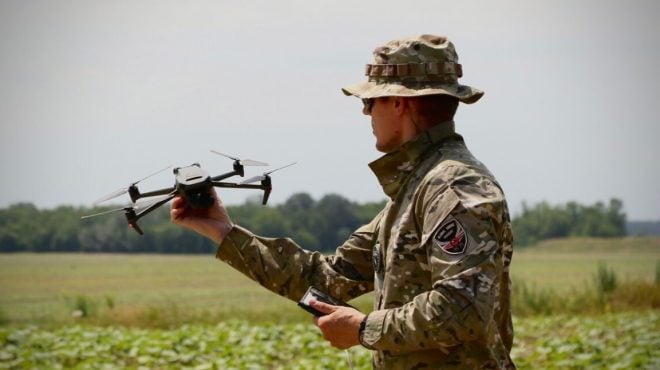
The presented system is based on artificial intelligence and is designed for unmanned aerial vehicles operating in complex environments. The emphasis is placed on three elements: resilient navigation in GPS-denied or electronic warfare conditions, target recognition, and system integration with various UAV platforms. The Ukrainian Ministry of Defense has not disclosed the name of the developer.
The organizers proceeded from the premise that a damaged airfield can be restored: runways are repaired, aircraft are dispersed, and fuel, munitions, and support services are relocated or reconstituted. Therefore, a single strike often produces only a temporary effect.
Participants were invited to develop solutions for autonomous or operator-guided engagement of key aviation infrastructure elements, capable of complicating and increasing the cost of restoring an adversary’s airfield operations.
First place was taken by Czech company LPP Holding with an autonomous long-range drone strike system designed to operate in GPS-denied and electronic warfare environments. Second place went to Polish firm Supercluster with the StratoAIM system, which uses stratospheric balloons to deliver autonomous glide vehicles over long distances without traditional launch infrastructure.
According to the organizers, following selection, the winning team may receive funding and advance to the next stage — development, experimentation, and testing within the broader ecosystem of Allied Command Transformation. The development will then receive support from JATEC and validation under near-combat conditions.
Persistent Airfield Denial is NATO’s 19th Innovation Challenge. The jury was chaired by Major General Christian Breyner Ishøj, Commander of JATEC. According to him, the lessons of the war against Ukraine show that innovation cannot wait until tomorrow — it must be drawn from real combat experience and rapidly translated into practical solutions.