In modern warfare, victory is determined not only by weaponry but also by understanding the situation on the battlefield. Situational awareness systems make it possible to see the disposition of forces, detect threats, and make decisions based on up-to-date data.
Intelligence data arrives from various sources and is combined into a single information picture. This enables commanders to act faster, reduce risks, and coordinate units more precisely.
Situational Awareness Systems in Modern Warfare
Situational awareness systems are not a single tool but an entire infrastructure that combines various information sources into a unified picture. They allow the situation to be assessed not in fragments but comprehensively.
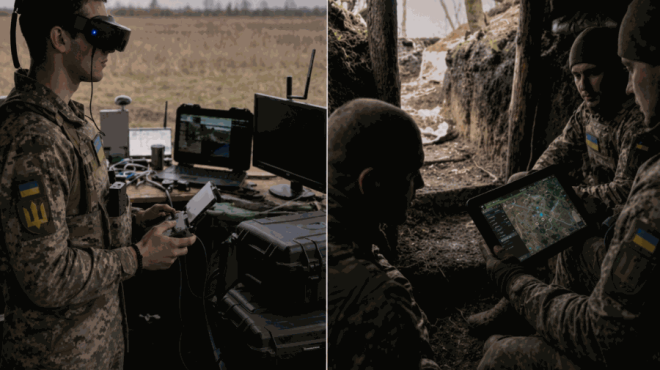
Such a system is typically represented as a digital map displaying friendly forces, recorded threats, and changes in the situation. Data is continuously updated, and the delay can range from a few seconds to a minute depending on the transmission channel. This makes it possible to reduce the time between detecting an event and making a decision, which is critical in the dynamic environment of combat.
Sources of Intelligence Data on the Battlefield
Intelligence data is formed from several types of sources, each of which provides only part of the information. The main ones include drones, ground observation posts, sensors, electronic intelligence assets, and satellite systems.
For example, a drone transmits video and coordinates, a sensor can detect movement, and electronic intelligence can detect transmitter activity in the airwaves. Only by combining this data is a more accurate picture obtained. When the same target is confirmed by multiple channels, the risk of error decreases and the reliability of the information increases.
Use of Drones for Intelligence Gathering
Drones have become one of the key tools for intelligence gathering. They allow information to be obtained quickly from areas where ground units cannot operate. In field conditions, a drone transmits video and coordinates in real time. This makes it possible to detect targets, assess the situation, and adjust actions without delays.
Depending on the platform type, the transmission range can be several kilometers, and the flight duration can range from 20 to 60 minutes. These characteristics make drones the primary source of operational intelligence data.
Processing and Analysis of Intelligence Data in Command Systems
Collected information has no value in itself if it is not processed. It is at this stage that a real picture of the battle is formed. Command systems gather data from various sources, filter it, correlate it, and display it in an understandable form. For example, a signal from a sensor can be confirmed by drone video, after which the target is marked on the map.
In practice, analysis involves not only recording objects but also assessing them as threats, prioritizing them, and passing this information further through the command system. It is precisely this process that allows a transition from individual signals to a holistic understanding of the situation.
Transmission of Intelligence Data Between Units
The transmission of intelligence data is critical for coordination between units. Data must arrive quickly and without significant delays; otherwise it loses its relevance.
Information is transmitted via radio channels, mobile networks, or relay stations. The delay can vary from a few seconds to tens of seconds depending on conditions.
Limitations and Challenges of Situational Awareness Systems
No system works perfectly in all conditions. Even modern solutions have limitations that must be taken into account. Transmission delays can reduce the relevance of information. Intelligence sources do not always provide a complete or accurate picture, and errors can affect decisions.
Electronic warfare plays a separate role, as it can disrupt communications and complicate data collection. Under such conditions, the system must adapt to changes and operate with incomplete information.
Conclusions
Situational awareness systems make it possible to combine intelligence data from various sources and form a coherent picture of the battle. This enables a rapid response to threats and well-informed decision-making.
The effectiveness of such systems depends on the quality of the data, the speed of its transmission, and the ability to operate under interference conditions.