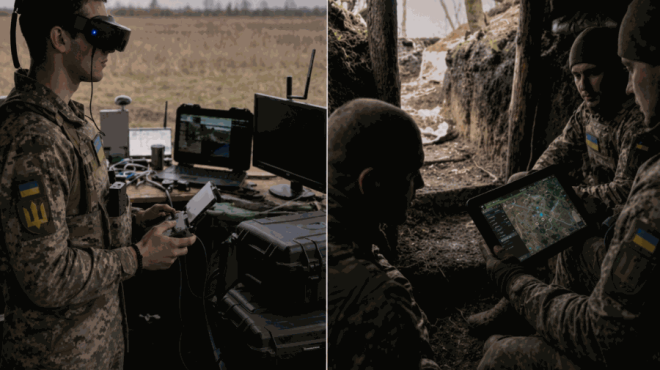
Unmanned aerial vehicles have become one of the key factors of modern warfare. They are used for reconnaissance, fire correction, strikes, and the guidance of other engagement assets. In such conditions, the timely detection of an aerial threat is often more important than attempts at direct counteraction.
The Role of Drone Detectors in Modern Conditions of War
Drone detectors perform the function of early warning about an aerial threat. Their main task is to record the activity of an unmanned aerial vehicle even before it becomes visible or begins to carry out a combat task.
Unlike destruction assets or electronic warfare, detectors do not affect a drone physically. They give time — for sheltering, the change of position, the cessation of work, or bringing a unit to readiness. In modern warfare, it is precisely these seconds that often have decisive significance.
More about the principles of how such solutions work, the types of signals, and the basic approaches to detecting an aerial threat, read in the article: «What is a drone detector?», which helps to better understand the technical basis of this category of assets.
Application at the Front and for the Protection of Critical Objects
At the front, drone detectors are applied for the constant monitoring of the airspace near positions, equipment, and movement routes. They make it possible to record the appearance of a UAV at the stage of approach or preparation for an attack, when there is still a possibility to react.
In addition to combat units, such systems are used for the protection of warehouses, control points, energy facilities, and logistical hubs. For critical infrastructure, a drone detector is often a basic tool of early warning, especially in conditions of limited resources or the absence of full-fledged air defense.
What Threats Drone Detectors Can Detect
Modern drone detectors are able to record different types of threats: reconnaissance UAVs, FPV drones, repeater drones, and other craft that use radio channels for control or video transmission.
Depending on the type of device, it reacts to activity in certain frequency bands characteristic of drone control or the operation of the video channel. In practical terms, this means that the detector is triggered not when the drone is already located directly over the position but at the stage of active radio exchange between the craft and the operator.
That is precisely why detectors are especially effective against FPV drones, which constantly maintain communication for control and guidance. At the same time, it is important to understand that a detector records a signal, and not the craft itself. It reports the presence of a threat but does not give complete information about the type of drone, its equipment, or the exact trajectory of movement.
Limitations and Challenges in Combat Conditions
No drone detector is a universal solution. In combat conditions, their effectiveness depends on terrain, development, the saturation of the radio spectrum, and the enemy’s tactics.
Drones can work on atypical frequencies, use short communication sessions or autonomous modes, which complicates their detection. In addition, detectors are not able to distinguish a «friendly» signal from a «hostile» one without additional systems and internal procedures.
That is precisely why a drone detector should be considered a tool of situational awareness, and not a means of complete or guaranteed protection.
Typical Mistakes When Using Drone Detectors
One of the most common mistakes is the perception of a detector as a guarantee of safety. The presence of a device does not cancel the need for shelter, camouflage, and discipline.
Another typical mistake is the incorrect placement of a detector or its use without taking into account the features of the terrain. There is also a risk of ignoring signals or, on the contrary, a panicked reaction without an assessment of the situation.
The effectiveness of a detector directly depends on whether the personnel can correctly interpret signals and act according to a predefined algorithm.
The Place of Drone Detectors in a Comprehensive Security System
In a comprehensive security system, drone detectors occupy the place of the first line of informing. They complement engineering shelters, camouflage, electronic warfare assets, and organizational measures, but do not replace any of these elements.
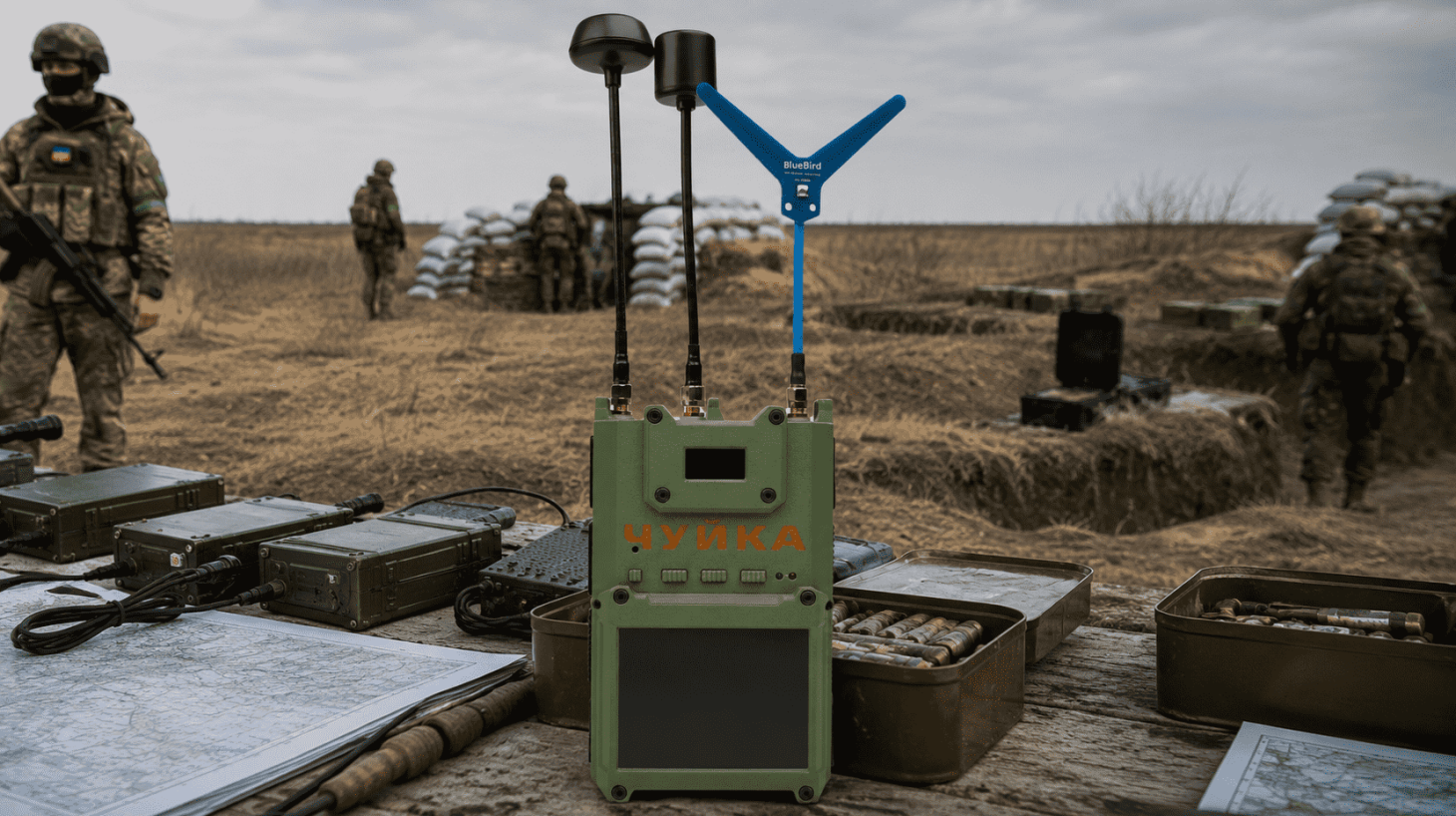
As an example of such an approach, one can mention the «Chuika 3.0» from BlueBird — a Ukrainian portable detector that is used to record the activity of FPV drones by radio-electronic signs. Such solutions are applied precisely as an element of an early warning system, and not as a standalone counteraction asset.
Their task is to report a threat in time and give a unit or personnel time for correct, considered actions.
Conclusions
Drone detectors have become an important element of modern warfare, but their capabilities have clear bounds. They do not destroy drones and do not guarantee complete safety, but they substantially increase the level of awareness and reduce the surprise factor.
The biggest mistake is to expect from a detector a result for which it was never intended. The highest effectiveness is achieved when drone detectors are used as part of a comprehensive security system — together with discipline, camouflage, engineering solutions, and other protection assets.