


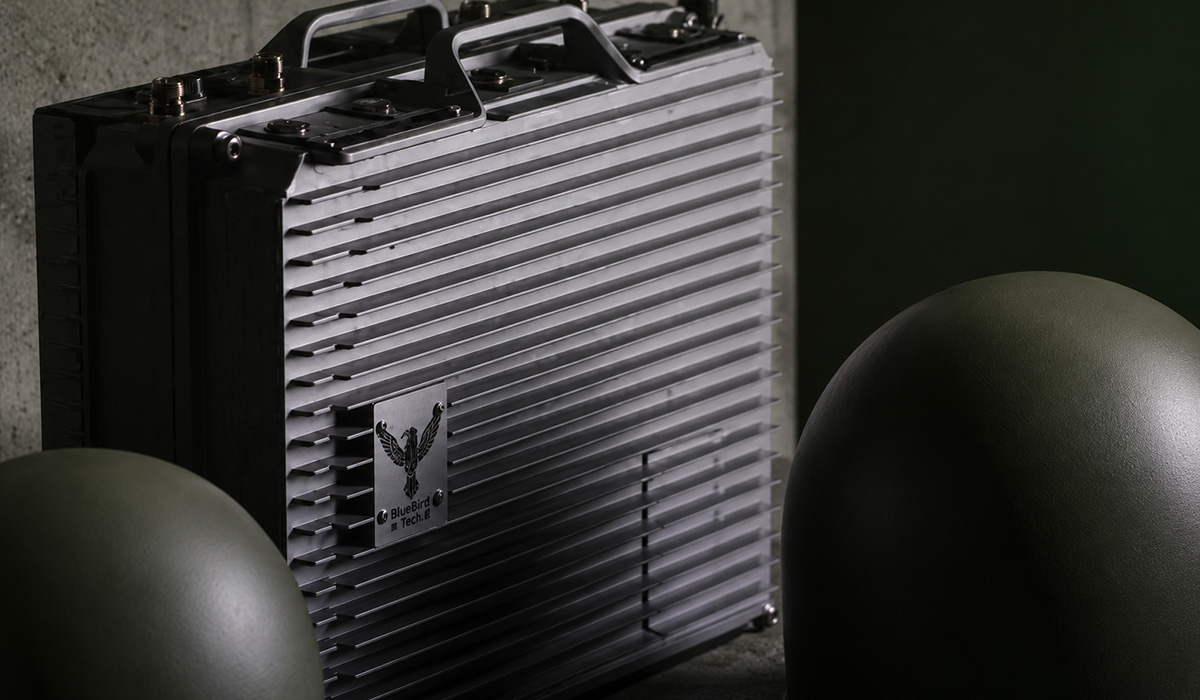
In modern warfare, electronic warfare has become one of the key tools for protecting units from unmanned systems. The mass use of FPV drones, reconnaissance UAVs, and other unmanned platforms forces units to use different types of EW systems for suppressing control channels and video signal transmission.
One of the most widespread solutions at the tactical level is portable electronic warfare systems. They make it possible to quickly create local protection from drones without complex equipment or stationary complexes. Such systems can be used at infantry positions, in mobile groups, or during the movement of a unit.
The Portable EW System in the Structure of a Unit’s EW Assets
In the structure of a unit, electronic warfare assets can be used at different levels. Large stationary complexes are intended for covering significant sections of the front or important infrastructure objects. Mobile systems are installed on vehicles or specialized platforms and move together with units.
A portable EW system performs a different role. Its main task is to provide local protection from drones at a specific position or in the operating zone of a small group. Such systems can be carried by one or several military personnel and quickly deployed in field conditions.
In combat conditions, portable EW systems are usually used together with other counter-drone assets, forming a multi-level protection system for a unit. To better understand how different types of EW complexes are combined with each other and what tasks they perform, it is worth getting acquainted with the article: «How to choose the right EW system?». It examines in more detail the classes of EW systems, their purpose, and their role in the structure of a unit.
The Portable EW System: Main Selection Parameters
When choosing a portable EW system, it is necessary to take into account several key characteristics. In practical systems, important parameters are the radiation power, the number of signal suppression channels, the stability of operation in various conditions, and the speed of deploying the complex.
Another important factor is the effectiveness of suppressing those frequency bands that are most often used by unmanned systems for transmitting video and control.
During the development of such systems, engineers must take into account the balance between the effectiveness of signal suppression, energy consumption, and the mobility of the complex. That is precisely why portable EW systems are often created taking into account the specific tasks of a unit, for example protecting a position or covering a mobile group.
Mobile EW Systems and Portable EW Systems in Combat Conditions
Mobile EW systems are usually installed on transport platforms or specialized complexes. They can have greater radiation power and cover a wider spectrum of frequencies.
Portable EW systems, on the contrary, are created for maximum mobility. They can be carried without the use of transport, quickly deployed at a position, or used during the movement of a unit.
One example of such a solution is the AntiSkid backpack — a mobile EW system. It is a portable electronic warfare complex made in the form factor of a backpack. The system is intended for suppressing the control channels and video signal transmission of drones at a tactical distance.
Such a complex can be used as a standalone protection asset for a small group, for example during movement or work at a position. In some cases, it is also applied together with other EW systems, complementing mobile or stationary complexes and creating an additional level of protection from drones.
Frequency Bands of the Portable EW System
The effectiveness of a portable EW system largely depends on the frequency bands that it is able to suppress. Most unmanned systems use standard radio-frequency channels for transmitting video and control.
In practical systems, engineers focus on those frequencies that are most often used by drones to transmit a signal. It is precisely the coverage of these bands that determines the effectiveness of the system in countering drones.
When choosing a complex, it is important to pay attention not only to the number of suppression channels but also to the stability of the system’s operation in various conditions. In combat conditions, the ability of the complex to quickly start working without complex settings is of importance.
Autonomy, Weight, and Mobility of the Portable EW System
For portable electronic warfare systems, important parameters are the autonomy of operation, the mass of the equipment, and the convenience of transportation. In combat conditions, the operator can carry the system together with other gear, so the weight of the complex is of importance.
In practical systems, a portable EW system is often made in the form of a backpack or a compact unit with battery power. Such a design makes it possible to quickly move the system between positions or use it during patrolling.
The autonomy of operation depends on the power of the system and the capacity of the batteries. During the development of such complexes, engineers try to find a balance between the effectiveness of signal suppression and the duration of autonomous operation.
Typical Mistakes When Choosing a Portable EW System
When choosing a portable EW system, units sometimes focus only on one parameter, for example radiation power. In reality, the effectiveness of a complex depends on a combination of characteristics, including frequency coverage, stability of operation, and mobility.
Another common mistake is underestimating the conditions of real use. A system can demonstrate good characteristics in laboratory conditions but work less effectively in a difficult electromagnetic environment.
It is also important to take into account the tactical role of the system in the structure of a unit. A portable EW system must be not only technically effective but also convenient for use in real combat conditions.
Conclusions
Portable electronic warfare systems play an important role in protecting units from unmanned systems. They make it possible to quickly create local protection from drones without using complex stationary complexes.
When choosing a portable EW system, it is important to take into account not only the power of the system but also the frequency bands, the autonomy of operation, the mass of the equipment, and the convenience of use in combat conditions.


