In modern warfare, a significant part of attacks is carried out from the air. Drones, cruise missiles, guided munitions, and other aerial assets can appear over unit positions or over important objects within minutes. That is precisely why it is critically important for the military to have a system that makes it possible to detect such threats as early as possible.
For this, systems for the automatic detection of air threats are used. They combine different surveillance technologies, among which are radar systems, air defense radars, sensors, and specialized counter-drone systems. All these elements form a single surveillance system that makes it possible to monitor the airspace and promptly react to the appearance of a potential threat.
A Surveillance System for Early Warning
A surveillance system is the basis of early warning about air threats. Its main task lies in the constant monitoring of the airspace and the timely detection of objects that may pose a danger to units or infrastructure.
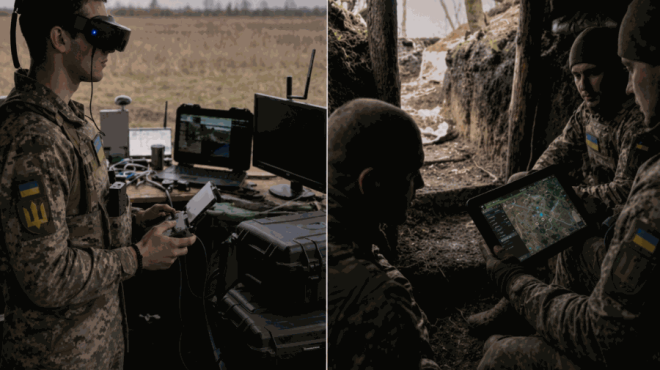
In such a system, various surveillance assets can be used, in particular radar systems, optical sensors, thermal imaging cameras, and radio-monitoring systems. Data from these sources is transmitted to control centers or directly to units on the ground.
Thanks to such an approach, the military gains the ability to quickly react to the appearance of aerial targets. For example, a surveillance system can record the appearance of a drone or another aerial object and transmit a warning even before it reaches the positions.
More about the principles of organizing such systems can be read in the article: «Detecting threats on the battlefield: reconnaissance, surveillance, and early warning», which examines how different surveillance technologies are combined into a single situational monitoring system.
Radar Detection in Identifying Aerial Targets
One of the key technologies in surveillance systems is radar detection. It makes it possible to detect aerial objects using radio waves, regardless of the time of day or weather conditions.
The operating principle of radar detection lies in emitting a radio signal and analyzing the signal reflected from an object. If an aircraft or another object appears in the airspace, the radar records the change in the signal and determines the approximate distance, direction, and speed of the target’s movement.
Radar systems can be used to monitor airspace at different levels. They are applied in air defense systems, in complexes for monitoring the air situation, and in specialized drone-detection systems.
Thanks to radar detection, units gain the ability to detect aerial targets while they are still approaching and to prepare for a response.
Air Defense Radars and Radar Systems in Modern Warfare
Air defense radars are one of the main elements of the air defense system. Their main task lies in monitoring the airspace and transmitting information about detected targets to control systems.
Modern radar systems can simultaneously track several objects, determine their coordinates, and transmit information to command posts. This makes it possible to create a single picture of the air situation.
Such radars are used to detect aircraft, cruise missiles, drones, and other aerial objects. In modern warfare, radar systems often work in combination with other surveillance assets, which makes it possible to increase the accuracy of detecting targets.
The combination of air defense radars, sensor systems, and other monitoring assets creates a multi-level surveillance system that makes it possible to detect threats at different stages of their approach.
Counter-Drone Systems in the Structure of Air Threat Detection
In modern combat conditions, a significant part of air threats is posed by drones. They can be used for reconnaissance, fire correction, or attacks on unit positions.
To counter such threats, specialized counter-drone systems are applied. They can use different detection methods, in particular the analysis of the radio signals controlling drones or the recording of the characteristic parameters of drone operation.
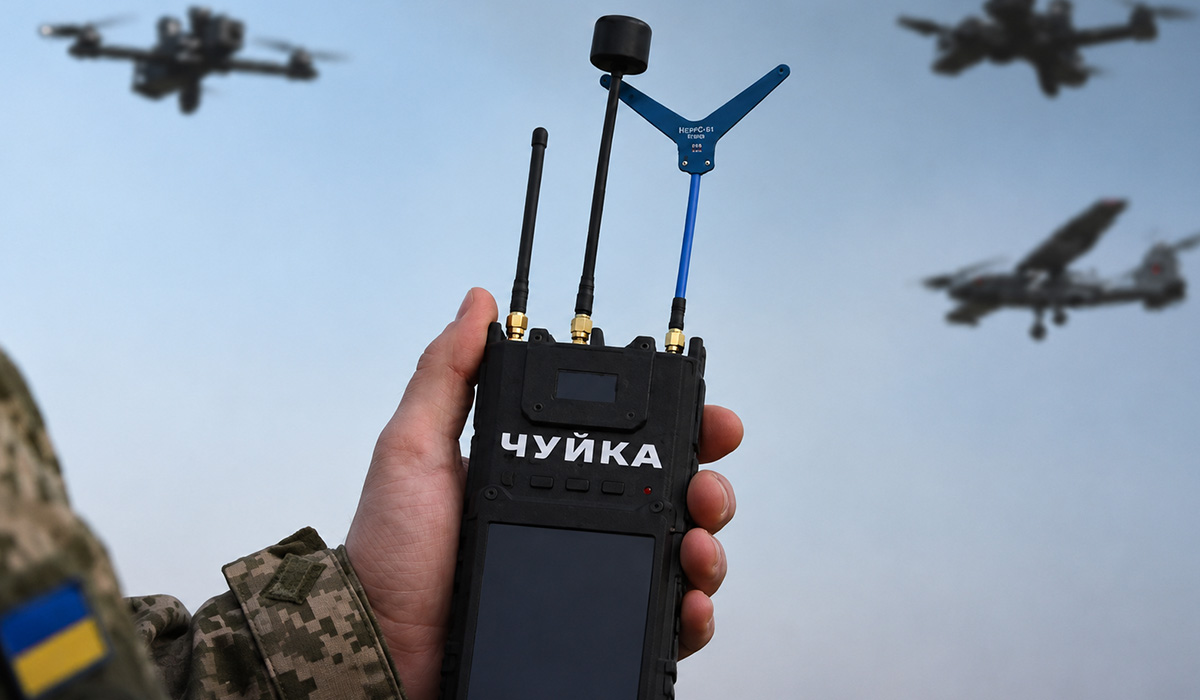
One example of such equipment is the «Chuika 3.0» from BlueBird Tech, which is used as a drone detector. Such devices are not standalone air defense systems but act as elements of a broader surveillance system.
The detector can record the signal controlling a drone or other signs of its operation in the radio spectrum. After such a signal is detected, the system can transmit a warning to units or to operators of surveillance systems, which makes it possible to react faster to the appearance of drones in the airspace.
Integrating Radar Systems Into the Air Defense System
In modern conditions, individual radar systems rarely work in isolation. Usually they are integrated into a general air defense system that combines radars, sensor systems, control systems, and destruction assets.
Such integration makes it possible to transmit data about aerial targets between different elements of the system. Information from radars or other sensors can be used to form a general picture of the air situation and make decisions about a response.
The integration of different radar systems into a single network increases the effectiveness of surveillance and makes it possible to detect threats faster in different sections of the airspace.
Limitations of Automatic Detection Systems
Despite the high effectiveness of modern surveillance systems, they have certain limitations. The operation of radar systems can be affected by the features of the terrain, weather conditions, or electronic interference.
In addition, some small aerial objects, in particular compact drones, can be difficult to detect with traditional radars. That is precisely why modern surveillance systems often use a combination of different technologies, including radar systems, sensors, and specialized counter-drone devices.
The combination of several technologies makes it possible to increase the accuracy of detecting threats and ensures more stable operation of the surveillance system in difficult conditions.
Conclusions
Systems for the automatic detection of air threats are an important element of a modern defense system. They make it possible to monitor the airspace, detect aerial targets in a timely manner, and warn units about a possible attack.
Radar systems, air defense radars, counter-drone complexes, and other sensor technologies form a multi-level surveillance system that ensures early warning about the appearance of threats in the air.