In modern warfare, information about the situation on the battlefield is of critical importance. Unit commanders must quickly receive data about the movement of the enemy, the appearance of equipment, the operation of drones, or changes in the situation at positions.
For this, different types of sensor systems are used. They make it possible to record movement, heat, radio signals, or other physical parameters that can indicate enemy activity. Such systems help detect threats, transmit information to control systems, and increase the situational awareness of units.
Types of Sensor Systems for Surveillance at the Front
Sensor systems are the basis of modern surveillance systems. They are used to collect information about the situation on the battlefield and make it possible to detect threats at a significant distance.
In military conditions, different types of sensors are applied. These include optical surveillance systems, thermal imaging cameras, radar sensors, acoustic detection systems, and motion sensors. Each type of sensor is intended for recording certain signals or physical parameters.
The collected data can be transmitted to control centers or directly to units on the front line. Thanks to this, the military obtains a more complete picture of the situation and can react faster to changes in the circumstances.
Optical Sensors and Thermal Imaging Systems
One of the most widespread surveillance assets at the front are optical sensors and thermal imaging systems. They are used for visual observation of terrain, detecting enemy equipment, or monitoring the movement of people.
Optical cameras work in the visible spectrum and make it possible to obtain a detailed image of objects. Such systems are often used at observation posts, on drones, or on ground robotic platforms.
Thermal imaging systems work on a different principle. They record the thermal radiation of objects, thanks to which they can detect equipment or people even in darkness, fog, or difficult weather conditions.
More about modern surveillance technologies can be read in the article: «Modern surveillance assets at the front: from thermal imagers to UAVs», which examines the main types of equipment used to monitor the situation on the battlefield.
Radar Sensors for Detecting Targets
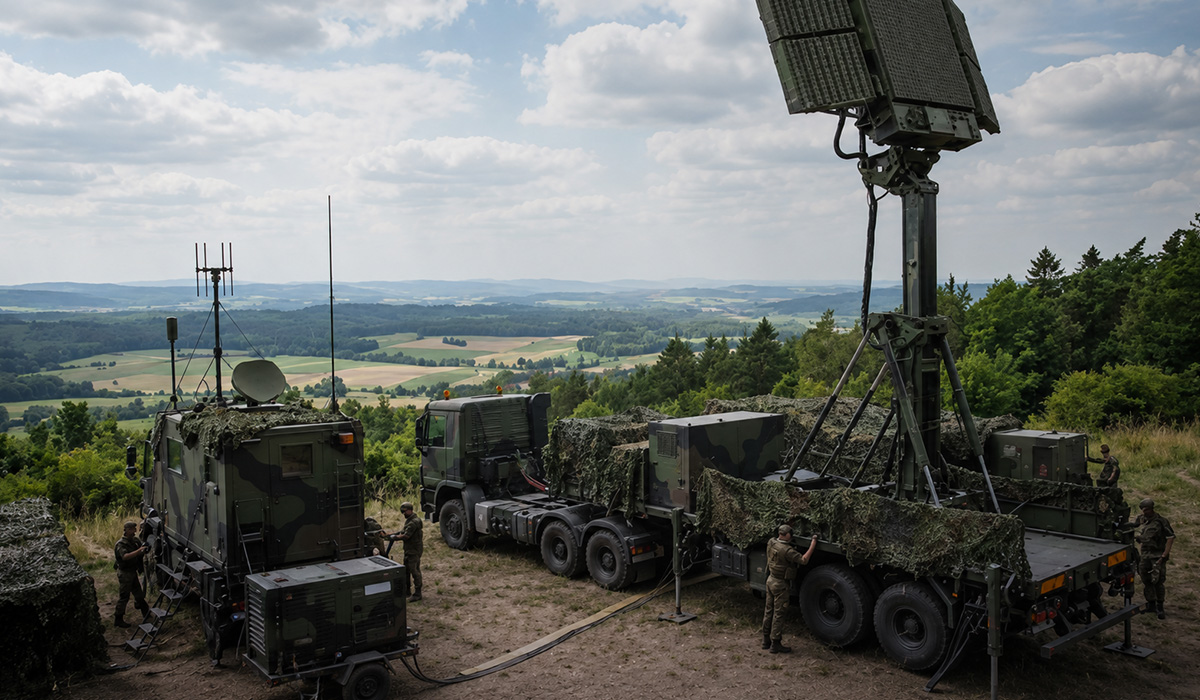
Radar sensors are used to detect objects with the help of radio waves. Such systems can determine the presence of a target, its distance, and direction of movement.
Radar sensors are applied to monitor airspace, observe the movement of equipment, or detect low-flying drones. Unlike optical systems, a radar can work regardless of lighting or weather conditions.
In modern surveillance systems, radar sensors are often used together with other types of sensors. The combination of different technologies makes it possible to obtain more accurate information about objects and reduces the likelihood of false detection.
Sensor Networks in Reconnaissance Systems
Modern surveillance systems increasingly work in the format of sensor networks. This means that different sensors are combined into a single system that transmits information to command centers or operators.
In such networks, data from cameras, thermal imagers, radars, or other sensors is analyzed together. This makes it possible to create a more accurate picture of the situation in the terrain and detect potential threats faster.
Sensor networks can be used to monitor sections of the front, observe important objects, or monitor airspace. Thanks to combining different data sources, the military gains the ability to promptly react to changes in the situation.
Using Sensors in Unmanned Systems
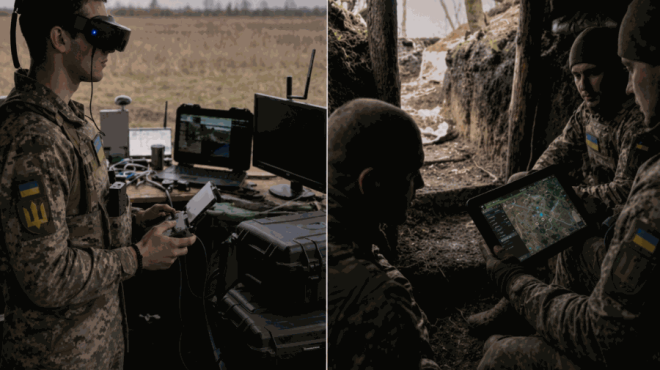
Unmanned systems are one of the main carriers of sensor technologies in modern warfare. Many drones are equipped with cameras, thermal imagers, motion sensors, or special signal-detection systems.
Such sensors allow drones to carry out reconnaissance tasks, monitor terrain, or detect enemy activity. Information from the sensors is transmitted to the operator or to the command center in real time.
Some systems use specialized sensors to detect the operation of drones. An example of such equipment is the Chuika 3.0 from BlueBird Tech, which is used as a drone detector. Such a device is not a standalone reconnaissance system but acts as an element of a larger surveillance system.
The detector records the characteristic radio signals or other signs of a drone’s operation and helps promptly detect the appearance of drones in the surveillance zone. The obtained information can be used to warn units or be integrated into comprehensive airspace monitoring systems.
Limitations of Sensor Systems in Combat Conditions
Despite the significant capabilities of sensor technologies, their use in combat conditions has certain limitations. The operation of sensors can be affected by weather conditions, difficult terrain, or electronic interference.
For example, optical systems can lose effectiveness in fog or heavy rain, and radar sensors can be subjected to interference from other radio systems. In addition, in combat conditions equipment can be limited by energy resources or data transmission capabilities.
That is precisely why modern surveillance systems usually use a combination of different sensors. The combination of several technologies makes it possible to compensate for the weak sides of individual systems and ensures more stable operation in difficult conditions.
Conclusions
Sensor systems play an important role in modern warfare, providing units with information about the situation on the battlefield. Optical cameras, thermal imaging systems, radar sensors, and other technologies make it possible to detect threats, monitor terrain, and increase the situational awareness of the military.
Combining such sensors into networked surveillance systems makes it possible to create a more accurate picture of the situation and react faster to changes in the circumstances.