The share of jet-powered Shaheds in Russian strikes has risen sharply, and mobile fire groups in northern Ukraine are operating in increasingly dangerous conditions.
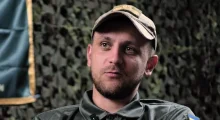
This was reported on the air of “Yedyni Novyny” by Oleksandr Bondar, an analyst of the intelligence processing group of the 638th Separate Anti-Aircraft Machine Gun Battalion.
“The Russians primarily use ‘Geran-4’ and ‘Geran-5.’ Three months ago, jet drones did not exceed 30% of the total number; now their share is over 70%,” the expert said.
The overall trend is confirmed by intelligence. The Main Intelligence Directorate of the Ministry of Defense reported that Russia has focused on producing “Geran-4” and “Geran-5” and has ceased production of “Geran-3.” Approximately three thousand such drones are manufactured monthly, primarily at the SEZ “Alabuga” in Tatarstan. According to Ukrainian intelligence, as of August 2026, Russia has stockpiled approximately 6,200 drones of the “Geran” type.
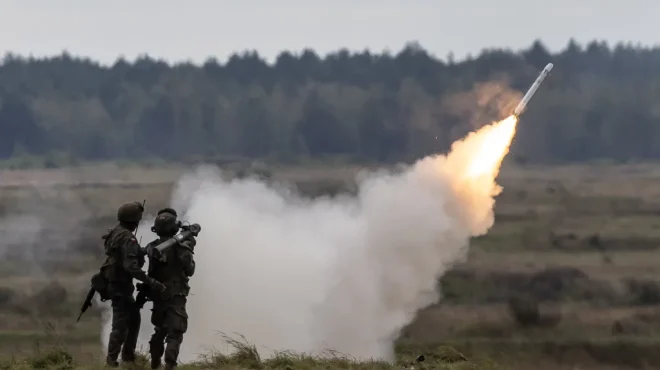
Tactics have also changed. According to ISW’s assessment, instead of 600–1,000 drones per attack, the enemy now launches 150–300, compensating with speed. The institute’s analysts predict that Russia will rely on jet-powered Gerans until the offense-defense race “resets.” The Financial Times reported that air defense shoots down only about 60% of the new jet drones, and mobile fire groups are effectively losing the ability to engage them efficiently.
Bondar also spoke about decoys. With the emergence of jet-powered Gerans, the Russians have reduced their numbers; however, during massive attacks, they still try to add as many decoys as possible.
“At first, when the drones are just entering the airspace, they are almost indistinguishable, and only later do noticeable differences become apparent across a number of parameters. Ukrainian forces shoot down both combat drones and decoys, because any one of them can pose a threat,” the analyst emphasized.
He also spoke separately about the risks for mobile fire groups. According to him, one of the enemy’s main objectives is to disable defense forces and assets in order to freely use the airspace.
“Service in mobile groups was never easy before, but now it has become genuinely dangerous for the fighters themselves,” Oleksandr concluded.