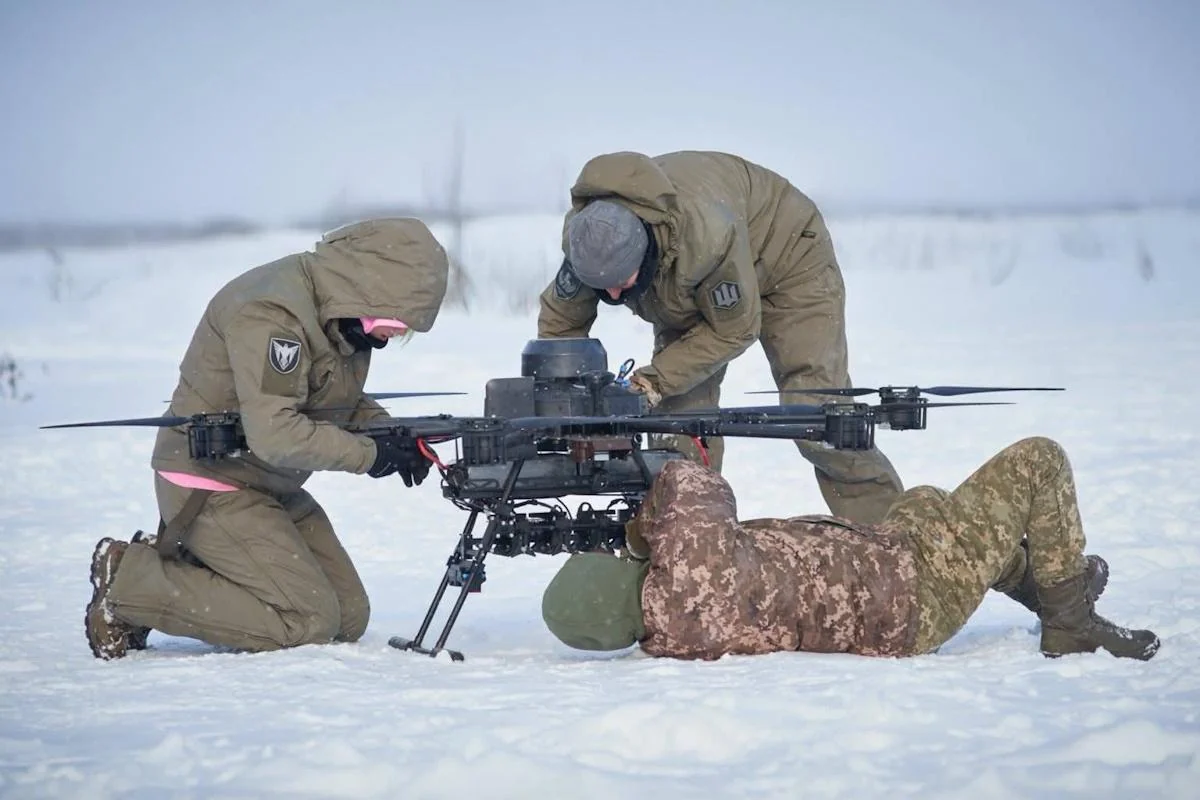
In winter, drones most often go down not because of enemy electronic warfare but due to physical phenomena: voltage sag, condensation on circuit boards, and ice on propeller blades. Major Maksym Taran of the Rubizh Brigade warns that below −20 °C any equipment can behave unpredictably, with FPV drones being more temperamental than bomb-droppers. DefPulse has put together a practical guide to winter drone operations: what breaks, why, and how to avoid it.
Batteries: Warm First, Fly Second
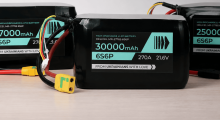
At zero degrees Celsius the electrolyte in a LiPo thickens, internal resistance rises, and under load the voltage sags below ~3.2 V per cell. The result is a brownout: the flight controller shuts off and the drone drops. There is another threat as well: charging in freezing temperatures causes lithium plating on the anode, permanently reducing capacity and, in the worst case, causing a short circuit.
What to do:
- Keep LiPo packs warm before takeoff. DJI recommends above 15 °C; other sources suggest 20–25 °C.
- After takeoff, hover at 2–3 m for 30–60 seconds: motor current will warm the cells from the inside. DJI recommends about one minute.
- Transport batteries in a heated thermal bag, such as the SkyRC ThermoGuard. Do not place a chemical hand warmer directly against the battery casing — only through a layer of fabric.
- For longer flights, choose 21700 Li-ion cells. They offer 250–260 Wh/kg versus 150–210 for LiPo and sag less. However, reconfigure the low-voltage warning in Betaflight accordingly: for 6S the safe threshold under load is around 15 V.
- Semi-solid batteries, according to manufacturers, retain over 80% of their capacity at −20 °C without heating. However, these figures come from vendors, so verify them under your own flight conditions.
Heating Can Give Away Your Position
A battery at +25 °C in a −10 °C environment creates a 35-degree thermal contrast. To a thermal imager, a bag of cells, a charging station, or the operator themselves become a beacon. Insulation does not solve the problem: wires, connectors, and zippers on bags act as “thermal bridges.” This argument was put forward by Wiltson, a company that sells low-temperature batteries, so it may be partly promotional in nature. But the physics is clear: heat exposes you. Therefore:
- Heat batteries only under cover, never at an open charging station in the field.
- Multi-spectral camouflage ponchos are available for personnel and equipment — for example, those made by Ukrainian company STG Defence, which feature low infrared emission.
- A fuel-powered generator produces an additional thermal and acoustic signature. Quiet battery-powered stations (such as Temerland) are a safer solution.
Condensation: the Board Killer
A frozen drone brought into a warm bunker becomes coated in dew. Example: air at +20 °C with 50% humidity has a dew point of around +9 °C, while boards and heatsinks are still at −5 °C. Moisture then settles on the electronics, mixes with flux residue, and causes a short circuit when power is applied. The following tips can help counter this:
- Seal a cold drone in an airtight zip-lock bag with silica gel and let it warm up inside — at least 2–3 hours.
- Swap batteries outdoors.
- Coat boards with silicone conformal coating (MG Chemicals 422B/C), not acrylic: acrylic hardens in the cold and cracks under vibration, letting moisture in through the cracks. Silicone retains its rubber-like flexibility down to −40 °C. Tape over the barometer, USB port, and Boot button; apply two thin coats rather than one thick one.
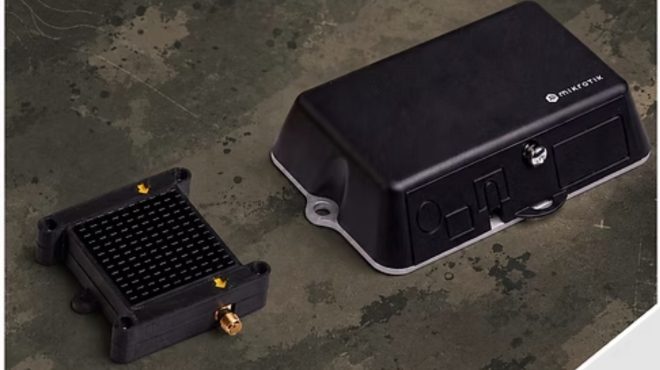
- A video transmitter (VTX) running at 1000–1600 mW with no airflow heats up to 80 °C within two minutes. Fill the space under the heatsink with thermal putty so there is no air gap — and no condensation.
- Keep the VTX in PitMode (up to 25 mW) before launch, then switch to full power 15–20 seconds before takeoff — the heat will evaporate any moisture. Take off within 40–60 seconds, or the VTX will overheat without airflow.
Ice on Blades and Frozen Bearings
In clouds at sub-zero temperatures the icing risk is high. A warning sign is when the difference between air temperature and dew point drops to 2–3 °C. Experiments show that just 0.5–1 mm of ice reduces lift by 35% and increases drag by 160%. More critically, ice sheds unevenly: one blade loses mass, vibration overwhelms the gyroscope, and the drone rolls or loses control. A review of scientific papers on UAV icing helped explain this mechanism and identify countermeasures:
- If you feel sudden vibration, do not delay — bring the drone in for landing immediately.
- Replace budget polycarbonate propellers: they become brittle in the cold. The best compromise is nylon reinforced with fiberglass.
- A hydrophobic coating on the blades reduces ice adhesion from a typical 200–1000 kPa to less than 25 kPa, but requires regular reapplication.
- Factory bearing grease thickens in the cold, causing voltage sag on startup. Flush it out with isopropyl alcohol and apply 1–2 drops of synthetic oil rated to −40 °C. Do not use WD-40: it dissolves grease and evaporates.
Radio and Sensors: Snow Fools the Antenna and Camera
At 5.8 GHz, snow and fog absorb signal, so ranges that were safe in summer are shorter in winter. Multipath propagation is an even more insidious problem. Packed snow reflects the signal; the reflected wave cancels the direct one, so at 100 m altitude the link is perfect, while at 10–15 m above a field the video cuts to a “black screen.” Always plan for more range margin than you would in summer. PVC-insulated pigtails crack in the cold, so use coax with PTFE insulation (RG316).
Drones with optical positioning (VPS) cannot detect texture over fresh snow and may drift or settle unexpectedly. DJI recommends not flying below 5 m over deep or reflective snow. Researchers have found that over snow it is better to disable VPS in the settings and fly on GNSS. Note, however, that this advice applies primarily to commercial platforms such as the Mavic series. A thermal imager will not help in fog or snowfall: poor visibility makes target recognition difficult.
Pre-Flight Checklist
- Battery is warm (15–25 °C); heating was done under cover
- Low-voltage threshold is set to match battery chemistry
- Drone was stored in a zip-lock bag with silica gel; boards are dry
- VTX: thermal putty applied, PitMode used, takeoff within 60 s
- Propellers are intact and not polycarbonate
- Motors spin freely; lubricant is rated for winter temperatures
- Range margin accounts for 5.8 GHz attenuation; no low passes over snow