


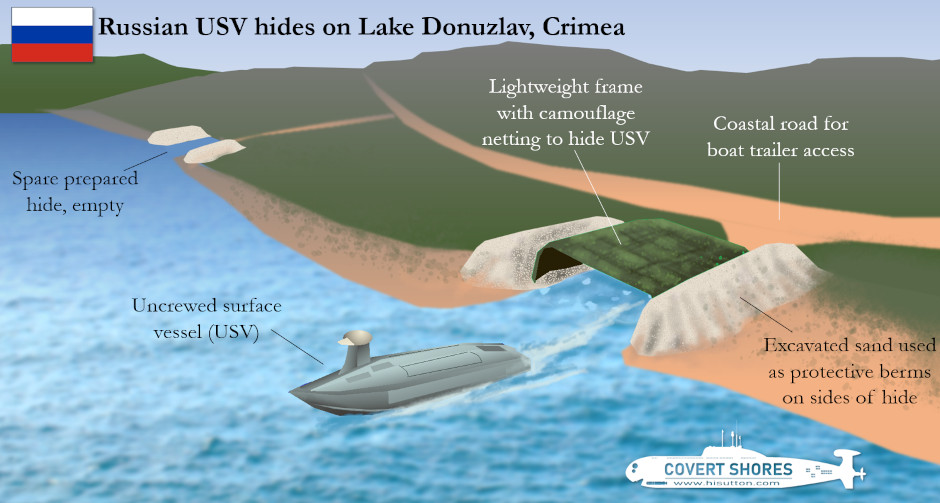
Open-source analyst H I Sutton (Covert Shores project) published satellite imagery on September 1 documenting the construction of a network of shelters for Russian unmanned surface vessels on the southern shore of Lake Donuzlav in Crimea.
According to the analyst’s assessment, the site contains at least 21 covered shelters — essentially boathouses excavated directly into the shoreline by mechanical diggers. The facility is divided into two sections: the first is located near the former Donuzlav airfield (approximately 45.3424°, 33.0532°), with construction having begun in February 2026.
The second cluster appeared somewhat later, between the airfield and the historic Novoozerne base. Both sections were largely completed by mid-March, though the number of shelters continued to grow over the following months.
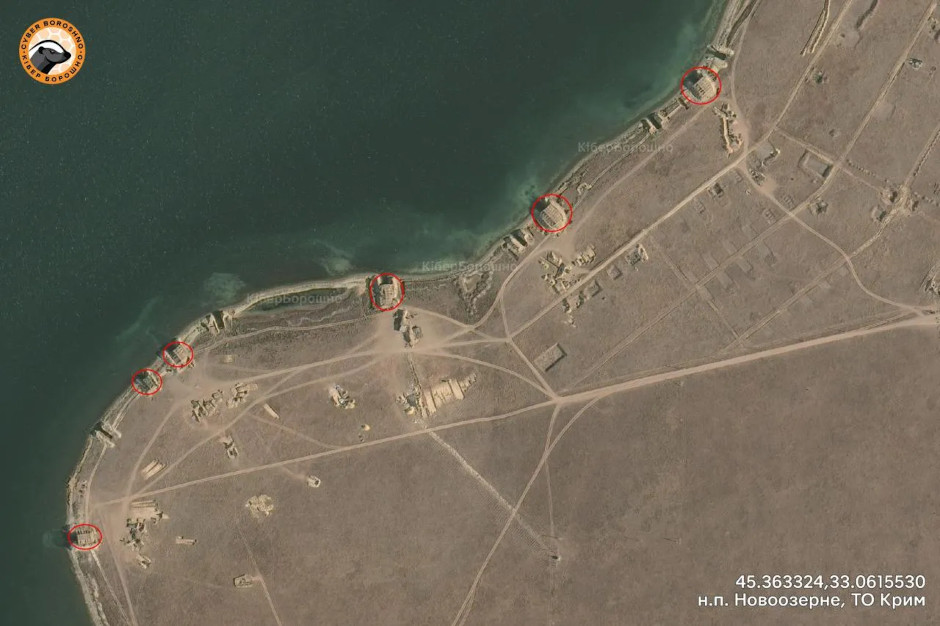
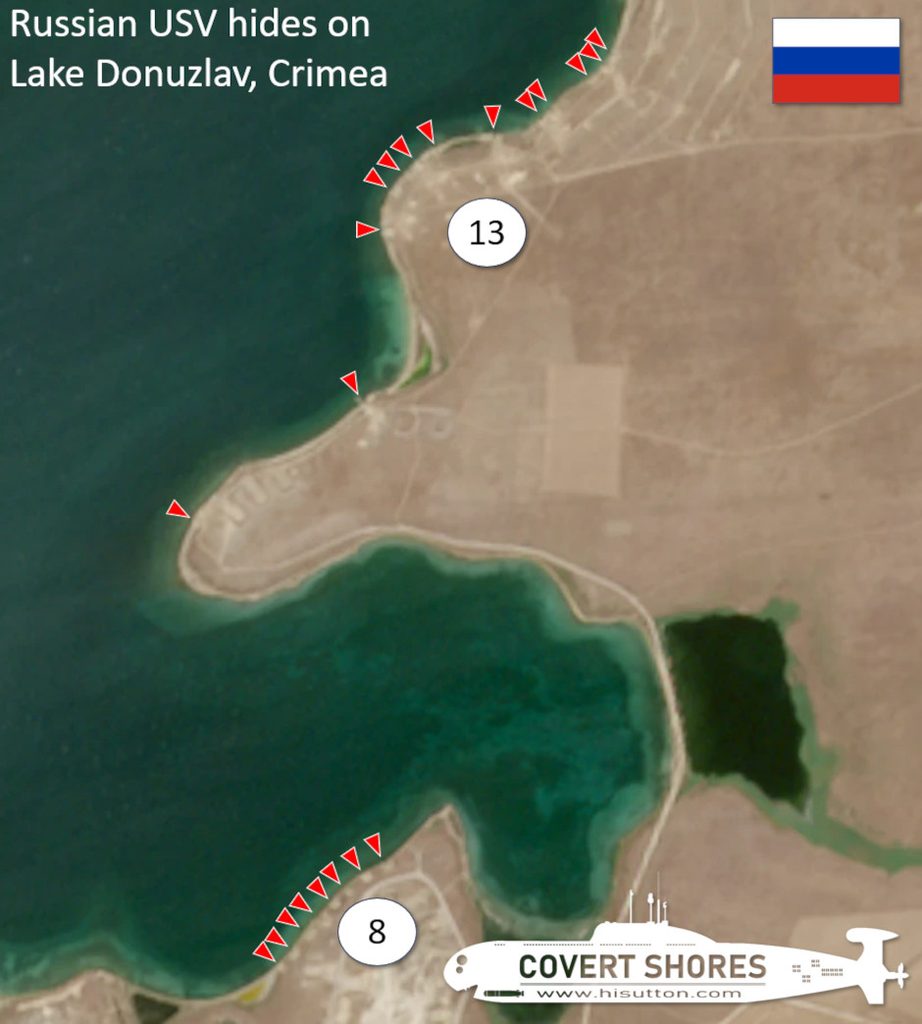
According to Sutton’s assessment, approximately half of the boathouses are covered at any given time — meaning they are effectively being used for storage or concealment of vessels. Some drones and associated equipment are likely kept in open revetments on and around the airfield grounds.
The analyst links the emergence of this infrastructure to an increase in Russia’s use of its own naval drones against the Odesa region.
According to H I Sutton, the appearance of the base at Donuzlav “coincides with an observed increase in Russia’s use of naval drones against the Odesa region.” Previously, such attacks were launched primarily from temporary positions such as those near Chornomorske. Analysts at CyberBoroshno note that active USV employment from this specific location has not yet been observed, but “the creation of such infrastructure indicates that the enemy is likely in a testing phase and is preparing a base for future deployment of this class of weapon.” If the facility becomes fully operational, the covered boathouses will make it harder to detect the vessels before they put to sea, while the proximity to the coastline will reduce transit time to Ukrainian port shipping lanes.