Kyiv has already installed 12 automatic turrets to counter reactive Shaheds, and eight more modules armed with 12.7 mm caliber machine guns are to be mounted in the Kyiv region. The publication of this news sparked debate: can machine-gun turrets protect the capital from drone attacks?
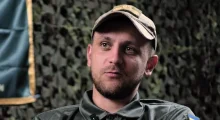
Expert Serhii “Flash” Beskrestnov answers the question:
“It is important to understand that a machine-gun-based turret is not city-level protection — it is object-level protection. For example, a warehouse, a production facility, a bridge, or a power substation. The protection range is determined primarily by the characteristics of the machine guns. A turret does not replace primary air defense assets. A turret is the last line of defense, when a drone has overcome everything else.”
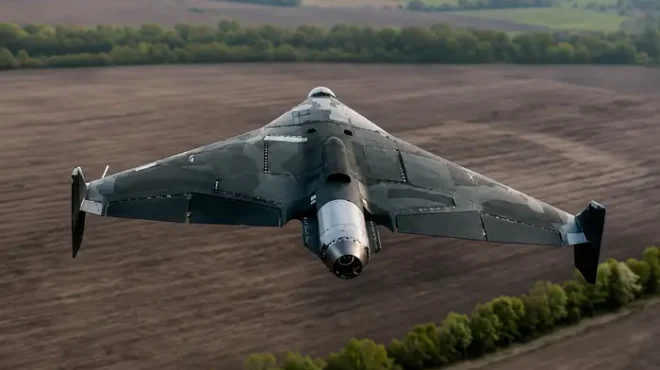
Betting on the “last line” makes sense right now. According to Volodymyr Zelenskyy, Russia launched 900 reactive Shaheds in just the past week. The defense forces shoot down 85–92% of conventional Shaheds, while the intercept rate for reactive ones stood at approximately 50–70% at the time of the interview. The head of state later announced that the figure had risen and crossed the 90% mark.
The propeller-driven “Geran-2” reaches approximately 185 km/h. The turbojet “Geran-3” can reach 600 km/h, and up to 800 km/h in a dive. 600 km/h is nearly 170 meters per second. So every kilometer of a machine gun’s range gives the operator only a few seconds to detect, aim, and engage. That is precisely why, in Serhii “Flash”‘s view, the speed of the automated system is critical, and the distance at which the machine gun fires is the effective “protection range.”
For this reason, as Volodymyr Zelenskyy emphasizes, cities need combined protection. Moreover, according to “Flash,” fully covering Kyiv with electronic warfare means has not proven possible. The focus is therefore placed on kinetic means. Turrets are precisely part of such a countermeasure effort.
At the front, similar systems have been tested in combat. On May 9, 2026, then-Defense Minister Mykhailo Fedorov published the first video of a Ukrainian AI-powered turret developed by a Brave1 participant: the system autonomously detects and tracks the target, while the operator only confirms the engagement. Brigade K-2 was the first to employ it, and by May more than 10 units were using the technology.