DefPulse spoke with the commander of the Pereiaslav Voluntary Territorial Defense Formation of Kyiv Oblast about new threats, countermeasures, and the needs of those defending the skies.
From Shahed to Jet-Powered Drone
Russian strike UAVs have, over recent years, become one of the primary tools of attacks and terror against Ukraine’s population. Their numbers, routes, and employment tactics are constantly changing, forcing Ukraine’s air defense system to adapt to new types of threats.
The first UAV-related challenge for air defense was the mass attacks by Iranian Shahed-136s and their Russian analogs, the Geran-2. However, the enemy has already begun modifying their design, navigation systems, warheads, and tactics. In 2026, yet another threat was added to the list — jet-powered drones.
Unlike most previous versions of strike UAVs:
- jet-powered aircraft have significantly higher speeds (compared to standard Gerans, which fly at 150–190 km/h, jet-powered ones reach 400–500 km/h)
- they can operate at greater altitudes (up to 10,000 meters)
- the conditions for intercepting them require different methods
Russia is increasingly employing jet-engine drones and expanding its infrastructure for their production. Certain modifications — such as the Geran-5 — can reach speeds of up to 600 km/h.
However, the speed of the aircraft alone is not the only challenge. For air defense teams, the critical challenge is the combination of speed, flight altitude, route, and the time remaining from the moment a target is detected to the moment it can be intercepted.
Why Speed Is Not the Main Problem
Oleh Voroshylovskyi, commander of the Pereiaslav Voluntary Territorial Defense Formation of Kyiv Oblast, believes that high speed in itself is not the main problem.
“A much bigger problem is flight altitude. If a drone is flying at low altitude and the shooter has the right skills, then even a target moving at around 500 km/h can in principle be shot down. But it is an extremely difficult task,” he explains.
If a jet-powered UAV is flying at three, five, or seven thousand meters, such a target becomes virtually unreachable for a mobile fire group equipped with machine guns.
“You have to look at the technical specifications of the weapons. When we talk about machine guns, their effective engagement range is about two thousand meters,” says Voroshylovskyi.

Oleh has led the Pereiaslav VTDF since its founding in 2022 and commands the Voluntary Formation of the Pereiaslav City Territorial Community, which is one of the most effective volunteer formations in Kyiv Oblast. Before the full-scale invasion, Oleh worked in education management and then in entrepreneurship; since the start of the full-scale invasion he has commanded a unit that defends the skies over Kyiv.
Combined Attack: Different Drones — Different Altitudes
During a single attack, air defense teams simultaneously engage targets that require fundamentally different interception approaches and different equipment.
“The enemy is not stupid. Right now they are combining the use of standard Gerans, which fly at very low altitudes to avoid radars,” notes Voroshylovskyi.
Such Gerans, according to Oleh, fly at altitudes of 100–200 meters and use terrain features for concealment. Unfortunately, the enemy knows the terrain very well. As a result, a standard Geran-2 can appear quite unexpectedly even deep in the rear — in Ivano-Frankivsk Oblast, for example — and no radar will be able to catch it, since it flies very low.
“Jet-powered drones can be used to divert attention from conventional UAVs. As a result, air defense units are forced to engage targets flying at very low and very high altitudes simultaneously. The Russians are essentially ‘probing’ our air defenses right now — looking for weak points and gaps in the system,” says the commander.
Weather remains an additional factor:
“They also use cloud cover and weather conditions to complicate the work of Ukrainian air defenses, launching Gerans of both types on cloudy days at certain altitudes.”
Why Can’t You Simply Use Missiles?
At first glance, it would seem logical to destroy a jet-powered drone with a weapon that itself has high speed. But here another problem arises — the cost of such an interception.
According to Voroshylovskyi, jet-powered UAVs have a larger thermal signature, which makes it easier for aircraft to detect them.
“Our aviators adapt very quickly to new types of targets. Jet-powered UAVs have a larger heat signature, so for aviation it is fairly easy to detect such a drone at any altitude,” he says. — “But then the question of cost arises: we do not have enough air-to-air missiles.”
Interceptors Must Become Faster
The emergence of faster Russian UAVs is already driving the development of new Ukrainian interception systems.
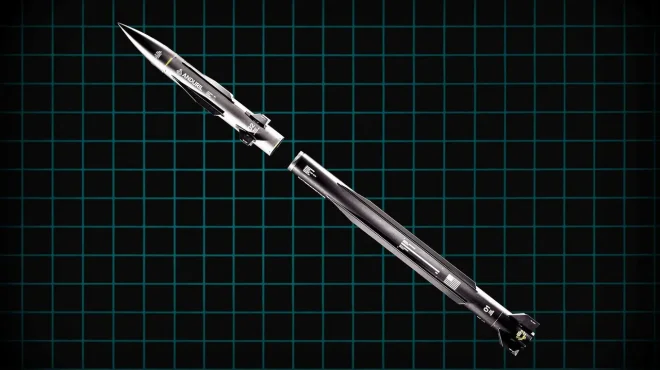
In March 2026, the Ministry of Defense announced the certification of the Ukrainian JEDI Shahed Hunter complex. Its interceptor drones can accelerate to over 350 km/h and are designed, among other things, to combat Shaheds, Gerans, and other UAVs.
In June 2026, the DANCER 4.5.0 drone was also unveiled; it has a speed of up to 450 km/h and can be used to intercept jet-powered UAVs.
In effect, a new technological arms race is beginning: the faster a strike drone becomes, the faster, cheaper, and more precise its interceptor must be.
MANPADS as an Additional Tool
Voroshylovskyi also names Western man-portable air-defense systems as another potential solution:
“Western MANPADS would help us greatly. They would give mobile groups more capability to engage targets appearing at various altitudes.”
The emergence of jet-powered UAVs therefore does not diminish the importance of mobile fire groups, but it does change the requirements placed on them. They need greater mobility, a broader range of engagement means, and the ability to react quickly to changes in enemy tactics.
Jet-powered drones are the next stage in the development of Russia’s long-range strike campaign. Their appearance does not mean that previous drone types will disappear. On the contrary, the greatest challenge for Ukrainian air defense may prove to be precisely their combination: fast jet-powered aircraft at high altitudes alongside conventional Gerans attempting to pass through at very low altitude.