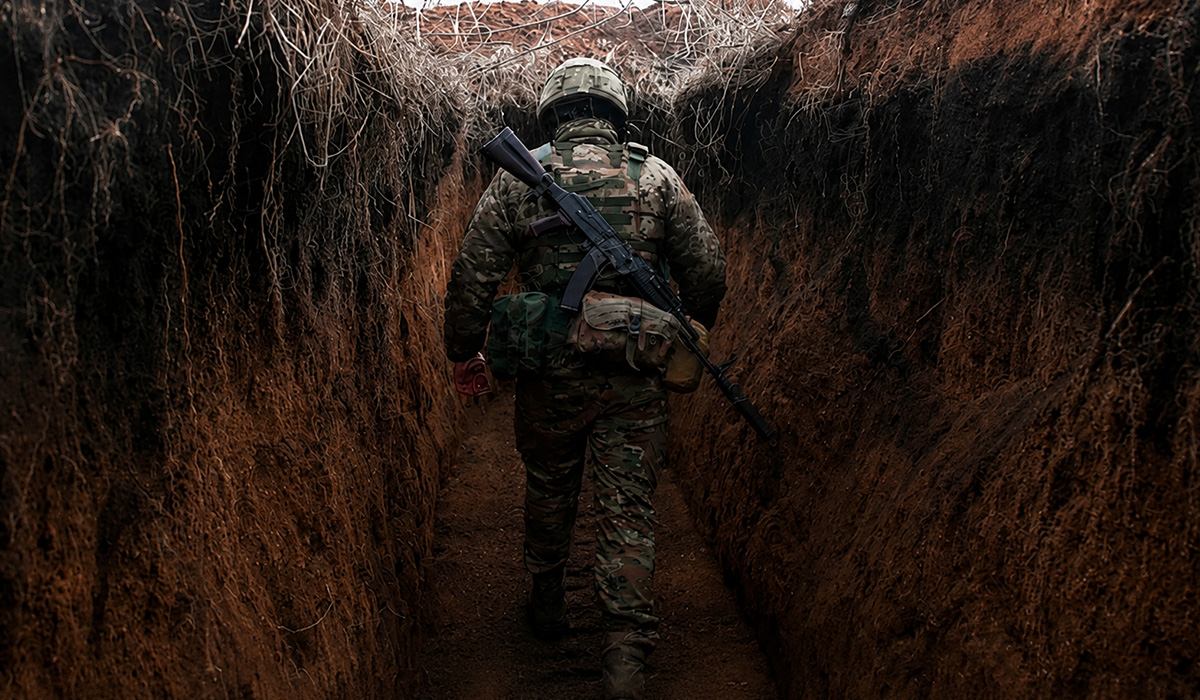
The construction of fortified positions has always been an important part of conducting combat operations. However, modern warfare has substantially changed the approach to creating defensive positions. The mass use of drones, precision artillery, and developed reconnaissance assets force the role of fortifications to be assessed differently.
Modern fortifications must not only protect personnel from shrapnel and blast waves but also reduce the visibility of positions to drones and aerial reconnaissance. That is precisely why fortification structures today combine classic engineering solutions with new approaches to camouflage and the distribution of positions.
Modern Fortifications Under the Influence of Drone Threats
The appearance of mass unmanned systems has substantially changed the approach to building defensive positions. If earlier fortifications were created primarily for protection from artillery fire or small arms, today it is important to take into account the threat of surveillance and attacks from the air.
Drones allow the enemy to quickly detect positions, correct artillery, and attack shelters directly. In such conditions, defensive structures must have minimal visibility from the air and ensure the dispersal of positions.
Modern fortifications are often built on the principle of small fortified points located at a distance from one another. Such an approach reduces the risk of the simultaneous engagement of a large number of personnel.
Fortification Structures Against FPV Drones and Artillery
One of the main threats to positions today is FPV drones, which are able to attack shelters with high accuracy. Because of this, fortification structures must provide protection not only from shrapnel but also from a direct hit by drones.
Usually, multi-layer shelter constructions are used for this. The top overhead covers are created from several layers of materials that are able to absorb or dissipate the energy of an explosion.
Artillery shelling also remains one of the main threats. Therefore, defensive structures are built in such a way that the blast wave and shrapnel have a minimal impact on the internal space of the shelter.
Field Shelters and Rapid Engineering Solutions
On the front line, there is often no possibility of building complex engineering constructions. That is precisely why field shelters must be created quickly and using available materials.
In many cases, the natural features of the terrain are used. Tree lines, folds of the terrain, or natural depressions can significantly improve the protection of positions.
Such shelters do not always provide the maximum level of protection, but they make it possible to quickly organize a defensive position. In combat conditions, the speed of creating a shelter is sometimes of no less importance than its complexity.
Camouflaging Defensive Structures From Aerial Reconnaissance
In addition to physical protection, modern fortifications must be as inconspicuous as possible to the enemy’s reconnaissance assets. Drones and satellite systems make it possible to detect positions even at a significant distance.
That is precisely why camouflaging defensive structures has become an important part of military engineering. For this, natural materials, camouflage nets, and special constructions are used, which reduce the contrast of positions against the terrain.
More about the approaches to creating fortified positions can be learned in the article: «Military engineering in modern warfare: how positions are built, fortified, and camouflaged», which examines the principles of building modern defensive systems.
Protecting Personnel in Shelters During Shelling
The main purpose of any fortification structure is to protect personnel. In modern conditions, shelters must ensure safety not only from shrapnel but also from the shockwave and secondary damaging factors.
During artillery shelling or a drone attack, it is important that the shelter has sufficient depth and overhead cover. This makes it possible to reduce the impact of the explosion and prevent the collapse of the construction.
The placement of entrances and internal passages is also an important factor. They must be designed in such a way that the blast wave does not penetrate directly into the internal space of the shelter.
Typical Mistakes in Building Fortification Structures
One of the most common mistakes is creating large fortified positions without sufficient camouflage. In modern conditions, such defensive structures are easily detected by aerial reconnaissance and become targets for artillery or drones.
Another problem is insufficient protection from new types of threats. For example, shelters that effectively protect from shrapnel can be vulnerable to FPV drones or point strikes.
In such conditions, electronic warfare assets can be an additional element of protecting positions. One example of such a solution is the “Hrets” 4M — a light trench EW asset for the front, which is used to create interference for drone control channels. This device is installed directly at positions and helps reduce the risk of FPV drone attacks.
The “Hrets” 4M is not a fortification structure but works as a technological supplement to defensive positions. Thanks to the creation of radio interference, it can complicate the control of the enemy’s drones near fortified positions.
Conclusions
Modern fortifications differ substantially from the fortifications of past wars. The mass use of drones, precision artillery, and developed reconnaissance systems force a change in the approach to building defensive positions.
Fortification structures must combine protection from shrapnel, camouflage from aerial reconnaissance, and adaptation to new threats. Field shelters, engineering solutions, and technological protection assets together form a modern system for the defense of positions.