Modern war has changed the approach to waging battle. If earlier the main factor was the quantity of equipment, then today the decisive factors are speed, autonomy, and technologicalness.
The Ukrainian Armed Forces have adapted to these realities, creating new types of combat formations – mobile groups, FPV teams, and the reformed corps system of the AFU.
This article will help the military, volunteers, and civilians to better understand the features of the work of these units and why precisely they have become the basis of the modern defense of Ukraine.
The Mobile Fire Group – the Flexible Force of a Modern Army
A mobile fire group is a compact combat unit capable of quickly moving, conducting fire, and promptly changing positions. Such groups have become the basis of the modern defense of Ukraine, especially in the fight against drones and missile attacks.
They act where stationary equipment is ineffective. Thanks to the speed of deployment, a mobile group can come out to a position, detect a target, destroy it, and leave the area before the enemy reacts.
The main tasks of mobile groups:
- the destruction of enemy drones and missiles;
- the cover of critical infrastructure;
- the support of units on the front line;
- quick reaction to breakthroughs or aerial threats.
Typical equipping of a mobile group:
- an off-road vehicle (a pickup or armored vehicle);
- a machine gun or grenade launcher on a turret;
- portable anti-aircraft complexes (Stinger, Igla);
- thermal imagers, night vision devices, radio stations;
- generators and floodlights for night operations.
Such groups often work in close interaction with reconnaissance and artillery. A mobile fire group is a universal instrument that combines the speed of reaction with high precision of destruction.
FPV Teams – Precise Strike and Reconnaissance
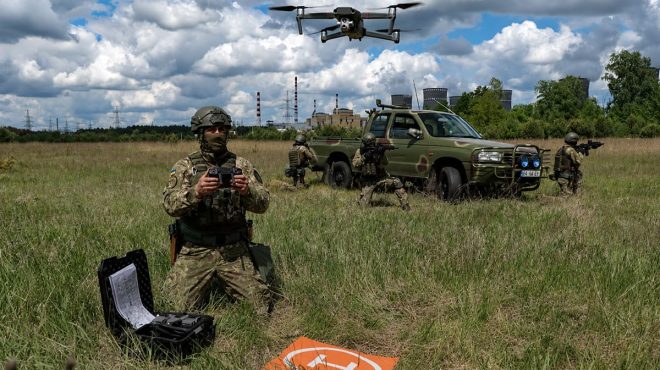
FPV teams are a new format of combat units that apply drones with manual control (First Person View). The operator controls the drone in real-time mode, using goggles or monitors, which ensures the maximum precision of destruction.
The main directions of the work of FPV teams:
- the destruction of armored vehicles, depots, positions of the enemy;
- the correction of artillery fire;
- reconnaissance in difficult sectors of the front;
- the fight against enemy drones.
FPV teams combine military preparation and technical knowledge. They not only control drones but also independently assemble and improve them for concrete tasks. Thanks to this, Ukrainian FPV pilots have become one of the most effective instruments on the battlefield.
The Corps System of the AFU – a New Structure of Management
The corps system of the AFU is one of the main reforms of the Ukrainian army. Its essence consists in the creation of autonomous, self-sufficient corps that combine various types of units: infantry, armored, artillery, mobile groups, and FPV teams.
The advantages of the corps system:
- quick making of decisions in real time;
- improved coordination between branches of the troops;
- autonomy and flexibility in the planning of operations;
- optimized logistics and management.
The corps system of the AFU makes it possible to integrate modern technologies into military management, ensuring a single network of communication and interaction between units. A transition from a traditional to a high-tech army, capable of effectively reacting to any challenges.
Conclusion
Mobile groups, FPV teams, and the corps system of the AFU are a symbol of the renewed Ukrainian army. They combine mobility, autonomy, and technologicalness, forming a modern model of the army, capable of acting effectively in conditions of a constant threat.
Ukraine is creating an army of a new generation, where the speed of making decisions and technological advantage become the key factors of success.