“There have been cases where EW jams its own units,” admits Oleksiy “Did” in an interview with LB Oleksiy “Did”, commander of the EW company of the 2nd Corps of the National Guard “Khartiya.” According to him, the reason is that units do not have enough time to coordinate who is operating where and on which frequency.
This is a systemic problem at the front. The radio spectrum in the combat zone is just as limited a resource as ammunition or fuel. How orderly it is managed determines UAV controllability, communications stability, and the effectiveness of EW assets.
What Frequency Planning Is and How It Has Evolved
Frequency planning is a pre-agreed allocation of operating frequencies among communications assets, UAVs, relay stations, and EW systems that minimizes mutual interference. Military personnel note that the logic of planning has grown significantly more complex in recent years.
In the combat zone the spectrum is constantly changing: units move, new technical assets appear, and enemy activity shifts. Frequency planning therefore requires regular updates and timely dissemination of changes to all operators.
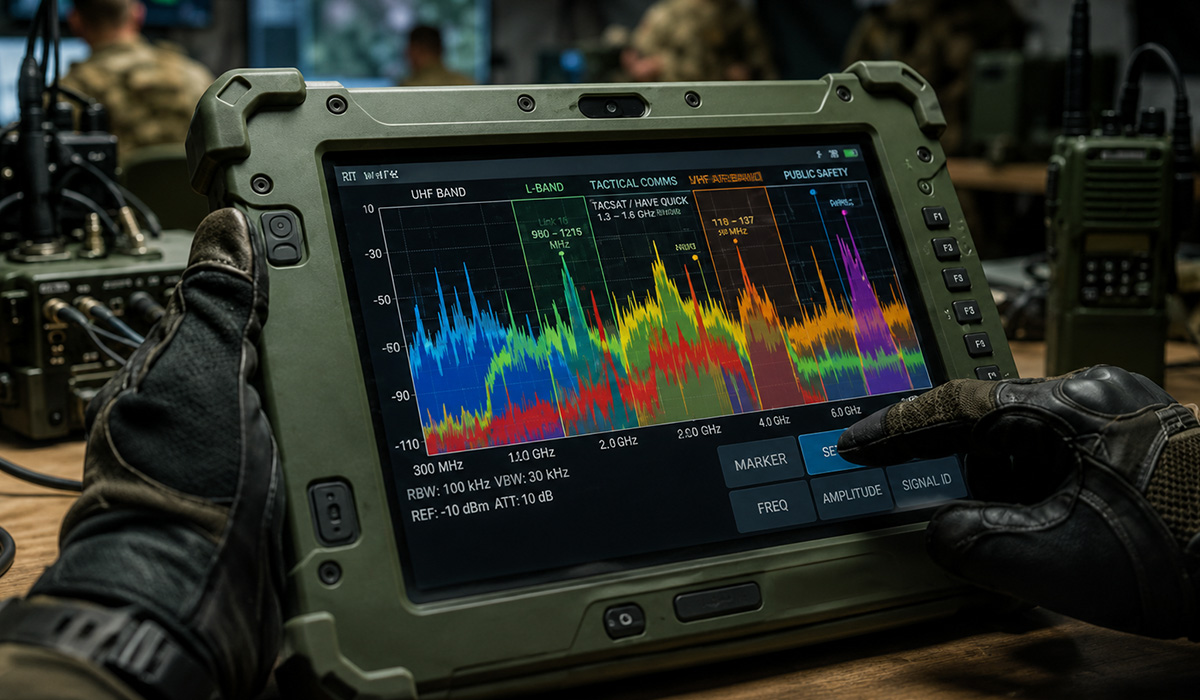
Yaroslav Filimonov, CEO of Quertus, describes this as a constant migration through the spectrum: both sides “look for gaps” in an occupied band. And whereas not long ago the bulk of activity was concentrated in the 300–6,000 MHz range, today both sides are increasingly moving higher — to 7–7.2 GHz and even 8 GHz.
Where “Friendly Conflicts” Come From
Conflicts arise when several friendly systems operate in adjacent bands without coordination. Most often this happens due to self-configured equipment, a unit changing positions, or EW being activated without accounting for neighboring communications channels and drone control links.
The problem could be resolved by a direct notification procedure between neighboring units — without waiting for full command-level approval.
There is also a flip side: UAV pilots who do not want to “reveal” their activity through situational-awareness systems. They cite secrecy, fearing data leaks about take-off and landing locations. In 2026, however, such cases have already become rare.
How the Front Is Trying to Solve the Problem
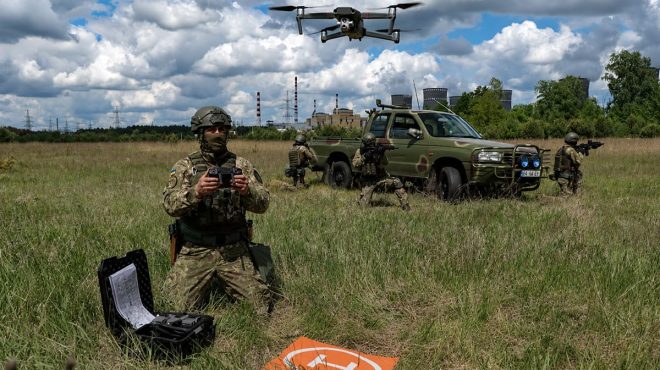
Instead of paper schedules, units are transitioning to digital situational-awareness systems. In the Khartiya corps, according to Oleksiy “Did,” the unit operates its own system that shows all users where EW assets are deployed, in which sectors they may operate, and on which frequencies they are currently working. Knowing this, a UAV pilot selects a frequency and flight route to avoid falling under the effect of friendly EW. If necessary, he additionally clarifies with operators what polarization a specific asset is using.
A defining trend of 2026 is the integration of detection, identification, and suppression into a single system: the decision to jam is made with full awareness of what is currently present in the spectrum. Such systems are already operating in individual units, but the approach has not yet become universal.
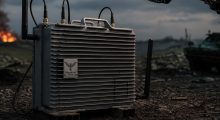
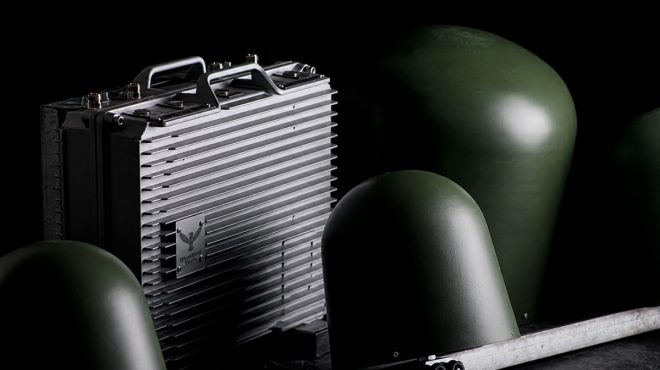
Manufacturers are also trying to address the problem at the equipment level itself. In spring 2026, BlueBird Tech upgraded the “Hrets XL” complex, expanding its operating frequency range and adding adaptive signal suppression. This is a response to FPV drones dynamically switching channels across a wider spectrum.
According to the company, the need for the upgrade was based precisely on feedback from units — the conflicts and spectrum gaps recorded by units at their positions.
Frequency Conflicts Arise Even When a Plan Exists
The complexity grows due to the physics of the spectrum itself. The effectiveness of one and the same EW asset at the same point can vary depending on the type of target, range, transmitter power of the drone operator, and whether the channel is analog or digital.
An additional factor is targets that are practically invisible in the spectrum: reconnaissance drones such as the Orlan, ZALA, or Orion only receive signals and emit almost nothing themselves. Countering them therefore requires first calculating the operator’s position 100–300 km from the front line.
A similar problem exists with the CRPA “Kometa” antenna on Shaheds: it is located on top of the drone’s fuselage, making it difficult to suppress from below. Countering it is therefore a separate, highly specialized technological field that only a handful of manufacturers in Ukraine address systematically.
Practical Guidelines for Units
- A sector must have a person or service that maintains an up-to-date map of occupied frequencies and communicates changes to neighbors — regardless of whether full command-level approval has been obtained.
- UAV operators check which frequencies and sectors EW assets are operating in. EW crews check which frequencies friendly aircraft are flying on in the sector. Where digital situational-awareness systems exist, they should be used despite concerns about data leaks.
- Clarifying polarization and modulation is what determines in practice whether a pilot will “see” interference from friendly EW.
- When repelling an assault or striking an important target, units consciously accept a compromise between EW protection and the needs of drone operators. But this decision must be made deliberately.
- Analyzing incidents where EW suppressed a friendly channel makes it possible to adjust the plan and avoid repeating the same mistakes in subsequent rotations.
Frequency planning transforms the radio spectrum from a chaotic environment into a managed resource — it reduces the number of conflicts, improves UAV stability, and makes EW more predictable.