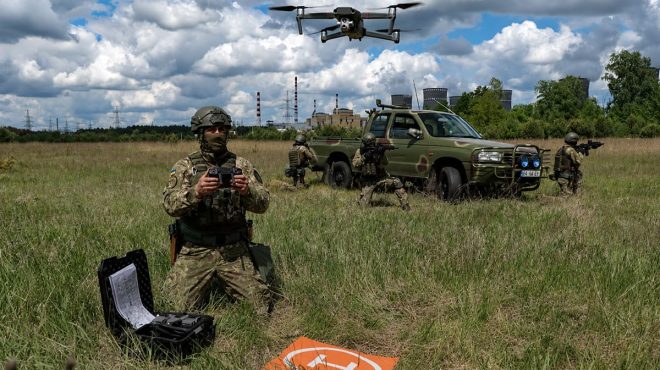
Since the beginning of 2026, the Defense Forces have struck over one million Russian targets with drones, with June being the most productive month — recording more than 200,000 strikes. Strike drones have become the primary engagement tool at the front. But as their role grows, so do the conditions of the confrontation.
Fiber Optics Break the EW Monopoly
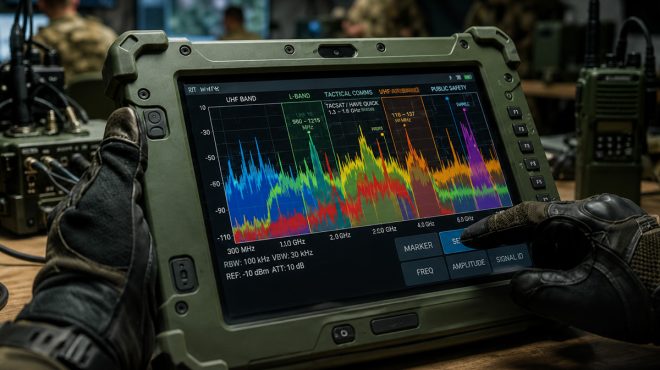
Until 2025, electronic warfare (EW) systems remained a relatively effective countermeasure against radio-controlled FPV drones. The situation changed when Russia established serial production of fiber-optic cable drones — aircraft whose control cannot be jammed and is difficult to track.
The Ukrainian side followed the same path. According to the Ministry of Defense, during 2025 under contracts with the DOT Defense Procurement Agency, the military received 374,000 fiber-optic drones, and by April 2026 — already over 92% of the entire previous year’s delivery volume. Fiber-optic systems ensure stable engagement even under difficult electronic warfare conditions, though they are inferior to radio-controlled drones in range and maneuverability.
The Second Line of Defense: Interceptor Drones
Due to the declining effectiveness of ground-based EW systems against fiber optics, another layer of countermeasures began to develop — interceptor drones, aimed primarily at Shaheds and reconnaissance UAVs.
The Ukrainian-developed P1-SUN, along with foreign counterparts Coyote (RTX Corp) and Merops (Project Eagle), have become a cost-effective alternative to air defense missiles. The Ministry of Defense is already testing groups of interceptor drones capable of operating without constant operator intervention. At the same time, as Defense Tech for Ukraine president Jonathan Lippert notes, autonomization does not eliminate the need for trained operators. They simply take on a new role: navigation and control in a complex electronic environment instead of direct piloting.
Artificial Intelligence — Another Answer to Jamming
The stronger the electronic countermeasures, the greater the demand for drones capable of completing missions autonomously: without a stable connection to an operator and without vulnerability to control channel jamming. This applies to both strike FPVs and air defense systems. We wrote about these and other applications of AI use at the front.
Notably, the updated defense procurement mechanism introduced by the Ministry of Defense in spring 2026 relies on objective combat data. The priority of the first-half campaign was FPV drones — both radio-controlled and fiber-optic.
Effective countermeasures against enemy drones require a systematic approach, in which EW systems play an important part. However, the kinetic interception component is also being actively developed. It is precisely the combination of technologies and tactical solutions that allows an advantage to be maintained in the face of constantly evolving threats.