Choosing an EW system does not come down to comparing specifications in documentation. In real conditions, effectiveness is determined not by the declared power or the list of frequencies but by whether the system can steadily jam the control and data-transmission channels of drones in a specific environment.
Without practical testing, even a technically strong solution may produce no result. Terrain, buildings, obstacles, and the behavior of the UAVs themselves affect operation far more than formal parameters.
How to Test EW Effectiveness Before Purchase
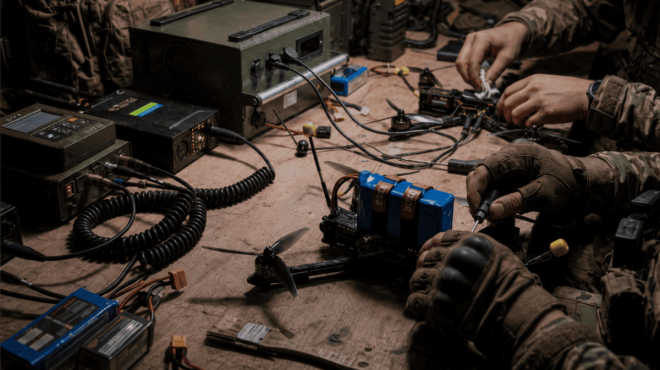
Testing EW effectiveness should take place not in a laboratory but in an environment as close as possible to real use. Theoretical figures do not account for the influence of terrain, obstacles, and the behavior of drones in flight.
In practice, testing begins with defining the scenario. It is important to understand which types of UAVs the system will work against, which channels they use, and at what distances. Without this, testing loses its meaning.
Next, it is assessed whether the system can actually disrupt the link. This means not just the presence of an EW signal but a situation in which the drone loses control, flight stability, or the ability to transmit video. If the drone continues to perform the task, even partially, the system’s effectiveness is limited.
Operational stability is checked separately. In real conditions, what matters is not a one-time jamming but the system’s ability to maintain the effect over time, without dropouts and ‘dead zones’.
To understand the basic principles of choosing systems, see the article: «How to choose the right EW system?», which covers the logic of selecting solutions for specific tasks.
Which Parameters Determine EW Effectiveness
EW effectiveness is determined not by one parameter but by their combination. The first and critical factor is frequency matching. The system must operate in the bands that drones use. If the frequencies do not overlap, there is no effect regardless of power.
The second factor is the signal density in the zone. It is important not only to ‘reach’ the target but to create a sufficient level of interference to exceed the useful signal. In practice this means steady jamming rather than a brief effect.
The third parameter is coverage geometry. Even with sufficient power, a system may have zones where the signal weakens. In such areas the drone retains control and passes through the defense.
The fourth is resilience to changing conditions. Drones can change their position, altitude, or signal configuration. An effective system must maintain the result under such changes. It is the combination of these factors that determines whether the EW will work in real conditions, not merely match the technical description.
How EW Effectiveness Is Assessed in Practice
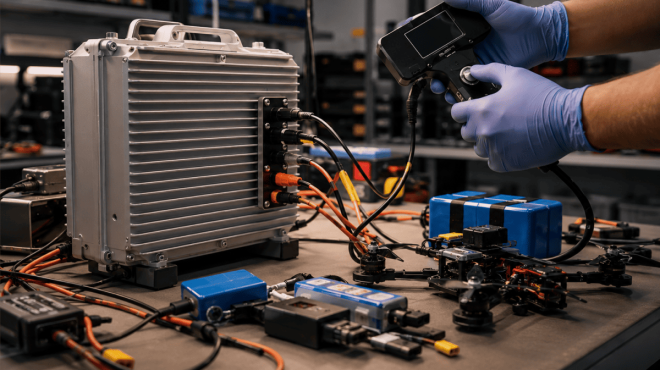
Practical assessment is built on real scenarios. Testing is carried out using drones that simulate a typical threat, with different distances, approach directions, and operating modes.
During testing, it is assessed whether the drone loses stability, whether the video signal disappears, and whether task execution stops. What matters is not only the fact of jamming but the moment when it happens and whether the system remains effective when conditions change.
Coverage is checked separately. The system must provide uniform impact throughout the entire zone, without areas where a drone can pass unhindered. In real conditions this is one of the key indicators.
For tasks of protecting positions and objects, it is worth paying attention to solutions that allow flexible scaling of coverage. In particular, systems such as the modular dome EW system «Hrets XL» make it possible to adapt the configuration to specific conditions and minimize the risk of ‘weak zones’. Practical assessment is always more important than formal parameters, because it is what shows real effectiveness in use.
Conclusions
Assessing EW effectiveness before purchase is not a formality but a critical stage that directly affects the result in real conditions. Relying solely on technical specifications is not enough, since they do not reflect the system’s behavior in a specific environment.
Real effectiveness shows when the system steadily disrupts the operation of drones in a given zone, covers the required bands, and has no gaps in coverage. It is these aspects that should be key during testing.