Control of the state border is a critically important element of a country’s security, especially in conditions of modern threats, where violations can occur quickly, covertly, and on different sections at once. Today, border control is not only the physical presence of people but the systematic work of technologies that make it possible to see, record, and analyze the situation in real time.
State border monitoring systems combine cameras, sensors, radars, and unmanned aircraft into a single infrastructure. This makes it possible to control tens and hundreds of kilometers of territory, including hard-to-reach sections where constant patrolling is impossible.
State Border Monitoring Systems in Modern Security
Modern state border monitoring systems are built on the principle of multi-level defense. This means that control of the state border is carried out not by a single asset but by a combination of different technologies that cover each other’s weaknesses.
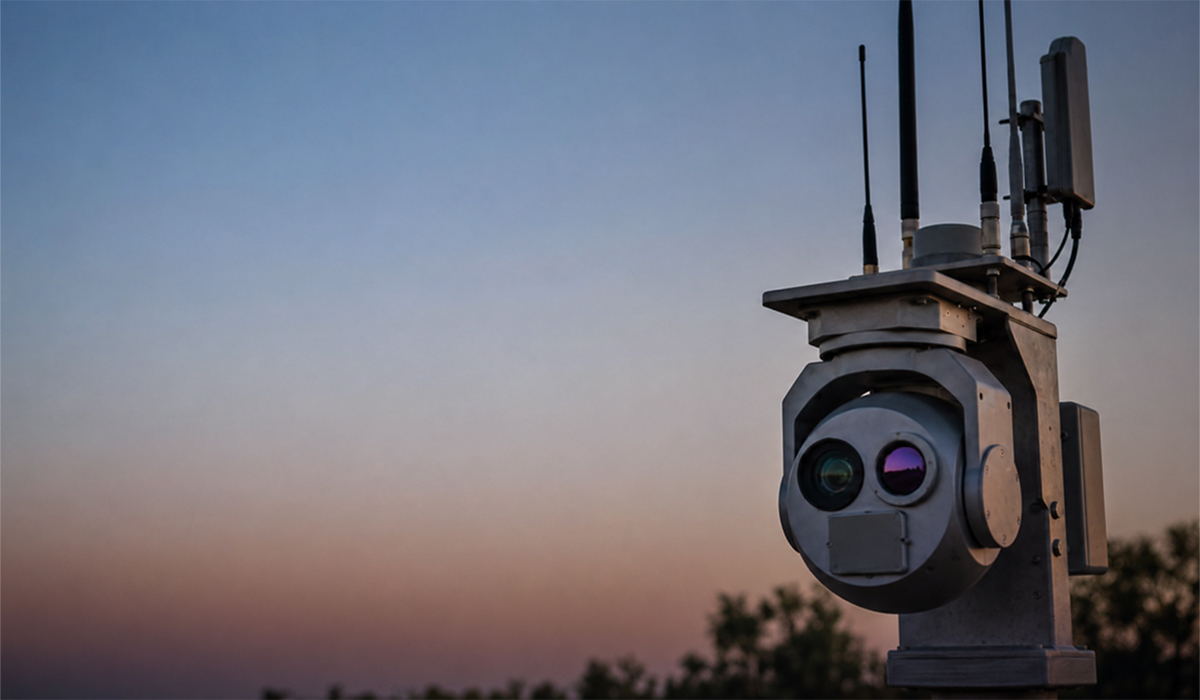
For example, a surveillance camera, a thermal imager, and a seismic sensor can work simultaneously on one section of the border. If a person or vehicle crosses the border, movement is first detected, then the system confirms it using video or a thermal signal, after which the information is transmitted to the operator. In practice this looks like continuous control of the territory divided into areas of responsibility. Each zone has its own sensors and communication channels, and the operator sees the situation as a single picture rather than separate signals.
Thus, border control shifts from a reactive model to a proactive one, where it is important not only to record a violation but to understand its nature and make a decision quickly.
Border Control and State Border Protection Technologies
Protection of the state border is based on a combination of several types of technologies that work simultaneously. These include optical cameras, thermal imaging systems, night-vision assets, and software algorithms for video analysis.
For example, an ordinary camera is effective in the daytime and in open terrain, but at night or in poor visibility its capabilities are limited. In such conditions a thermal imager is engaged, which makes it possible to detect objects at a distance of roughly several hundred meters to several kilometers depending on the conditions and the type of equipment.
Video-analytics algorithms make it possible to automatically detect movement, tell a person from an animal or vehicle, and filter out false triggers, for example from wind or precipitation. This reduces the number of false alarms and increases the effectiveness of border control.
To understand how these technologies are applied in real conditions, see the article: «Modern observation assets at the front: from thermal imagers to UAVs», which explains in detail how such systems work in the field. As a result, effective protection of the state border is achieved not by individual devices but by their correct combination and configuration for specific terrain.
Using Drones for State Border Monitoring
Drones significantly expand the capabilities of state border monitoring, especially where stationary systems have limitations. One UAV can, in a single flight, survey several kilometers of territory and check signals received from sensors.
In a practical scenario this looks like this: a sensor detects movement, the system transmits the coordinates, after which the operator launches a drone for verification. The drone’s camera makes it possible to quickly assess the situation and understand whether the threat is real.
Depending on the model, drones can work from 20 to 60 minutes and transmit video over a distance of several kilometers, which is enough for most border tasks.
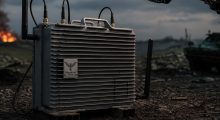
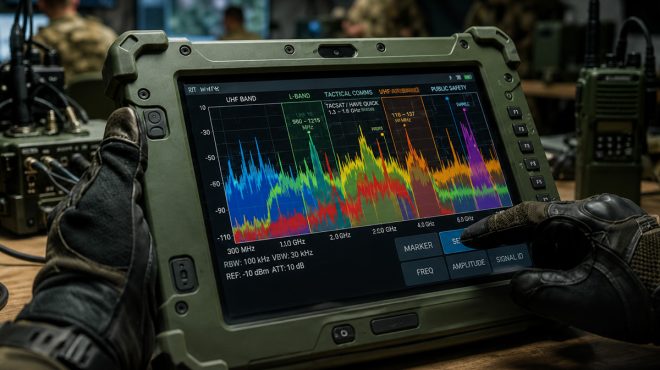
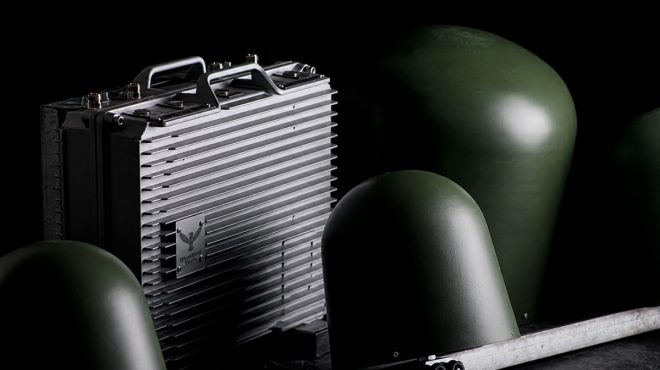
At the same time, drones can also be used as a tool for violation, for example for reconnaissance or delivering cargo. That is why border control systems use means of detecting drones, in particular the «Chuika 3.0» drone detector, which makes it possible to record UAV activity and react in time. Thus, drones are a versatile tool that simultaneously strengthens control of the state border and creates new security challenges.
Sensors and Radars in Border Control Systems
Sensors and radars make it possible to ensure continuous control of the state border even where there is no direct line of sight. They react not to an image but to physical changes in the environment.
For example, a seismic sensor can detect a person’s footsteps or the movement of a vehicle at a distance of several dozen meters, and an infrared sensor reacts to body heat. Acoustic systems are able to detect the sound of an engine or movement in silence.
In practice this looks like an ‘invisible barrier’: a person may not see the system, but their movement is already recorded and transmitted to the operator. Radars complement these capabilities, making it possible to detect objects in open terrain at distances from several hundred meters to several kilometers. The combination of sensors and radars makes it possible to create a reliable border control system that works regardless of lighting or weather conditions.
Data Transmission in Border Control Systems
Data transmission is the foundation of the operation of any border control system, since it is what unites all elements into a single network. Without a stable link, information from sensors or drones has no practical value.
A typical process looks like this: a sensor or camera records an event, transmits the signal through a radio channel or mobile network, the data arrives at the control center, after which the operator makes a decision and directs a response group.
In real conditions, various communication channels are used, including radio networks, mobile networks, and satellite systems. The transmission range can vary from several kilometers in local networks to significantly greater distances when using repeaters.
An important part of the system is channel redundancy. If one channel stops working due to interference or damage, the data is automatically transmitted by another route. This is critical for stable border control. Thus, effective data transmission ensures the speed of response and makes it possible to turn individual signals into an understandable situational picture.
Limitations of State Border Monitoring Technologies
No state border monitoring system is perfect, and this is important to take into account when using it. The main limitation is the impact of weather conditions, such as fog, rain, or strong wind, which can reduce the effectiveness of cameras and sensors.
Complex terrain, for example forests, mountains, or dense buildings, creates zones that are difficult to control even with radars. In such cases it is necessary to combine different assets and change the configuration of the system.
A separate problem is countermeasures. Modern intruders can use camouflage, electronic interference, or move in small groups to avoid detection. Ultimately, effective border control is possible only with the constant updating of systems and adaptation to new conditions and threats.
Conclusions
State border monitoring systems ensure border control through a combination of sensors, drones, radars, and data transmission systems. This approach makes it possible to control large territories, quickly detect violations, and make decisions in real time.
At the same time, the effectiveness of these systems depends on correct configuration, terrain conditions, and the ability to adapt to new threats. A comprehensive approach remains the key factor in ensuring the protection of the state border.