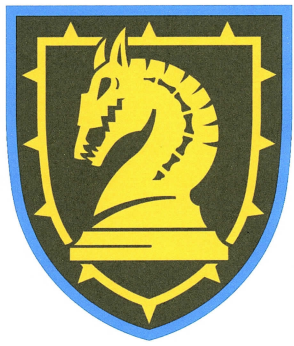
On the chevron of the 47th Separate Mechanized Brigade “Magura” is a creature that does not exist in nature. The Drakyn — a hybrid of a dragon and a horse — grew from the image of a chess knight: a piece capable of moving in unconventional ways and leaping over others. Alongside it is a spiked circle symbolizing a shield, and the motto Semper audentes! — “Always Daring.” For “Magura” recruits, this insignia is not simply issued along with a uniform: the presentation of the chevron after training has become a separate tradition of the brigade.
This is the difference between military identity and ordinary branding. In the civilian world, a logo can be changed after a failed audience study. In the military, a insignia accumulates a different kind of weight: people fight under it, use it to mark their unit affiliation, pass it on to fellow soldiers, and keep it in memory of the fallen. That is why modern UAF identity is not so much about graphic design as it is about how the Ukrainian military answers the question: who are we?
A chevron is not just a design
A sleeve patch primarily marks belonging. But in military culture, its function has long gone beyond the utilitarian “friend or foe” distinction. A chevron communicates which community a person belongs to, and what combat history and traditions stand behind them.
Hence the unwritten rule: not every military patch is appropriate to wear simply because you like the image. Some symbols directly signify service in a specific unit or completion of a particular journey. In other cases, the brigades themselves sell official patches to civilians, turning them into a means of support.
This distinction is clearly illustrated by the example of “Magura”: official chevrons can be purchased to support the brigade, but the chevron as an element of internal military tradition is received by a recruit only after completing training. In other words, the same graphic symbol can exist simultaneously as a symbol of support for a civilian and as a mark of belonging for a servicemember.
A chevron can also be a gift. The exchange of patches between military personnel, or giving one’s own chevron to a civilian, often carries far greater meaning than an ordinary souvenir. Here, the graphic becomes a material confirmation of trust.
From the Trident of the Princes to the Sleeve Patch of Petliura
Modern Ukrainian military identity did not begin in 1991, and certainly not in 2022. Its foundational symbols have a much longer history.
The most obvious example is the trident. The oldest known depiction of it, according to archaeologists, dates to the 10th century. In the princely era it was the dynastic symbol of the Rurik dynasty, appearing on coins, seals, weapons, vessels, and other objects. There are up to 40 interpretations of its form — ranging from a falcon and an anchor to a symbol of the trinity of the world. There is no definitive answer as to what the trident originally meant.
In the 20th century, the symbol gained new state and military life. In January 1918, the trident appeared on the currency of the Ukrainian People’s Republic, and on February 25 it was officially adopted as the UNR’s coat of arms. On July 30, 1919, an order provided for a cloth sleeve trident for soldiers of the UNR Army. Supreme Commander Symon Petliura himself wore such a patch.
And there are many such references in contemporary symbolism. The Cossack era gave Ukrainian heraldry the “knight with a musket,” crosses, and images of Cossack weapons. The military formations of the 20th century contributed the mazepynka cap, tridents of various designs, and their own system of insignia. The modern army assembles these layers into a single visual language.
How the UAF Reclaimed Its Own Military Symbolism
After regaining independence, Ukraine inherited from the USSR not only a vast amount of military equipment and infrastructure. The army also received a Soviet visual shell: uniform traditions, colors, a system of insignia, and rituals.
The Russo-Ukrainian war turned this similarity from an aesthetic problem into an ideological one. After 2014, one of the principles of military symbolism reform was a simple formulation — a Ukrainian servicemember must not look like the enemy.
In 2015, the volunteer group “Nova Viisko” (New Military) joined the work on new military identity. Among its participants were Vitaliy Haidukevych, Vasyl Pavlov, and Oleksiy Rudenko.
The task was far broader than drawing a few new emblems: it was necessary to disconnect the Ukrainian army from the Soviet symbolic system and restore its own historical continuity. Hence the mazepynka caps, a new beret system, new emblems for branches of service, and references to the symbols of the UNR Army and other Ukrainian military formations.
One of the most emotionally charged changes concerned the Airborne Assault Forces. The blue beret had for decades been perceived as an inseparable part of airborne identity. Its replacement with a maroon beret — the color common among airborne formations in many countries around the world — provoked resistance from some servicemembers.
And it was precisely this reaction that showed how deeply a symbol can become embedded in professional identity. Changing the color of fabric is technically simple. Changing a symbol that a person associates with years of service, fellow soldiers, and their own status is far more difficult.
From Chevron to the UAF Brand Book
The next stage was the transition from individual symbols to a cohesive design system.
One of the key figures in this process is Taras Ishchyk. In the military, he traveled the path from service in the 103rd Separate Territorial Defense Brigade to working on the visual communications of the Armed Forces. Under Commander-in-Chief Valerii Zaluzhnyi, this work evolved into a systematic UAF brand book.
This is how UAF Sans was born — a typeface by Dmytro Rastvortsev. Its letterforms were assembled from the Ukrainian typographic tradition of the early 20th century: individual characters have 10–12 historical references each. Yet this is not a decorative reconstruction of old script. UAF Sans has more than 20 styles and is designed for modern communication tasks — from standard inscriptions to nametapes and equipment markings.
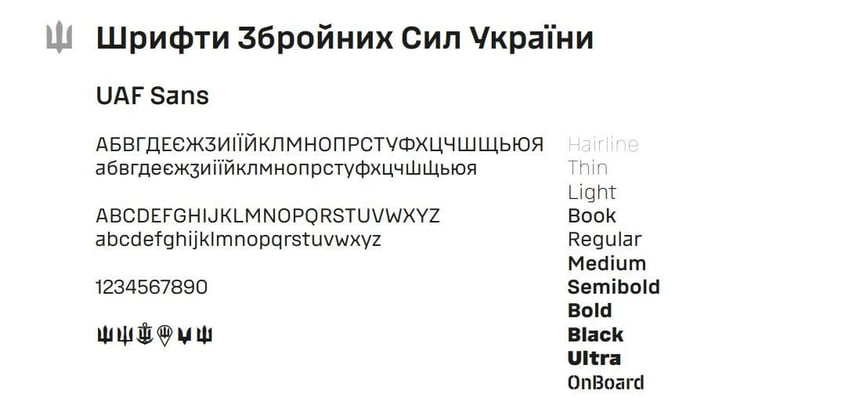
Alongside it in the system works Volja — a display typeface created by Marcela Mozhyna based on the graphic legacy of Nil Khasevych.

In 2023, the new typography became part of the official graphic style of the UAF. As a result, the Ukrainian military gained something it had effectively never had before: a visual system in which historical references do not become museum-style stylization but function within modern communications.
Six Symbols That Tell the Story of Their Units
Military identity works most interestingly at the level of specific units. Here, the general UAF rules meet local history, geography, the unit’s combat path, and its character.
72nd OMBr: A Skull as a Challenge to Death
Among the most recognizable insignia of the 72nd Separate Mechanized Brigade named after the Black Zaporozhians is a skull. It is interpreted as a symbol of fearlessness and readiness for self-sacrifice for Ukraine. The red color is associated with blood shed for Ukraine, and the black with the tradition of the Black Zaporozhians.
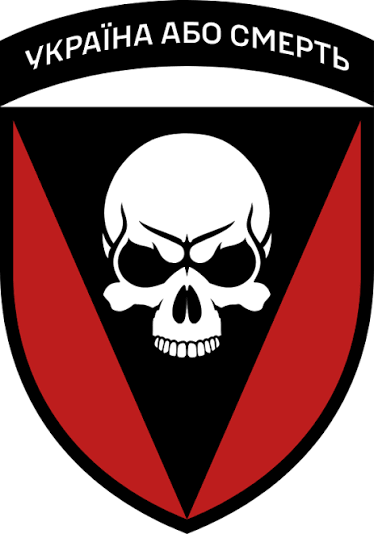
The brigade’s name itself references the Black Zaporozhians cavalry regiment of the UNR Army, which fought for Ukrainian independence in 1918–1920.
93rd OMBr “Kholodnyi Yar”: A Raven and an Oak
The official sleeve insignia of the 93rd Separate Mechanized Brigade “Kholodnyi Yar” depicts a black raven and oak leaves. The raven symbolizes fierce resistance, intelligence, longevity, and courage, while the oak leaves reference the Haidamak oak and the rebel movement of Maksym Zalizniak during the Koliivshchyna uprising.
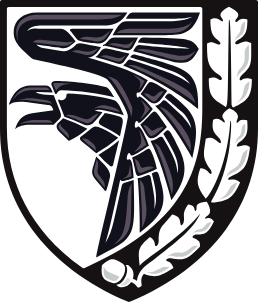
The honorary designation “Kholodnyi Yar” connects the unit to the historical locality known for its insurgent movement.
24th OMBr: The Lion of King Danylo
The 24th Separate Mechanized Brigade bears the name of King Danylo. The central element of its symbolism is the Galician lion crowned with a royal crown. This image is linked to the symbolism of the state of Danylo Romanovych.
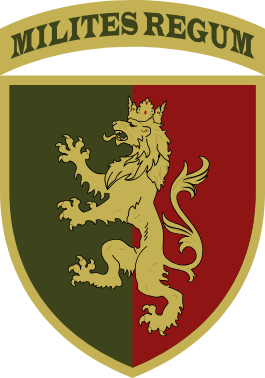
Danylo Romanovych was crowned in Dorohychyn in 1253, and on the brigade’s golden ribbon emblem appears the motto Milites Regum — “Soldiers of the King.”
Here, identity does not invent a new legend — it packages an existing historical memory into a modern military insignia.
10th OHSBr “Edelweiss”: A Flower That Survives in the Mountains
The symbolism of the 10th Separate Mountain Assault Brigade features an edelweiss and crossed bartkas (war axes). The bartkas symbolize resolve, combat hardening, and a steadfast character, while the edelweiss represents resilience, endurance, and vitality.
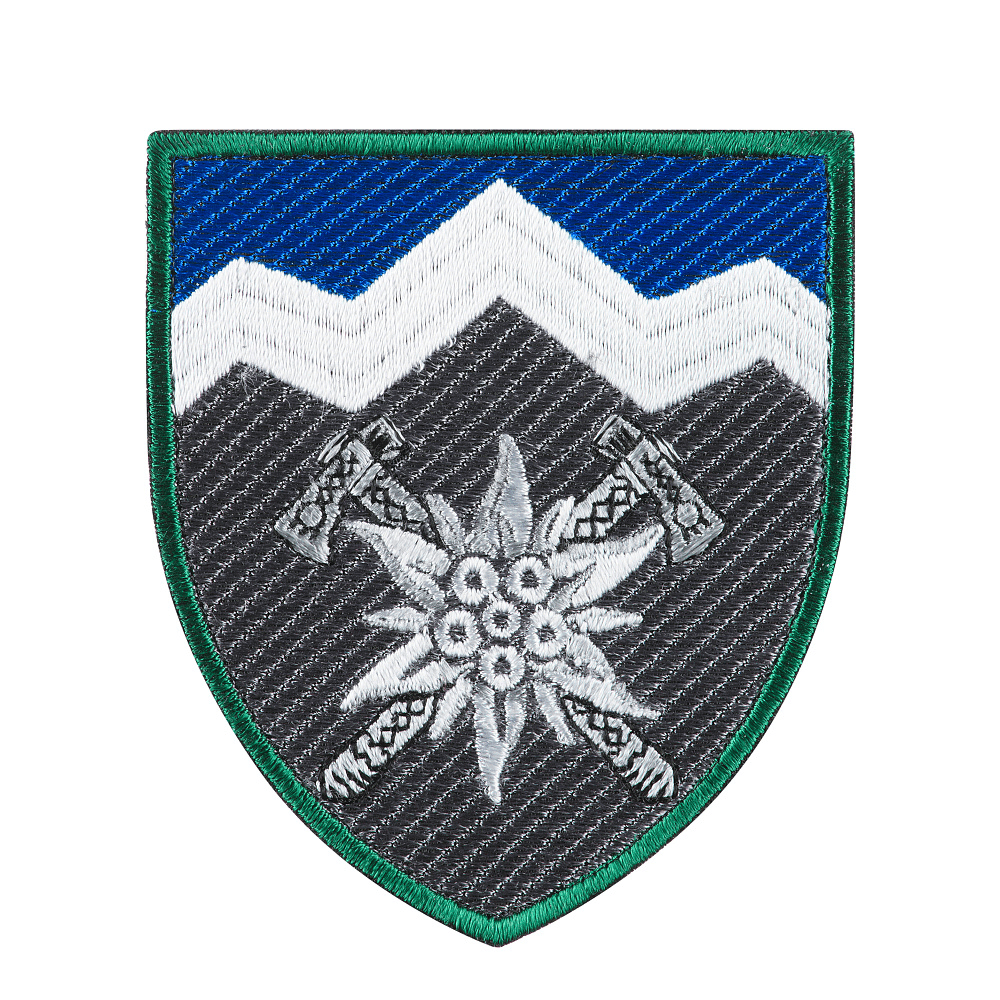
For a mountain assault unit, this flower is a concise graphic formula of its specialization and character.
“Azov”: A Symbol That Outlived Its First Client
The history of the “Idea of the Nation” symbol is more complex than that of most contemporary military emblems. Its graphic form was created by Nestor Proniuk in the early 1990s for the Social-National Party of Ukraine. Later, the symbol moved far beyond the organization for which it was created, and began to be used by other circles and units, including “Azov” and the 3rd Assault Brigade.
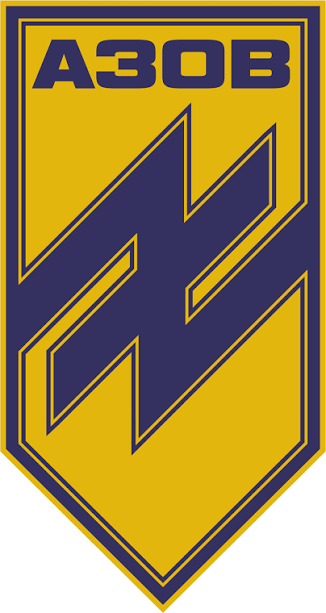
After the defense of Mariupol and Azovstal, this symbol became one of the most recognizable insignia associated with “Azov,” and simultaneously an object of Russian propaganda manipulation. The author himself and researchers of its history reject the Russian interpretation of the symbol as the German Wolfsangel.
This case illustrates an important property of symbols: an author can create a form, but cannot fully control its subsequent meaning. That meaning is accumulated by people and events.
HUR: An Owl Hunting a Bat
The emblem of Ukrainian military intelligence is an example of identity built as a visual response to the adversary. At the center is an owl with a sword over the territory of Russia, alongside the Latin motto Sapiens dominabitur astris — “The wise shall rule the stars.”
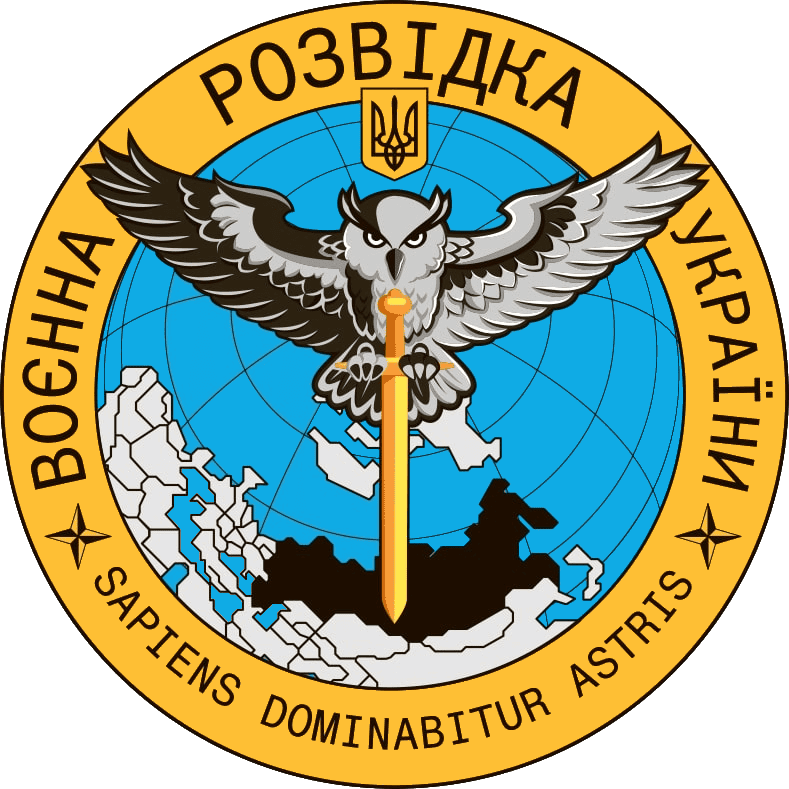
The emblem was publicly unveiled in October 2016. The HUR itself explains it as an allusion to Russian military intelligence: its emblem features a bat, while bats are prey for owls. The motto also contests the Russian phrase “Above us — only the stars.”
What we have here is not simply an institutional emblem, but a graphic response to the adversary, encoded within a single symbol.
When Identity Converts into Money
In the context of full-scale war, military identity has acquired yet another function — fundraising.
A telling case is the design system of the “Da Vinci Wolves” battalion, created by the agency TWID. The task was not simply to make the unit visually recognizable. The system had to scale rapidly across fundraising campaigns, social media, partner integrations, and merchandise.
The result can be measured in money. Three campaigns — “Fundraiser for 10 Million,” “One of the Pack,” and “Conquer the Darkness” — together raised more than 35 million hryvnias in half a year. Over 50 businesses, 35 establishments, and 20 opinion leaders participated, while more than a thousand people opened auxiliary bank accounts.
It would be inaccurate to attribute all of this money exclusively to design: people donate primarily to a unit, to its people, and to a specific need. But design reduces communication friction. A campaign is recognized more quickly in a feed, partners find it easier to work with a ready-made system, and dozens of different materials appear to be parts of a single campaign.
Other military structures employ a similar logic. For example, for “Khartiia,” the agency Taktika expanded the existing identity into a system capable of functioning in recruiting, fundraising, social media, and outdoor advertising.
In this way, military design becomes infrastructure. It helps not only to identify a unit, but also to recruit personnel, raise funds, and build a community around it.
UAF Memory: Design for Those Who Did Not Return
In military identity, there is a direction in which the words “brand” and “marketing” sound inappropriate.
On December 6, 2023, on the Day of the Armed Forces of Ukraine, UAF Memory was unveiled — the first Ukrainian memorial typeface, created specifically for military burials, monuments, memorial plaques, and gravestones.

The idea was proposed by Taras Ishchyk and realized by Dmytro Rastvortsev. UAF Memory became a continuation of UAF Sans, but its sources and purpose are different: it is intended to form a unified, recognizable language of remembrance for fallen servicemembers.
This is not merely a question of aesthetics. After 2014, and especially following the start of the full-scale invasion, Ukraine has been creating thousands of memorial plaques, military burial sections, and commemorative markers. If each of them is rendered in a random typeface and according to random rules, the state loses the opportunity to form a shared culture of memory.
That is precisely why UAF Memory can be considered a logical continuation of military identity. First, the system helps a servicemember say “who I am.” Then it helps the state say “whom we remember.”
When the Chevron Leaves the Military
Patches have long since ceased to belong exclusively to armies. After World War II, the military patch culture strongly influenced the biker movement. Following the Hollister incident of 1947, the famous “1%” patch emerged, turning a small sewn emblem into a statement of belonging to a distinct subculture.
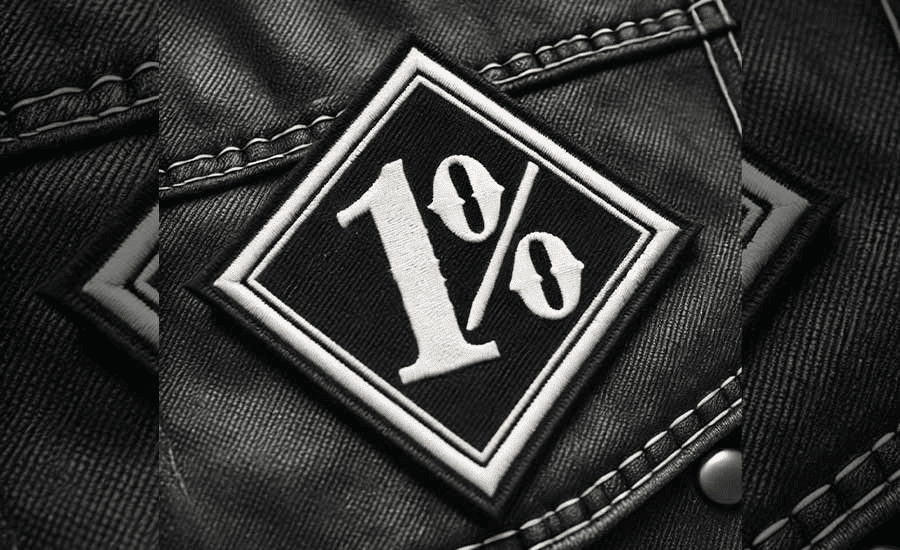
In Ukraine during the full-scale war, this process has moved in the opposite direction: civilian culture has begun to borrow military symbols on a massive scale.
Chevrons are sold for donations, auctioned off at charity events, and included in limited-edition merchandise. A patch received directly from a servicemember can become a personal relic. Recognizable brigade insignia appear on T-shirts, stickers, and other civilian items.
But popularity breeds conflict: who has the right to profit from military symbolism?
In 2023, Draft Law No. 9216 was registered in the Verkhovna Rada, proposing to establish criminal liability for the unlawful circulation of products bearing symbols of military resistance to Russian aggression. As of 2026, this remains a draft law rather than an enacted norm: in February 2026 it was included on the legislative agenda.
The very emergence of such a legislative initiative is telling. A military symbol has become an economic asset. It can generate revenue — and therefore the question arises of who has the moral and legal right to do so.
How Identity Grows Together with Its Unit
The 3rd Assault Brigade provides a clear illustration of how military identity can change alongside the unit itself. The brigade’s origins lie in the volunteer territorial defense detachment “Azov-Kyiv,” formed after the start of the full-scale invasion. The unit subsequently traveled the path from SSO “Azov” to the 3rd Separate Assault Brigade, and in 2025 the formation of the 3rd Army Corps began on its basis.
This path can be traced in its symbolism as well. The unit’s first distinct sleeve insignia was three golden swords on a blue background.

When the unit expanded into a brigade, they were replaced by a stylized “Idea of the Nation” symbol rendered in an assault style.
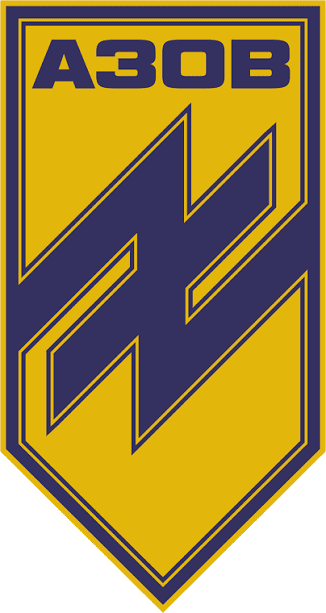
Later, the visual language was simplified further: the most recognizable symbol of the 3rd Assault Brigade became three diagonal stripes.

There is an instructive design logic at work here. Symbolism does not disappear during a unit’s transformation, but is reduced to its most recognizable element — the number three. This same principle continues in the identity of the 3rd Army Corps. Its logo retains the familiar composition of a shield and three diagonal elements, but now this symbol represents a significantly larger structure encompassing various brigades and separate units.
Three elements that initially formed part of one unit’s symbolism become the foundation of a recognizable “three” — the visual language of a large military structure.
This is how the UAF’s identity as a whole has evolved over the past decade: first it was necessary to abandon the Soviet visual legacy, then to restore Ukrainian historical tradition, and then to create a modern system of symbols and communications.
But at the heart of it all remains the simplest function of a chevron: it answers the question “who are your people?” And that is precisely why a small patch on a sleeve can mean far more than just a successful design.