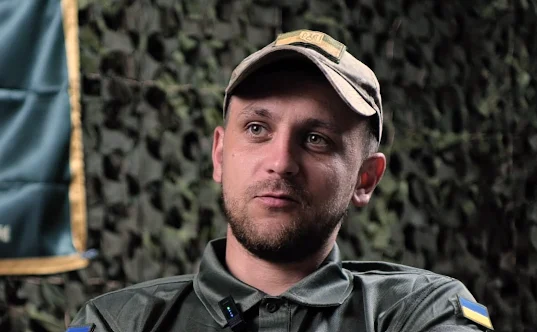
Ground robotic complexes are being increasingly used for logistics and evacuation at the front. A UGV operator from the 116th Separate Mechanized Brigade with the call sign “Moryak” described how ground drone crews operate, how long their missions last, and why such vehicles can save the lives of servicemembers.
The story of the servicemember was published by the 116th Separate Mechanized Brigade on November 4 on its social media channels.
According to “Moryak,” a ground robotic complex crew consists of three servicemembers. Their work begins long before they set out on a mission.
“We receive requests from units indicating where cargo needs to be delivered. We plan the route, always identify backup withdrawal paths, kit out and load the UGV, and then head out on the mission,” the operator explains.
The duration of a mission depends directly on the distance and movement conditions.
“The complex’s speed is approximately 4–6 kilometers per hour. Counting the trip there and back, a mission can take around 10–11 hours,” “Moryak” explains.
Despite its modest speed, the robotic platform has a significant payload capacity. According to the servicemember, the complex is capable of carrying up to 300 kg of cargo, making it a useful tool for supplying frontline units.
“Moryak” pays particular attention to operator training. In his view, it is not enough simply to learn how to operate the robotic platform.
“You need not only to be able to operate the UGV, but also to navigate the terrain. There are situations when GPS drops out, so you need to understand where you are and where to go next,” the servicemember notes.
An important component of the work is interaction within the crew.
“We are all interchangeable. We help each other out, cover for one another — especially when missions are long. One person shouldn’t have to carry everything alone,” the operator says.
Ground robotic complexes operate under conditions of constant danger. Russian forces attempt to detect and destroy such platforms, as they supply units and help reduce the need for servicemembers to travel along dangerous routes.
According to “Moryak,” over the past month alone the enemy made at least four attempts to destroy their complex. However, all of these attempts proved unsuccessful.
The operator explains that using robotic platforms holds a fundamental advantage over sending people to carry out dangerous logistics tasks.
“Better to lose some robot than three people,” the servicemember stresses.
The 116th Separate Mechanized Brigade notes that ground robotic complexes are becoming an important component of unit sustainment. Their use makes it possible to carry out logistics tasks while reducing risks to personnel.