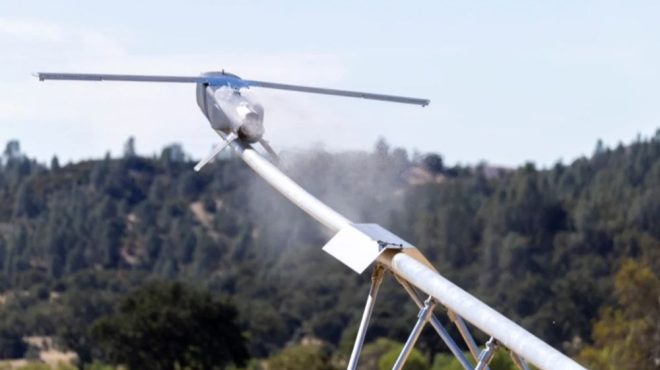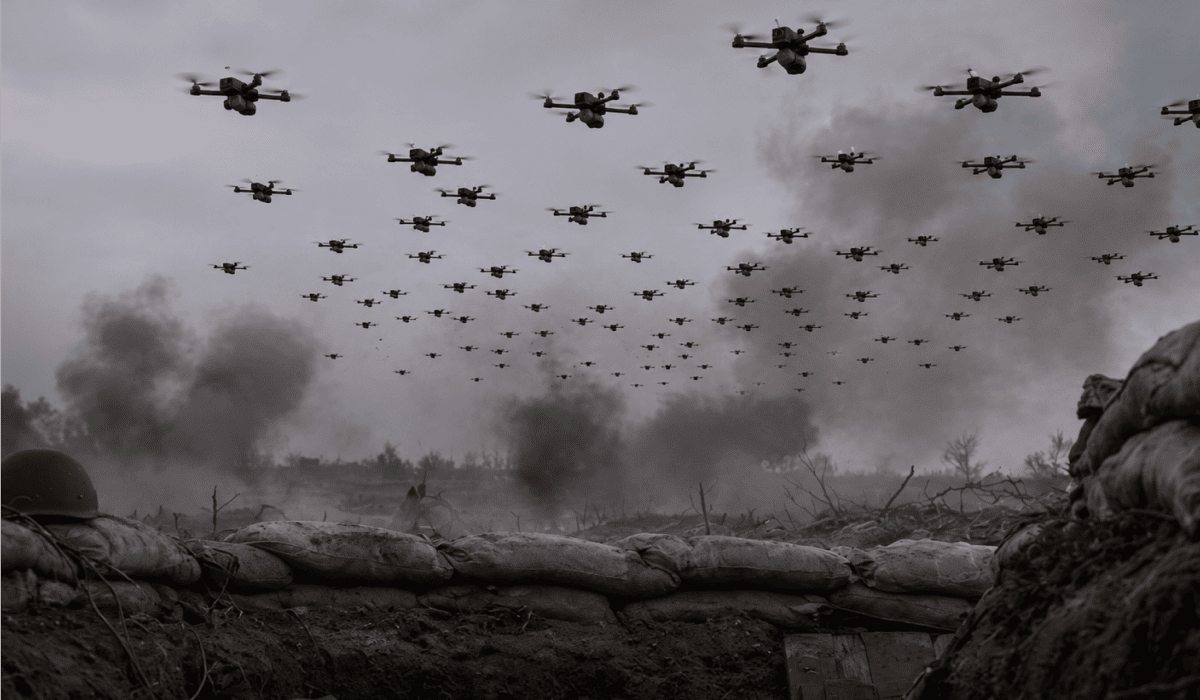
Swarm attacks change the approach to countering UAVs. While a single drone can be tracked and neutralized with a point solution, a swarm puts a load on all elements of the system at once — detection, tracking, data processing, and countermeasures.
The main difficulty lies not only in the number of targets but in their coordination. Drones can approach from different directions, change altitude, and act in sync, overloading the defense system.
How Protection Systems Against Swarm Attacks Scale
Scaling C-UAS systems begins with a shift from point solutions to a multi-level architecture. Instead of a single sensor or a single countermeasure, a network of components that work in concert is used.
The first level is expanding the detection zone. Sensors are placed so as to cover all possible approach directions. This reduces the likelihood that part of the swarm will go unnoticed.
The second level is scaling the tracking. The system must not just detect targets but track them simultaneously. For this, algorithms are used that distribute the load and maintain a stable track even with a large number of objects.
The third level is distributed countermeasures. Instead of a single source of jamming or engagement, several are used, which makes it possible to cover a larger area and work with several targets at once. Scaling means the system’s ability to maintain effectiveness as the number of targets grows without a sharp drop in results.
Which Approaches Are Used to Counter Drone Swarms
One of the key approaches is layered defense. The system is built in several tiers: early detection, identification, tracking, and engagement. This makes it possible to deal with targets before they enter the critical zone.
The second approach is combining sensors. Radio-frequency, optical, and other methods work together to reduce the number of missed targets. The third is automation. With a large number of drones, manual control becomes ineffective, so some decisions are made automatically based on algorithms.
The fourth is resource allocation. The system must set priorities and direct resources to where they are most needed in order to avoid overload. To understand the basic approaches to countering UAVs, see the article: «Effective methods of countering enemy drones», which covers the key principles of countermeasures.
What Limitations Arise When Scaling C-UAS Systems
The main limitation is the load on data processing. As the number of targets grows, the system must analyze information quickly, and when capabilities are exceeded, delays or loss of tracks occur.
The second limitation is zone overlap. If the system does not provide uniform coverage, some drones may pass through ‘weak spots’. The third is mutual interference. With a large number of countermeasures, they can interfere with one another, reducing overall effectiveness.
The fourth is energy resources. Scaling requires more power, and this limits the system’s runtime. All these limitations determine how effectively the system can work against a swarm and must be taken into account as early as the design stage.
How to Increase the Effectiveness of Protection Against Swarm Attacks
Increasing effectiveness begins with the right system architecture. It must be built as a single network, not as a set of separate solutions. The second factor is zone overlap. Each element of the system must complement the others to avoid gaps in coverage.
The third is coordination. All components must work in concert to avoid overload and conflicts. The fourth is adaptability. The system must change its behavior depending on the number and type of targets.
For such tasks it is advisable to use scalable solutions, in particular the modular «Hrets XL» EW system, which makes it possible to build a distributed countermeasures system and provide zone overlap when working against a large number of targets. In practice, an effective system is one that can steadily process and neutralize several targets at once without losing control of the situation.
Conclusions
Swarm attacks require a shift from point solutions to a systemic approach. Effectiveness is determined not by individual components but by their coordinated work within a single architecture.
Scaling C-UAS systems lies in the ability to maintain stability as the number of targets grows, to provide zone overlap, and to process data quickly. It is these factors that determine the result in real conditions.