The underground Operation “Veles” in the Kupyansk direction became an example of how Ukraine’s Defense Forces adapt combat tactics to a new reality. Ukrainian troops used old engineering infrastructure for covert maneuvering, while ground robotic systems, wire communications, ventilation systems, and unconventional transport solutions helped turn the underground space into a combat environment. DefPulse learned the details.
Combat Operations Moved Underground
The precondition for the operation was a change in conditions in the Kupyansk direction. The mass use of reconnaissance UAVs and FPV drones complicated infantry movement, ammunition resupply, and unit rotation. Even routes far from the front line came under the threat of aerial surveillance and strikes.
Russian forces found a way to partially circumvent this problem. They began using underground gas pipelines — main pipes running beneath the Oskil River. According to Ukrainian military personnel, this route allowed the occupiers to covertly move personnel and emerge on the right bank of the river.
Inside the pipes, the Russians set up shelters, machine gun positions, barricades, and storage areas for supplies. To reach the surface, they cut new openings. This complicated countermeasures: even if Ukrainian units identified and destroyed one exit, the enemy could create another.
The Defense Forces initially attempted to control the pipeline exits using aerial reconnaissance and strike assets. However, this tactic did not resolve the problem. Ultimately, the command of the 2nd Corps of the National Guard of Ukraine “Khartiya” decided to change its approach.
The change in tactics was described by the commander of the unmanned systems company of the 13th Brigade of the NGU “Khartiya,” with the call sign “Druid.” According to him, Ukrainian units decided to seize control of this infrastructure.

In the Kupyansk direction, pipes with a diameter of approximately 1 and 1.2 meters were laid. Soldiers could move through them only by crouching or crawling in full combat gear. Inside there was mud, water, rust, blockages, and remnants of equipment. In some sections, movement became especially difficult due to flooding.
These very limitations determined the technological architecture of the operation. An underground offensive required a separate infrastructure for communications, observation, ventilation, and supply. According to Radio Khartiya, the operation lasted about half a year and involved comprehensive preparation of personnel and technical support.
Engineering Preparation: How the Underground Bridgehead Was Created
One of the solutions was to create their own entry point into the pipeline. Ukrainian troops established access to the pipe from a safer section and carried out a tap-in.
This made it possible to organize the covert insertion of personnel and necessary equipment, as well as to deploy underground infrastructure for subsequent operations.
Ukrainian units had to create conditions for the permanent presence of personnel there, conduct combat, move cargo, and maintain communications with command.
That is why “Khartiya” training centers equipped simulators approximately 100–150 meters long. Soldiers trained to move in confined spaces, remain there for several days, carry out combat missions, and work with engineering equipment.
The training also included a psychological component. In an enclosed space it is impossible to quickly change position, turn around, or bypass an obstacle. The wounding of one soldier can block the movement of an entire group. Therefore, special attention was paid to physical endurance, self-control, and the ability to act according to a clear algorithm.
The Technological Component of Operation “Veles”
A distinctive feature of the operation was the creation of underground infrastructure that, in terms of its functions, resembled a simplified combat management system. It combined communications assets, video surveillance, ground robotics, ventilation, and transport. At the same time, the technological solutions had to meet specific conditions.
Wire Communications and Video Surveillance
One of the greatest challenges of the underground environment was the loss of conventional communications. The metal casing of the gas pipeline shields radio signals, so ordinary radios cannot provide stable command of units inside the pipe. Satellite GPS navigation is likewise unavailable.
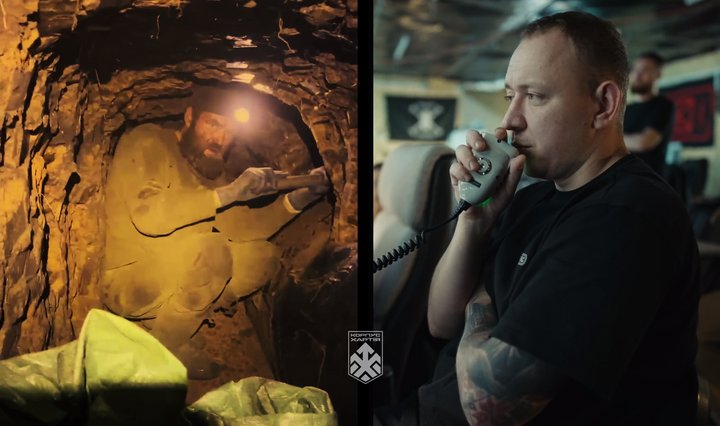
Ukrainian troops resolved this problem using a wired communications infrastructure.
Inside the pipes they used:
- Field telephone communications. So-called “tapiky” (field phones) provided voice message transmission between positions and command posts.
- Internet connectivity. Its use made it possible to transmit information from underground positions to the surface.
- Surveillance cameras. These provided remote monitoring of individual sections of the pipe, allowing the situation to be tracked and enemy movements to be observed.
Separately, troops used markings on the interior space. Marks on the pipe walls helped determine the direction of movement, locate needed sections, and avoid losing orientation in conditions of complete darkness.
2. Ground Robotic Systems: Reducing Risk to Infantry
The role of ground robotic systems (GRS) was to delegate the most dangerous tasks to machines, reducing the need for the direct presence of personnel. The main functions of robotics in such an environment:
- Checking individual sections and detecting potential threats.
- Fire support for assault groups.
- Transporting cargo that is difficult to carry by hand.
- Dealing with barricades and other engineering obstacles.
3. Electric Transport: Underground Logistics on the Metro Principle
One of the most unusual technological solutions was the use of electric scooters for moving personnel and cargo.
In effect, Ukrainian troops created an underground transport system that in its operating principle resembled a metro: movement between designated sections of the pipe, delivery of resources, and return trips.
Electric scooters made it possible to:
- Move personnel more quickly between sections of the pipeline.
- Deliver water, food, and ammunition.
- Transport equipment and other cargo.
- Reduce the time soldiers spent on high-risk routes.
According to “Druid,” the scooters were used exclusively as transport between points. This made underground logistics more predictable and organized.
4. Ventilation and Atmosphere Control
An enclosed metal space with insufficient ventilation, residual contamination, and potential gas accumulation posed life-threatening risks to personnel. An additional problem was posed by gunpowder combustion products during small-arms engagements. In an enclosed space they accumulate far more rapidly than in the open field.
According to the UAV company commander “Druid,” Ukrainian troops created ventilation openings, monitored air quality using CO₂ sensors, and checked hazardous sections before personnel entered. If gas contamination was detected, troops did not enter the relevant section until it had been ventilated.
The system included several levels of control:
- Creating ventilation openings to air out individual sections.
- Using ventilation equipment and ducting to supply air.
- Using gas analyzers to check the atmosphere before admitting personnel.
Personnel also used oxygen masks and gas masks.
5. Aerial Drones: Controlling the Underground Front from the Surface
In effect, Operation “Veles” became an example of interaction between two environments: the underground, where assault groups operated, and the aerial, where Ukrainian operators provided reconnaissance and strikes.
The unmanned systems units “Achilles” and “Lava” were involved in the operation. They supported ground and underground actions, monitored pipeline exits, and prevented the enemy from using them for reinforcement and resupply.
Ukrainian troops did not attempt to destroy the entire pipeline. Instead, they exploited the ability to physically isolate individual sections of it. During the advance, the pipe was segmented. According to “Druid,” FPV drones and heavy bombers were used for this purpose, destroying individual sections of the communications infrastructure and blocking exits.
This made it possible to cut off Russian groups from their main forces, deny them the ability to receive reinforcements, and prevent evacuation. At the same time, aerial reconnaissance tracked enemy attempts to create new exits or restore logistical connectivity.
How the Underground Operation Unfolded
Ukrainian troops employed a combination of engineering maneuver, localized combat engagements, blocking, and isolation of the enemy.
One of the principles was avoiding constant frontal assaults. Inside a pipe with a diameter of about one meter it is impossible to deploy a standard combat formation or outflank the enemy as one would in open terrain.
Therefore, Ukrainian units advanced gradually, established their own positions and barricades using soil and materials available inside the underground infrastructure.
The distance between positions could be as little as a few dozen meters. In some sections, the advance halted for extended periods due to the need to overcome enemy fortifications.
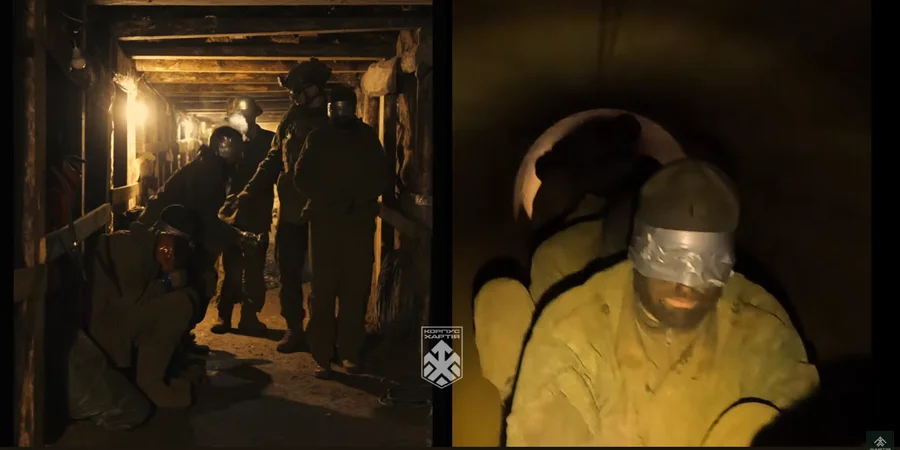
Through combined strikes, isolated enemy groups found themselves without the ability to receive reinforcements, food, or ammunition. Some Russian troops surrendered as prisoners.
Results of Operation “Veles”
More than 15 km of underground infrastructure came under the control of Ukraine’s Defense Forces as a result of the operation, as reported by the 2nd Corps of the NGU “Khartiya” in October 2026.
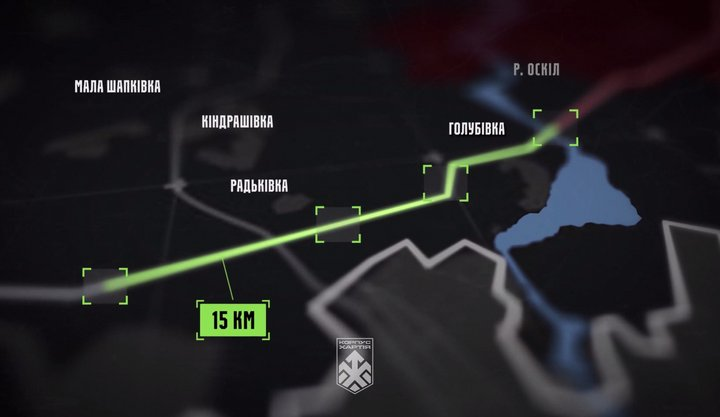
According to published data, the results included:
| Metric | Result |
| Length of cleared underground infrastructure | Over 15 km |
| Russian servicemen eliminated | Over 100 |
| Russian military personnel taken prisoner | Over 30 |
| Enemy’s main logistics route | Cut off |
Command noted that the operational significance of “Veles” lies in the elimination of an important route for the covert infiltration of Russian troops across the Oskil River toward Kupyansk.