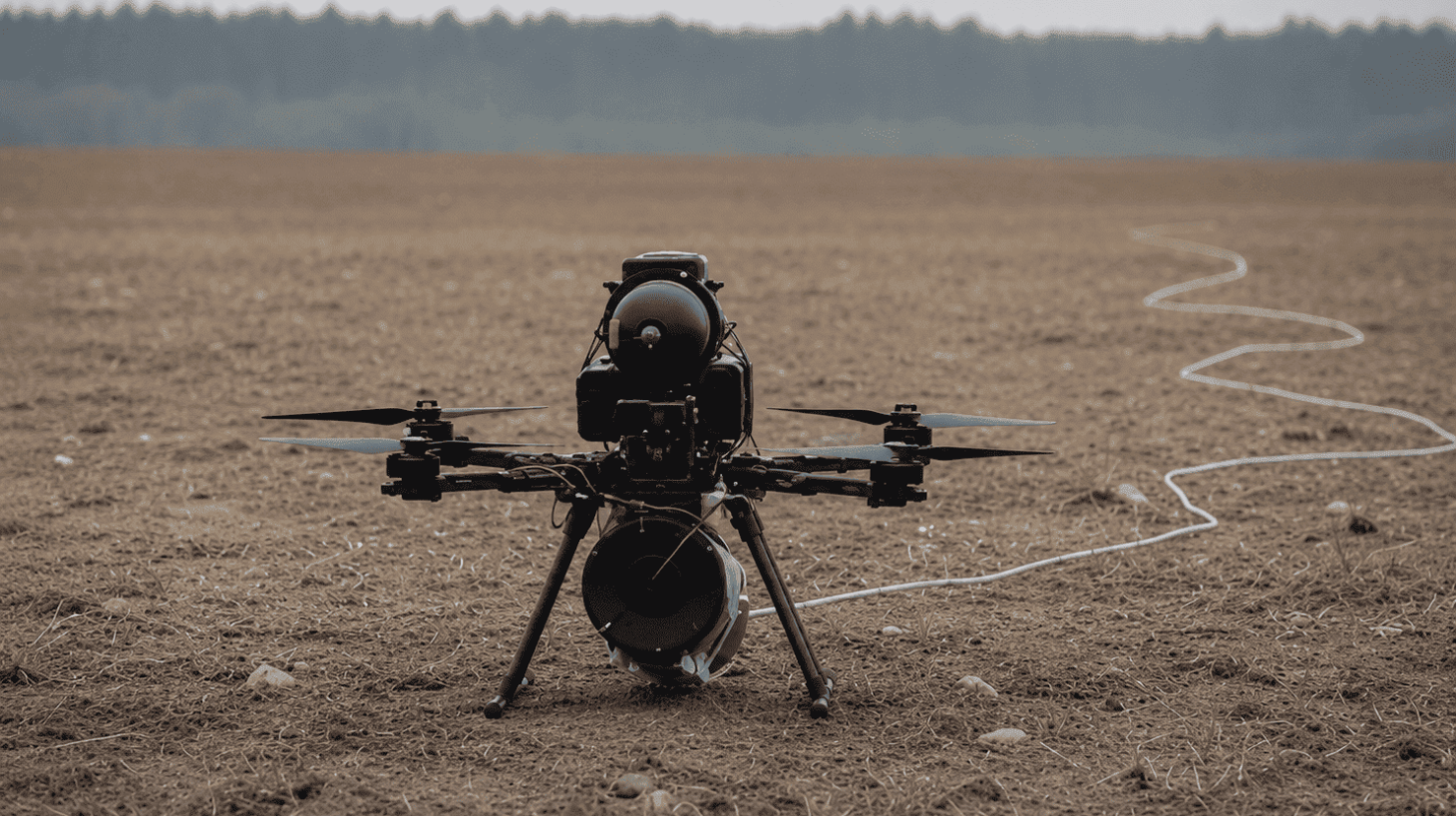
Modern warfare increasingly depends on unmanned technologies. However, the active use of electronic warfare assets has called into question the effectiveness of classic radio-controlled drones. In response to this, systems of a new type appeared — fiber-optic drones, which are controlled not over the air but by means of a physical cable connection.
Why Fiber-Optic Drones Appeared as a Response to the Active Operation of EW
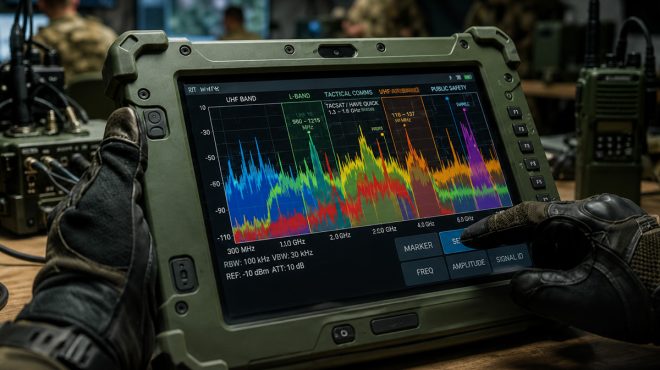
In recent years, electronic warfare has become one of the key tools on the battlefield. Powerful EW complexes have learned to jam UAV control channels, create interference for video transmission, intercept navigation signals, and imitate commands to disorient the operator. As a result, ordinary drones that work over a radio channel began to massively lose communication at critical moments.
Even the most modern digital protocols are not always able to ensure stable control in a zone of dense electronic suppression. The technology of fiber-optic control became a logical alternative. The transmission of data over a physical cable makes it possible to completely exclude the impact of EW: the signal cannot be jammed, intercepted, or distorted. That is precisely why fiber-optic drones quickly occupied their niche in modern combat operations.
Tactical Tasks of Fiber-Optic Drones in Combat Conditions
The main advantage of such systems is the absolute stability of the communication channel. This makes them especially useful for tasks where the loss of control is unacceptable. The main areas of application include point reconnaissance, the correction of artillery fire, observation of the enemy’s objects, the execution of strike missions, the escort of assault groups, and work in conditions of dense development.
An example of a practical tool for such tasks is the “Bebradron” UAV. It is applied for engaging slow-moving objects or clusters of infantry at a distance of up to 35 kilometers with a warhead with a mass of up to 6 kilograms. Such platforms make it possible to act in a point-targeted and effective way even in areas with powerful radio-electronic suppression, where ordinary drones often lose communication.
Fiber-optic systems give the operator the ability to work as precisely as possible: without video delays, without the risk of interception, and without the impact of interference. This is especially important during assault operations, when the safety of personnel depends on the quality of control.
In Which Situations Fiber-Optic Drones Are Most Effective
Such drones bring the greatest benefit in places where the enemy actively applies EW, as well as in areas with dense urban development and on fortified sections of defense. They are well suited for point operations, when it is necessary to bring the craft to the target as precisely as possible while maintaining full control over the situation. These can be tasks in industrial zones, tunnels, basements, or among concrete structures.
Such systems are also effective for the long-term observation of a single area. When it is necessary to monitor a certain object for hours without the risk of losing communication, a fiber-optic channel becomes significantly more reliable than any radio channel. Usually, the length of the fiber-optic cable in such systems is from 5 to 20 kilometers, which determines the real range of their practical application.
Main Limitations of Use on the Battlefield
Despite the obvious advantages, fiber-optic drones are not a universal tool. Their main feature — the physical cable — is at the same time the main weakness. The flight range is limited by the length of the fiber, and any damage to it leads to the complete loss of control. The cable can catch on trees, structures, or terrain elements, which complicates maneuvering.
In addition, the craft itself is usually heavier and less mobile than a classic FPV drone, and the deployment process requires more time. The use of such systems requires trained operators, the well-coordinated work of the crew, and a clear understanding of the tactical situation. That is precisely why fiber-optic drones are considered a tool for special tasks, and not a mass solution for all units.
Comparison With Other Types of Drones
Classic radio-controlled UAVs remain more universal, mobile, and faster to deploy. They can work at significantly greater distances and are not tied to a cable. However, in a zone of active EW their advantages often disappear: video delays, signal loss, and the risk of control interception appear.
In such conditions, fiber-optic drones have a decisive advantage — they maintain full control even where the airwaves are completely blocked. Therefore, modern units increasingly use a combined approach: radio-controlled drones perform mass and maneuver tasks, and fiber-optic ones perform complex and critically important operations where maximum reliability is needed.
The Significance of Fiber-Optic Drones for the Development of Modern Combat Tactics
The appearance of fiber-optic drones has in effect created a new area in the tactics of UAV application. They have proven that even in conditions of total electronic warfare, unmanned systems can remain controllable and effective. Thanks to such solutions, units have gained the ability to act more confidently, plan operations in «closed» areas, and carry out tasks that were earlier considered too risky.
Fiber-optic drones are gradually becoming an important part of the comprehensive toolkit of the modern army. More about the technical principles of how such systems work can be read in the article: «A fiber-optic drone — how does it work?»
Conclusions
Fiber-optic drones have become an important tool of modern warfare. They make it possible to effectively counter EW assets, maintain stable control, and carry out tasks in the most difficult conditions. Such systems do not replace classic drones but complement them, covering the niche of especially responsible and precise operations.
Their capabilities open up new tactical scenarios for units, but the physical limitations of the cable connection require competent planning and the professional training of operators. That is precisely why fiber-optic drones are considered a specialized but extremely important element of modern combat operations.