Swedish defense company Saab presented the first GlobalEye airborne early warning and control aircraft, built on order for the Swedish Air Force, on October 15, 2026. The presentation took place at the company’s production facility in Linköping. This is the first of three aircraft that Sweden has ordered to enhance its airborne surveillance and airspace control capabilities.
This was reported by Saab. Following the presentation, the aircraft is scheduled to undergo a testing and verification phase before its first flight, after which it will be delivered to the customer.
GlobalEye is a multi-domain airborne surveillance and control system capable of detecting and tracking targets in the air, at sea, and on land. The system combines the Erieye ER radar, additional sensors, and a command-and-control suite, all installed on a modified Bombardier Global 6000/6500 business jet.
Key Technical Specifications
Saab does not disclose all parameters of the radar system. Detection range depends on target type, flight altitude, observation conditions, and electronic jamming.
| Specification | Published Data |
| Type | Airborne Early Warning and Control (AEW&C) aircraft |
| Platform | Modified Bombardier Global 6000/6500 |
| Primary radar | Saab Erieye Extended Range (Erieye ER) |
| Radar type | Active Electronically Scanned Array (AESA) |
| Erieye ER antenna length | Approximately 10 m |
| Sensor suite instrumented range | 350 nautical miles, or approximately 650 km |
| Detection of low-flying threats | Over 400 km under manufacturer-stated conditions at an altitude of 35,000 ft (approximately 10.7 km) |
| Endurance | Over 11 hours; Saab’s product page states 12 hours |
| Ferry range | Over 11,000 km |
| Operating altitude | Over 35,000 ft (approximately 10.7 km) |
| Minimum runway length stated by Saab | Approximately 6,500 ft, or 1,980 m |
| Self-protection | Threat warning and countermeasures suite |
Erieye ER Radar: The Aircraft’s Primary Sensor
The core of GlobalEye is the Erieye ER (Extended Range) radar, which Saab developed to increase detection and tracking range compared to previous versions of the Erieye system. The approximately 10-meter-long antenna is housed in a radome mounted above the aircraft’s fuselage.
The radar uses AESA technology — an Active Electronically Scanned Array. Unlike mechanically rotating the entire antenna, this technology allows the radar beam to be steered electronically. This enables the system to rapidly shift its attention between different areas of airspace and multiple targets.

Another feature of the Erieye ER is the use of gallium nitride (GaN) in its radar modules. According to Saab, this technology enables operation at higher power levels and increases detection range. The manufacturer also claims the radar can operate in challenging conditions, including in the presence of electronic jamming and clutter from surrounding objects.
What GlobalEye Can Detect and Monitor
Airspace
GlobalEye is designed to detect, identify, and track aircraft and airborne threats. Saab claims the ability to detect low-flying targets at ranges exceeding 400 km under defined conditions. Early acquisition of information gives commanders more time to assess a threat and respond.

Maritime Targets
The combination of the Erieye ER with a dedicated maritime surveillance radar, an Automatic Identification System (AIS) for vessels, and additional sensors enables monitoring of maritime traffic. Saab also claims the system can detect small watercraft and periscope-sized objects under appropriate conditions.
Ground Situation
A specialized radar and Ground Moving Target Indication (GMTI) mode allow the detection of moving objects on land.
Airborne Command Post
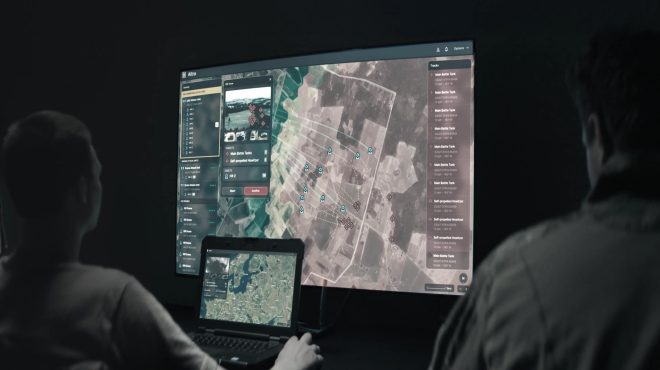
One of GlobalEye’s distinguishing features is the integration of surveillance assets with a Command and Control (C2) system. It fuses data from multiple sensors into a common operational picture and transmits information to the relevant military units and command authorities.
The system is designed to operate across a range of scenarios, from peacetime surveillance and border monitoring to support for military operations.
How a Business Jet Was Transformed Into a Military Aircraft
To create GlobalEye, Saab used the Bombardier Global 6000/6500 family platform — long-range business jets suited for extended flights at high altitudes.
According to Saab’s description, the airframe had to be structurally reinforced to accommodate the Erieye ER antenna, additional radomes and antennas were installed, the tail section was modified, and equipment for powering and cooling the sensors was added.

Saab unveiled the GlobalEye program in 2016 and publicly displayed the first aircraft in February 2018. The initial customer was the United Arab Emirates, which ordered the first two systems in 2015 and later expanded its purchase. It was this prior development and operational experience that enabled Saab to offer GlobalEye to other customers.
Sweden ordered the first two GlobalEye aircraft in 2022 through the Defence Materiel Administration (FMV). In 2024, the country ordered a third aircraft. GlobalEye is intended to provide Swedish forces with a broader situational picture at long ranges, including over the Baltic Sea and surrounding areas. The aircraft can operate as part of an airborne surveillance system, complementing ground-based radars, fighter jets, and other intelligence assets.