When a person disappears during war, families face not only an emotional blow but also legal and informational uncertainty. In such situations, DNA examination becomes one of the key tools that makes it possible to move from assumptions to confirmed facts.
BlueBird Tech has prepared this article for families who are searching for servicemen missing in action, to explain how exactly DNA identification works and in which cases it is applied.
DNA Examination as a Tool of Identification of Those Missing in Action
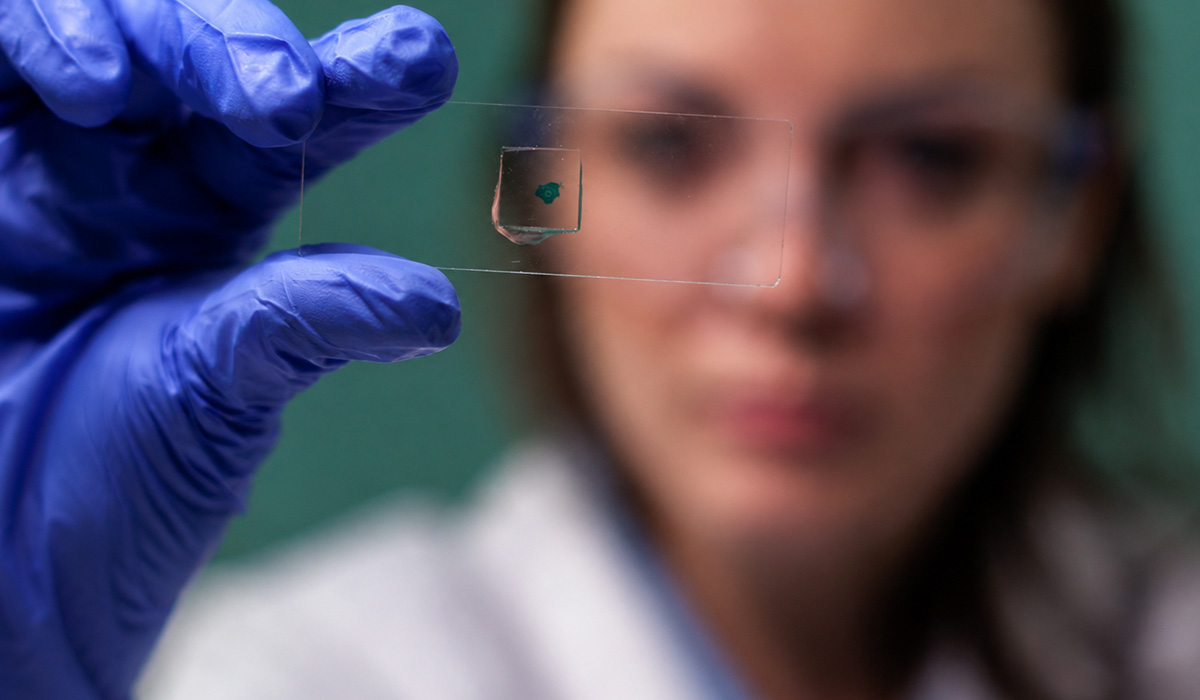
DNA examination is a scientific method of researching a person’s genetic material with the aim of establishing family ties or identifying a person. In cases of disappearance in action, it is used to compare the DNA of relatives with the biological samples of unidentified deceased or persons whose location is unknown.
The key feature of this method is its objectivity and high accuracy. Even in the absence of documents, external signs, or the possibility of visual identification, a DNA profile makes it possible to establish a person’s identity with a high probability.
What DNA Samples Are Used for Identification
For conducting the examination, the following types of samples can be used:
- samples of blood or buccal epithelium (a swab from the inner side of the cheek) from relatives;
- biological materials from the personal belongings of the missing person;
- fragments of bone tissue or other biological remains of unidentified bodies.
The specific set of samples is determined by the investigator or the expert institution depending on the circumstances of the case.
In the process of searching for a serviceman missing in action, an important role is also played by volunteers, who help families with navigation between state structures, the collection of information, communication with units, and the recording of data that can be significant for further identification.
Why DNA Examination Is Conducted in Cases of a Serviceman Missing in Action
When a serviceman missing in action figures in a case, DNA examination performs several critically important functions at once:
- it confirms or refutes the fact of death;
- it makes it possible to officially establish a person’s identity;
- it is a basis for entering information into the Unified Register of the Missing;
- it creates legal certainty for the family regarding status, social payments, and inheritance rights.
It is precisely DNA analysis that often becomes the decisive stage when field searches, testimonies, or documents do not give a result.
When and Under What Conditions DNA Examination Is Conducted
DNA examination is conducted not immediately but after the official registration of the fact of disappearance. The algorithm of actions looks like this:
- The submission of a statement about the disappearance of a person to the police or military unit.
- The entry of data into the Unified Register of Persons Missing Under Special Circumstances.
- The referral of relatives for the collection of DNA samples.
- Conducting the laboratory analysis and storing the profile in the database.
It is important to understand that DNA examination can last for months, since it depends on the development of combat operations and access to places of possible burial.
Who Must Give a DNA Analysis in Cases of Those Missing in Action
It is recommended that the closest relatives of the missing person give DNA samples. Priority is determined by the degree of kinship:
- parents;
- children;
- full brothers and sisters;
In some cases, other relatives can be involved if there is no possibility of obtaining samples of the first line of kinship. This is especially relevant when it comes to a serviceman missing in action whose family lives in different regions or abroad.
DNA Examination and a Comprehensive Approach to the Safety of the Military
DNA examination is one of the most reliable tools during the search for those missing in action. It makes it possible to replace assumptions with exact data, and uncertainty with official confirmation. It is precisely this method that often becomes the key to establishing the truth in the most difficult cases of wartime.
A comprehensive approach to the safety of the military in wartime extends far beyond legal procedures and search mechanisms. It includes real protection on the battlefield, where modern samples of military-technical assets play a decisive role. It is precisely in this area that BlueBird Tech works, combining analytical expertise with the development of practical solutions for the Armed Forces of Ukraine. One of such solutions is the vehicle-mounted EW “Hrets XL”, an electronic warfare asset intended for reducing threats from enemy drones and increasing the level of protection of the military during movement and the execution of combat tasks.
Sources Cited
The material has been prepared on the basis of current state and regulatory documents, in particular:
- Law of Ukraine «On the Legal Status of Persons Missing Under Special Circumstances» of July 12, 2018, No. 2505-VIII, Kyiv.
- Resolution of the Cabinet of Ministers of Ukraine «On the creation of the Unified Register of Persons Missing Under Special Circumstances» of 29.08.2022, No. 535, Kyiv.
- Official clarifications of the Ministry of Internal Affairs of Ukraine regarding the procedure for the collection and use of DNA samples in cases of disappearance in action.