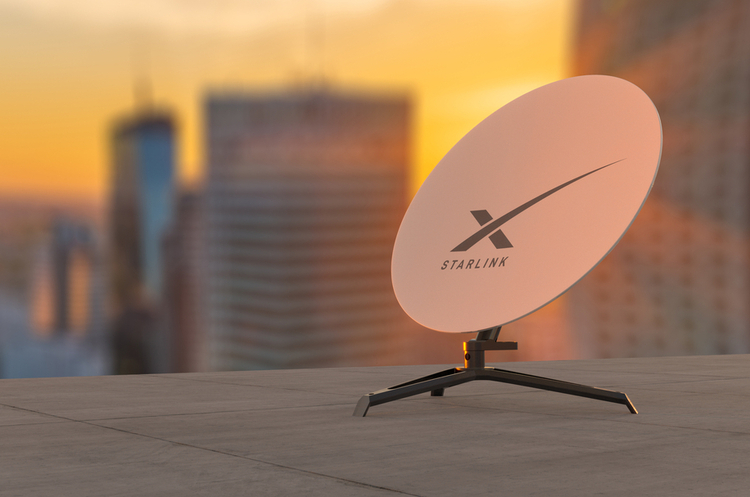
Starlink remains Ukraine’s primary satellite communications system. However, dependence on a single operator creates a strategic risk. DefPulse examined which terminal models are available in Ukraine, what alternatives to Starlink exist, what Ukraine is developing, and how much the equipment costs.
Overview of Starlink Models: From Front-Line “Pocket” Systems to Stationary Hubs
As of September 2026, four Starlink terminal variants are available on the Ukrainian market.
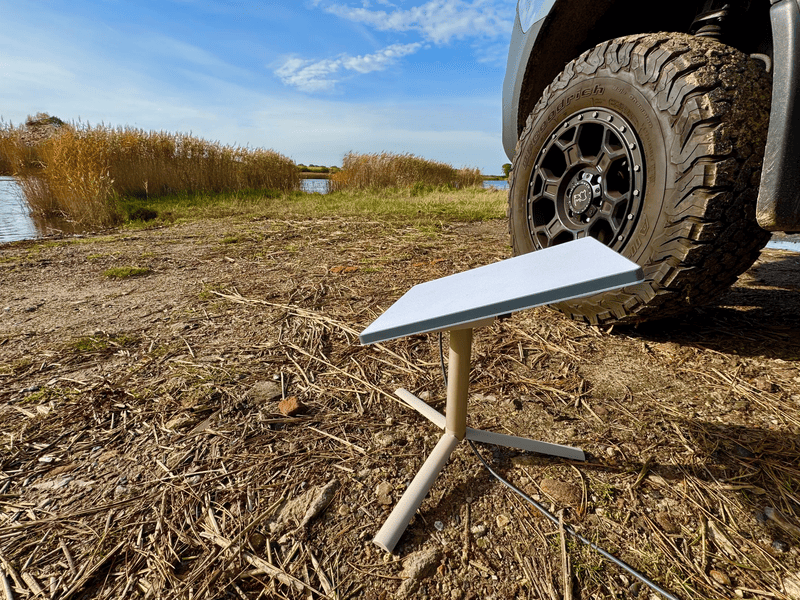
Starlink Mini / Mini X: Compact Terminals for Mobile Groups
Starlink Mini and the newer Mini X are compact terminals designed for mobile use. They feature built-in Wi-Fi, and the antenna weighs approximately 1.1 kg. The Mini X dimensions are approximately 298.5 × 259 × 38.5 mm.
- Weight. Antenna — approximately 1.1 kg; with stand and cable the kit weighs approximately 1.5 kg.
- Power consumption. On average 25–40 W.
- Power supply. Mini X supports 12–48 V DC, as well as USB-C Power Delivery with a source of up to 100 W (20 V/5 A).
- Speed. Starlink claims download speeds of up to 300+ Mbps, though actual performance depends on network load and operating conditions.
- Protection. The housing carries an IP67 rating.
- Mobility. The low weight and DC power capability make the Mini convenient for vehicles, mobile groups, and field kits.

Starlink Standard: The Primary All-Purpose Terminal
The fourth-generation Starlink Standard is a flat terminal with no mechanical actuator; orientation is handled entirely by software.
- Dimensions and weight. The antenna measures approximately 594 × 383 mm and weighs approximately 2.9 kg; with the stand the weight is approximately 3.2 kg.
- Power consumption. Approximately 75–100 W.
- Power supply. The standard kit runs on AC. Third-party and specialized DC power solutions are available for field use.
- Speed. Actual speed depends on the plan, network load, and region. Ukrainian retailers list peak values of up to approximately 300 Mbps for current kits.
- Connectivity. The current router supports Wi-Fi 6 and includes Ethernet ports.
The Standard is best suited where weight and power consumption are less critical: headquarters, command posts, offices, and stationary or semi-mobile facilities.
Starlink Performance: Professional Terminals for More Demanding Conditions
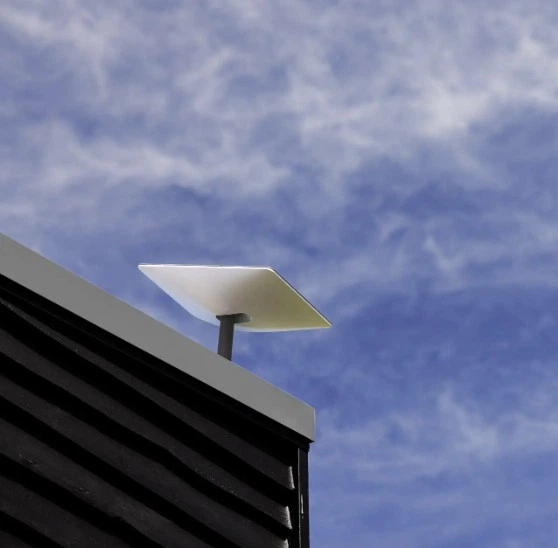
Under the Performance name it is worth distinguishing at least two categories of terminals — the newer Performance Gen 3 and the Flat High Performance.
- Performance Gen 3 features a more modern design and supports both AC and DC power. Starlink claims average consumption of approximately 70 W and a maximum download speed of up to 475 Mbps under certain conditions.
- Flat High Performance is a bulkier, previous-generation terminal. Its antenna weighs approximately 5.9 kg and power consumption is approximately 110–150 W.
Professional terminals are used where connection stability, a wide satellite field of view, and the ability to operate in more demanding conditions are important. Depending on the variant and service plan, they can be deployed on vehicles, in mobile command posts, and as a backup channel for critical infrastructure.
Comparison of Main Starlink Models
| Parameter | Mini | Mini X | Standard 4/4X | Performance Gen 3 | Flat High Performance |
| Primary use | Mobile groups, vehicles | Mobile groups | Headquarters, bases, offices | Professional use | Vehicles, demanding conditions |
| Antenna weight | ~1.1 kg | ~1.1 kg | ~2.9 kg | Depends on kit | ~5.9 kg |
| Power consumption | 25–40 W | 25–40 W | 75–100 W | ~70 W | 110–150 W |
| Power supply | DC / USB-C PD | 12–48V DC / USB-C PD | AC | AC / 12–56V DC | AC |
| Claimed maximum speed | up to 300+ Mbps | up to 300+ Mbps | depends on plan and conditions | up to 475 Mbps | depends on service |
| Protection | IP67 | IP67 | weather-resistant housing | IP69K with cables connected | IP56 |
Speed figures are maximum or manufacturer-claimed values and do not represent guaranteed real-world performance. Actual results depend on satellite network load, service plan, installation location, and signal reception conditions.
Ukrainian Modifications of Starlink for Field Conditions
A dedicated market for adapting Starlink to field conditions has emerged in Ukraine. Manufacturers and specialized suppliers offer enclosures, vehicle kits, power adapters, and modifications for battery-powered operation.
The most common modifications:
- DC power. Adapting terminals to run directly from batteries or a vehicle’s onboard electrical system.
- Compact enclosures. Protecting electronics from mechanical damage and weather conditions.
- Vehicle mounting. Kits for installing the terminal on a vehicle.
- Field kits. Combining the terminal, battery, and necessary switching equipment in a single portable package.
How Much Does Starlink Cost in Ukraine
Starlink prices vary by seller, configuration, and terminal origin, so the figures below represent the market range.
| Model | Format | Approximate price in Ukraine |
| Starlink Mini | compact, mobile | ~17,700–25,000 UAH |
| Starlink Mini X | compact, mobile | ~20,000–25,000 UAH |
| Starlink Standard 4/4X | stationary | ~24,500–28,000 UAH |
| Starlink Performance Gen 3 | professional | ~20,700–37,000 UAH |
| Starlink Flat High Performance | professional/mobile | from ~96,000 UAH |
The terminal cost is only part of the expense. The Starlink satellite service must be paid for separately. The price and availability of a plan depend on the country, plan type, and specific address of use. The company offers separate solutions for Residential, Roam, and business users.
Alternatives for a Crisis: What Can Replace Starlink?
The Space Layer: OneWeb and the UASAT Project
OneWeb (Eutelsat) is officially represented in Ukraine (including through a partnership with Kyivstar).
Advantages. Greater resistance to active jamming due to a different signal architecture.
Disadvantages. Heavy terminals (>10 kg), high power consumption, kit cost from $7,000.
Ukrainian company UASAT already offers its own satellite communication terminals, such as the GEO 74R and GEO 74 (2W). Unlike Starlink, this is a geostationary satellite segment solution. The UASAT GEO 74R weighs approximately 12 kg and, depending on the plan, delivers speeds of up to 100 Mbps. The UASAT GEO 74 (2W) has a claimed weight of approximately 22 kg, speeds of up to 100 Mbps, and latency of approximately 600–760 ms.
At the same time, the company is developing its own LEO constellation (similar to Starlink). According to its stated plan, UASAT intends to deploy up to 360 satellites by 2030, with the launch of the first test satellite, UASAT-NANO, scheduled for autumn 2026.
Direct Satellite Connectivity on Smartphones: Direct to Cell
Another backup communications channel is being developed by Kyivstar together with SpaceX. Direct to Cell technology allows compatible smartphones to connect to the Starlink satellite network without a separate terminal.
As of 2026, Kyivstar offers:
- SMS via the satellite network;
- Light Data mode on compatible Android smartphones;
- basic use of select services, including Viber, WhatsApp, and Google Maps.
This is not a full replacement for a Starlink terminal: bandwidth is significantly lower and use cases are limited. Nevertheless, the technology can serve as a backup channel for someone who has lost terrestrial mobile coverage.
Direct to Cell does not work in occupied territories, combat zones, or border areas.
Starlink in Ukraine Now Requires Verification
In 2026, Ukraine tightened control over Starlink usage. The Ministry of Defence, in cooperation with SpaceX, introduced a terminal verification system. For military use, authorized devices must be added to the relevant whitelist through the DELTA system.
The decision is linked to the need to control satellite communications use in the combat zone, in particular following reports of Starlink being used by Russian forces.
Without Internet: A Survival Formula for 2026
Attacks on data centers and restrictions on satellite systems have shown that no single monopoly solution guarantees resilience. Specialists therefore recommend the following resilience scheme for civilian households and businesses:
- Primary xPON cable connection (with an uninterruptible power supply for 48–72 hours).
- A backup Starlink Mini or Standard ready to run from a power bank or portable power station.
- A mobile router with multi-SIM support and Direct to Cell configured on a smartphone.
For information on organizing communications in military projects and combat zones, see the article “Field Data Networks: How the Armed Forces of Ukraine’s Communications Work“.