On August 6, 2024, Ukrainian F-16s took to the sky on combat duty for the first time. At the time, it seemed like the beginning of a rapid transition to Western standards. Two years have passed, and the Air Force of the Armed Forces of Ukraine is still flying a mix of Soviet aircraft, American and French fighters. Yet at the same time, they are turning this patchwork fleet into a functioning system through unconventional engineering solutions. We took a closer look at what Ukraine’s “falcons” are flying, how they respond to complex challenges, and what they expect in the near future.
What Is Already Flying in Ukraine?
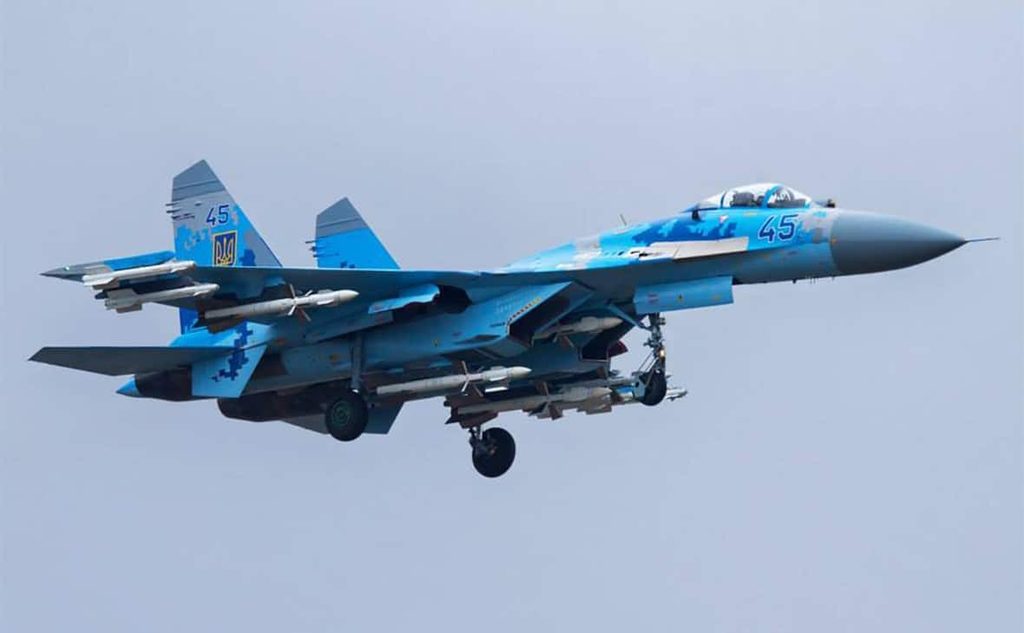
The MiG-29 and Su-27 remain the most numerous combat aircraft in the Armed Forces of Ukraine. Poland and Slovakia have transferred more than 30 MiG-29s of various modifications to Ukraine. These are aircraft with a maximum speed of up to 2.2–2.5 Mach, capable of carrying R-27 and R-73 missiles, but without modern fire-and-forget systems and without direct integration into the new airborne battle management network.
Su-25 “Grach” ground-attack aircraft (according to open-source data, Bulgaria and North Macedonia have transferred at least 18 aircraft) and L-39 Albatros trainer-combat jets continue to operate as ground support attack aircraft, though they sustain heavy losses from air defense systems.
Of course, the most notable change has been the arrival of F-16s and Mirage 2000-5Fs in the Air Force. As of mid-2026, Ukraine has received at least 42 F-16s from the Netherlands, Denmark, and Norway. Up to 45 more are expected in the coming years.
It has not been without problems: in the spring of 2025, during a massive Russian attack, the Armed Forces of Ukraine lost two F-16s in combat, and pilots Pavlo Ivanov and Maksym Ustymenko were killed. Yet another grim reminder of how dangerous it is to fly against the world’s largest air defense system.
Five French Mirage 2000-5Fs, transferred in February 2025, were initially used exclusively for interception. According to analysts, the French aircraft shoot down up to 98% of Kh-101 cruise missiles.
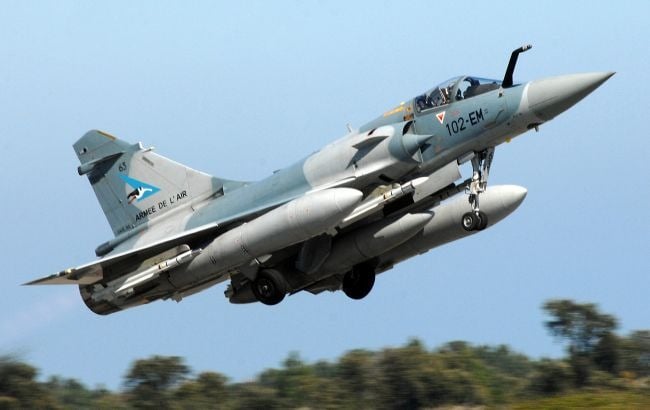
In the spring of 2026, The War Zone spotted footage indicating that the Mirages have begun to be used for strikes against ground targets as well: the aircraft drop bombs using the “toss bombing” method (with a sharp climb before the target), which allows them to avoid the air defense engagement zone.
Since March 2026, the Air Force has been operating Ukraine’s first-ever airborne early warning aircraft — the Swedish Saab 340 AEW (ASC 890). The Ministry of Defense officially confirmed this only on September 4, 2026.
Canadian military analyst Kyle Glen calls such an aircraft a “force multiplier”: it makes every fighter twice as effective, allowing F-16s, Mirages, and future Gripens to fly with their own radars switched off — making them significantly harder to detect. However, Soviet-era MiG-29s and Su-27s gain no benefit from the Saab 340.
The Most Interesting Part: What Gets Hung Under the Wings
Engineering improvisation — that is how the Ukrainian experience across all branches of the military can be described: adapting modern solutions to outdated platforms. The Air Force has a particularly notable track record in this regard.
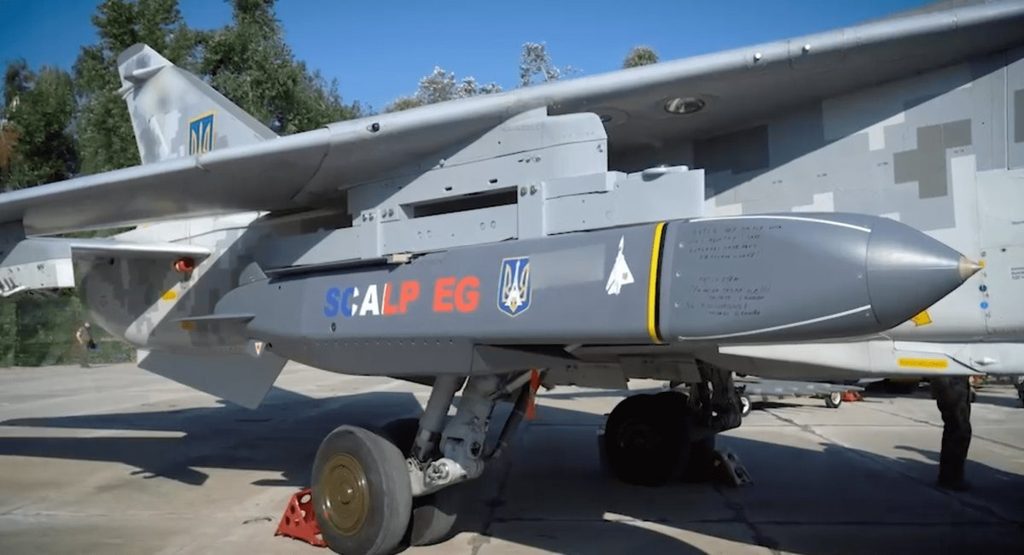
The most well-known example is the long-range Storm Shadow/SCALP-EG cruise missiles, which the UK and France began transferring in the summer of 2023. At that point, none of the Western fighters available to the Armed Forces of Ukraine could carry them as standard. So engineers adapted the suspension system for the Soviet Su-24M bomber, using pylons from decommissioned British Tornado aircraft, among other things. The result — strikes on the Crimean Bridge, headquarters, and ammunition depots deep inside occupied territory.
And that is not the only example. American AIM-9 Sidewinder missiles, which the US and Canada began transferring in the autumn of 2023, were successfully adapted for Soviet MiG-29s. The secret lies in the fact that back in 1958, an unexploded AIM-9B made its way to the USSR from China, and Soviet designers created a copy of it — the R-13 (K-13) — which was installed on all Soviet fighters of that era, from the MiG-21 to the MiG-29.
The MiG-29 also stands behind another precedent — the world’s first integration of the AGM-88 HARM* anti-radiation missile onto this Soviet aircraft, something no one had done before Ukraine.
*AGM-88 HARM — an American anti-radiation missile manufactured by Raytheon/Northrop Grumman, developed in the 1980s. It homes in on the emissions of enemy radars and is standard equipment on NATO fighters, including the F-16 and F/A-18, for suppressing air defense systems.
French “smart” bombs, meanwhile, are operational across three different platforms simultaneously. AASM Hammer guided bombs, initially adapted for the MiG-29 and Su-24, are now officially in service on the Mirage 2000-5F as well.
Combat use of the AASM Hammer has been recorded since March 2024 — when the Armed Forces of Ukraine first used them to strike the occupied Avdiivka Coke and Chemical Plant, and since then the bomb has been employed repeatedly against targets in Zaporizhzhia, Kherson Oblast, and the Belgorod direction. In particular, a MiG-29 of the 40th Tactical Aviation Brigade “Ghost of Kyiv” dropped such a bomb on a Russian drone operators’ and personnel base in the village of Nesterianka, Zaporizhzhia Oblast.
The AASM Hammer is a hybrid of a rocket and a bomb. The range of the basic version exceeds 70 km thanks to a solid-fuel booster that adds thrust after release. According to Safran, for the basic version it exceeds 70 km, although in practice Ukrainian pilots use the “toss” method from a cabriole maneuver, which significantly reduces the actual engagement distance.
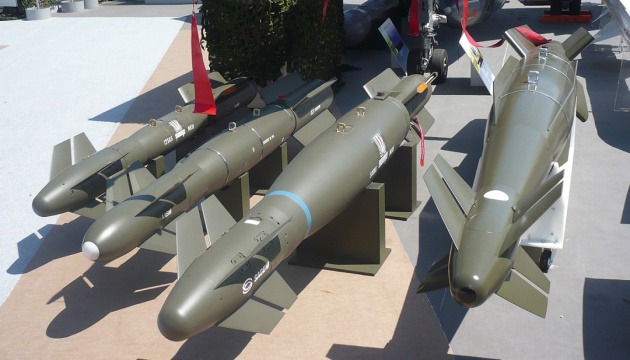
However, the Hammer is not the only type of guided munition in the Armed Forces of Ukraine’s arsenal. Since February 2023, Ukraine has also been receiving American JDAM kits — modular guidance packages that convert conventional free-fall bombs into precision weapons using the same principle — and these have likewise been adapted for the MiG-29 and Su-27.
In the summer of 2025, it emerged that the Trump administration was considering transferring long-range JASSM-ER cruise missiles for the F-16 to Ukraine, with a range of up to 925 kilometers. According to The Times, such missiles would bring at least 30 Russian airfields deep inside Russian territory within striking range. The US has not yet made a final decision, but these missiles are likely the next candidate for adaptation to all available platforms in the Armed Forces of Ukraine.
The Unmanned Component
Turkish Bayraktar TB2 strike-reconnaissance drones — up to 50 aircraft, transferred primarily before 2022 — remain part of the aviation arsenal, though their effectiveness against modern Russian air defenses has declined significantly compared to the early days of the full-scale invasion.
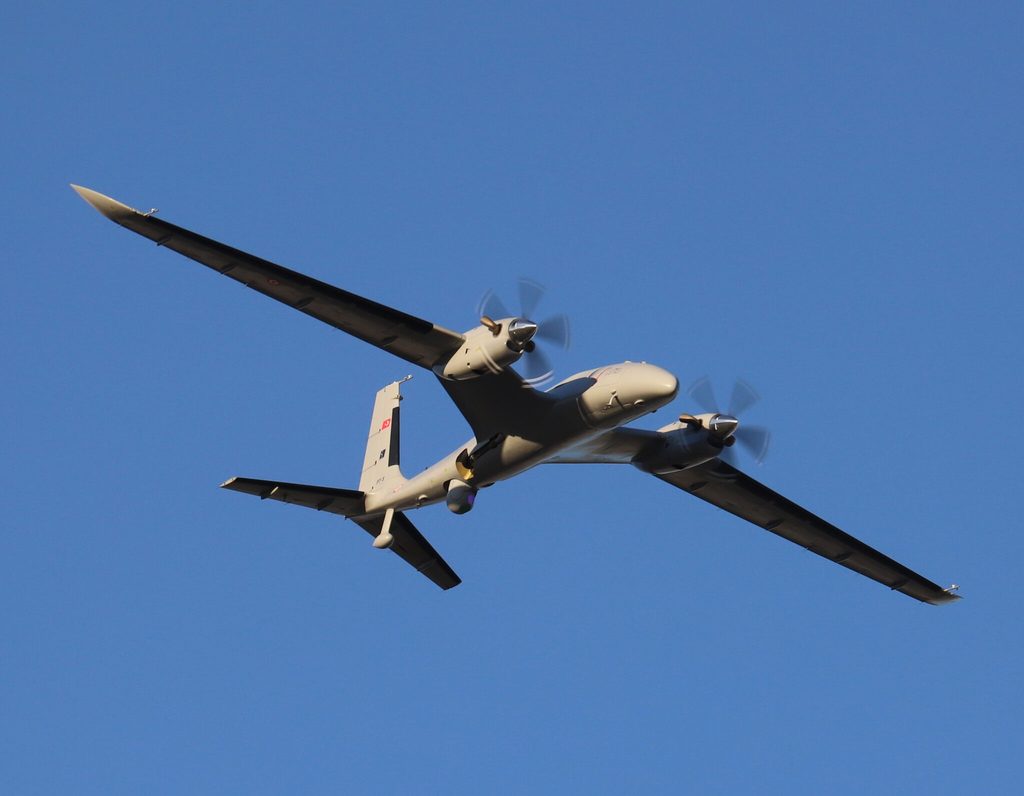
More interesting is this: in March 2026, manufacturer Baykar conducted combat testing of a new line of munitions on the heavy strike UAV Bayraktar Akıncı, whose maximum takeoff weight reaches 6 tonnes and payload capacity up to 1.5 tonnes, including the ability to carry cruise missiles. Deliveries of the new aircraft to Ukraine have not yet been confirmed, though negotiations have been ongoing for several years.
What Is on the Way?
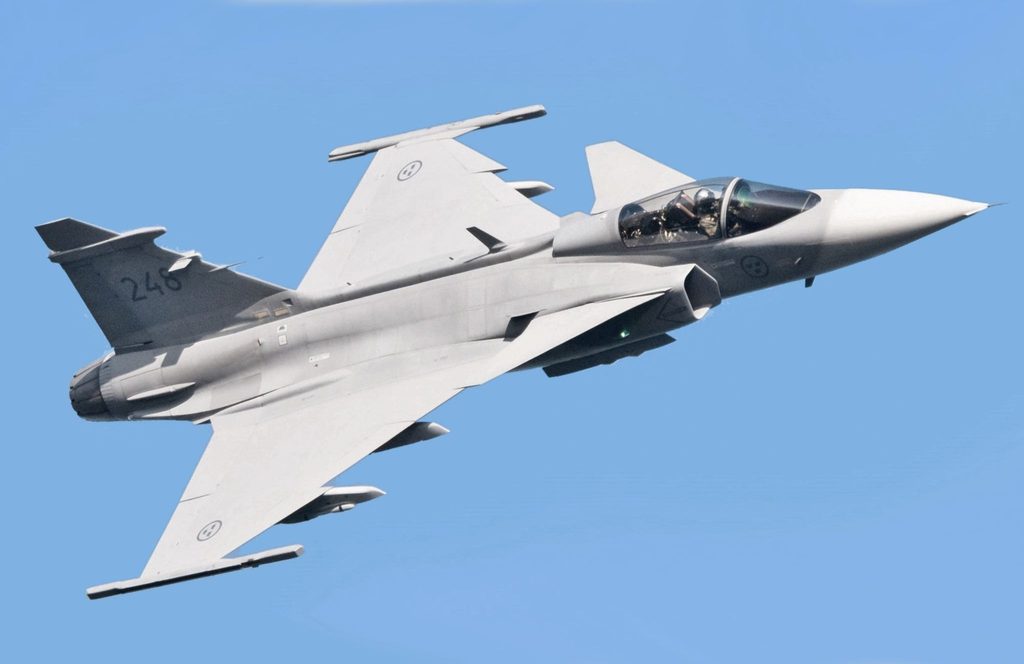
In May 2026, Sweden and Ukraine signed an agreement for 16 upgraded Gripen C/Ds plus up to 20 new Gripen Es, but Swedish Prime Minister Ulf Kristersson noted that deliveries will begin in early 2027. In the long term, Ukraine expects a total of 150 aircraft of this type.
Gripens armed with MBDA Meteor ramjet-powered air-to-air missiles could potentially shoot down glide bomb carriers — Russian Su-34s — when they approach 50–60 km from the front line to release a bomb 80–90 km deep into Ukrainian territory. Interception could potentially occur before the aircraft even enters its launch zone. Aviation expert Kostiantyn Kryvolap comments: shooting down just one or two Su-34s or Su-35s could force Russia to completely rethink its guided bomb employment tactics.
In July 2026, Emmanuel Macron announced the transfer of 16 French Rafales, but immediately clarified that the first aircraft will arrive only in 2028–2029. Pilot training is set to begin this year, but Dassault Aviation’s production backlog is booked years in advance: even Serbia’s 2024 order will not be fulfilled before 2028. Dassault Aviation’s total order portfolio, at current production rates, keeps the company booked for approximately 8.5 years. At the same time, France has promised to transfer licenses for the production of Aster-30 missiles, AASM Hammer guided bombs, and SCALP cruise missiles.
So the F-16 remains the main “workhorse” of the Ukrainian military. Partners are helping with this. Belgium, for instance, will increase its contribution from 30 to 53 aircraft: seven will be transferred in 2026, five in 2027, fourteen in 2028, and the remaining twenty-seven in 2029.
Soviet MiG-29s and Su-27s, despite their age, remain the most numerous and most “heavily armed” class: every new type of Western munition is first tested on them before these solutions are transferred to more modern platforms. The Su-24 fulfills the role of long-range deep-strike aircraft thanks to Storm Shadow/SCALP, while Su-25 attack aircraft continue to support infantry at the most dangerous sections of the front.
The next two to three years are set to fundamentally expand the capabilities of this system. Until then, the main burden will continue to be borne by the F-16s, Mirages, and “re-shod” Soviet hardware — along with the engineers who keep finding ways to fit new Western weapons onto old Soviet hardpoints faster than the official manufacturers themselves.