Modern drones are used in dozens of fields — from entertainment and photo-video filming to reconnaissance, monitoring, and complex professional tasks. Most such craft work on one basic principle — control through a radio channel. That is precisely why the concept of a «radio-controlled drone» is the basis for understanding most modern UAVs.
What a Radio-Controlled Drone Is and How It Works
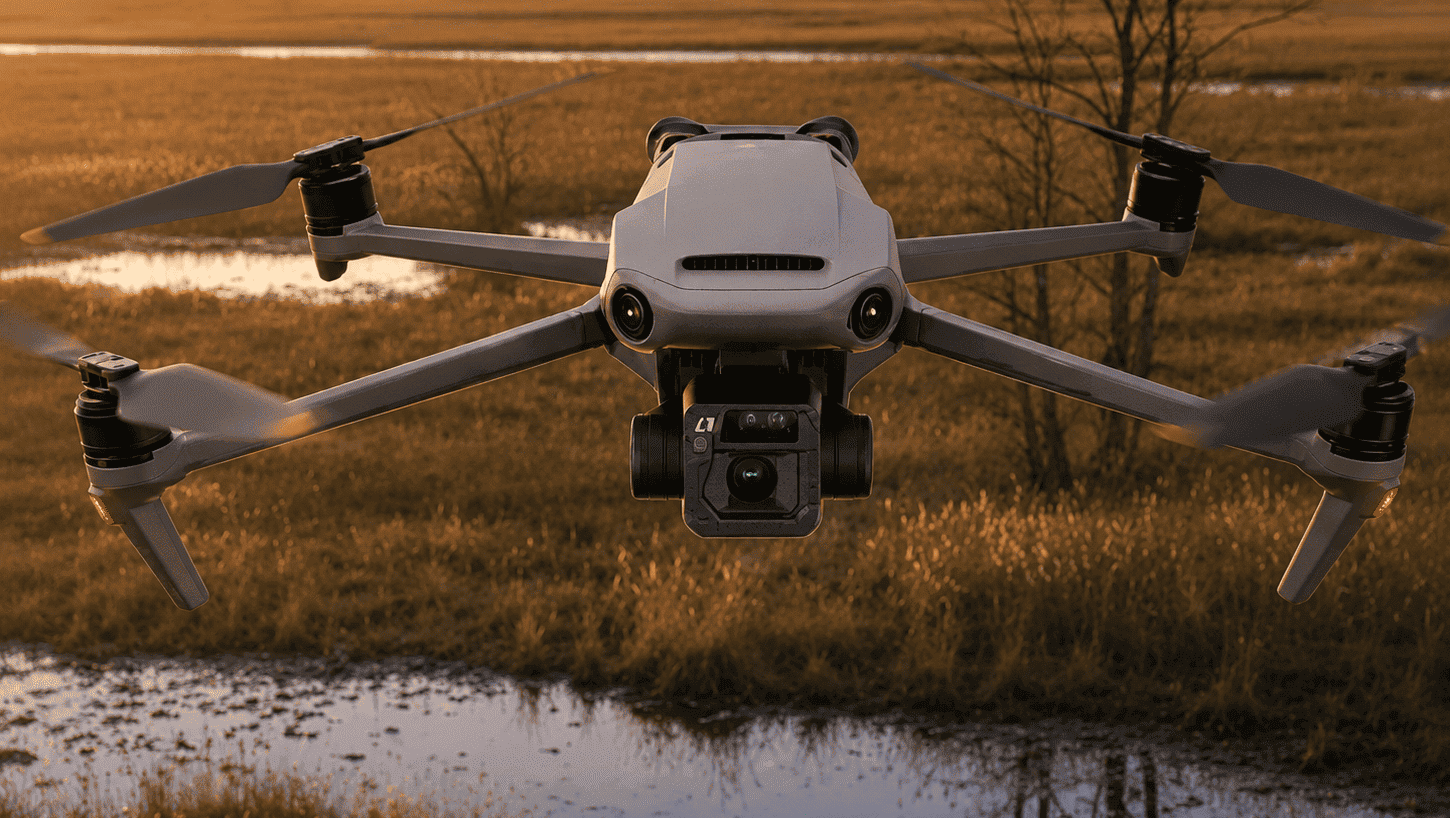
A radio-controlled drone is an unmanned aerial vehicle that receives commands from the operator through a wireless communication channel. Control is carried out by means of a controller, a ground station, or special software.
The operating principle is based on the constant exchange of signals between the transmitter and the receiver. The operator sets the direction, speed, flight altitude, and other parameters, and the drone’s electronics convert these commands into the movements of the motors and control elements.
Most modern radio-controlled drones also transmit feedback information to the operator: the video signal from the camera, telemetry, data about the battery charge, coordinates, and the state of the systems. This makes it possible to control the craft in real time even at a significant distance.
The Principle of Radio Control and Signal Transmission
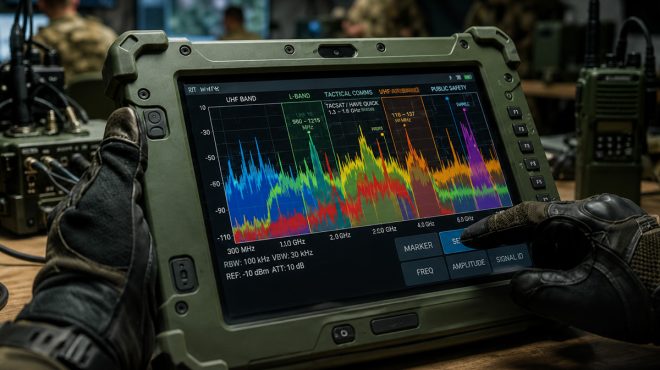
The radio control of a drone takes place by means of special frequency bands. The 2.4 GHz, 5.8 GHz, and other professional bands are most often used depending on the equipment. The transmitter forms a signal, which through an antenna is transmitted into the air, and the receiver on board the drone receives and processes it. Video and telemetry are transmitted in the opposite direction.
The stability of communication depends on many factors: the power of the transmitter, the quality of the antenna, the presence of radio interference, the terrain, the distance between the operator and the drone, weather conditions, the congestion of the airwaves by other devices, and the quality of the equipment.
In ordinary conditions, amateur radio control systems ensure a range of 1 to 5 km, professional complexes — up to 10–20 km in the presence of direct line-of-sight and the use of signal amplifiers. An important parameter is the signal delay: for video it is usually from 30 to 150 ms depending on the communication protocol.
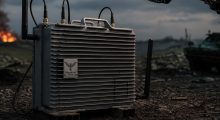
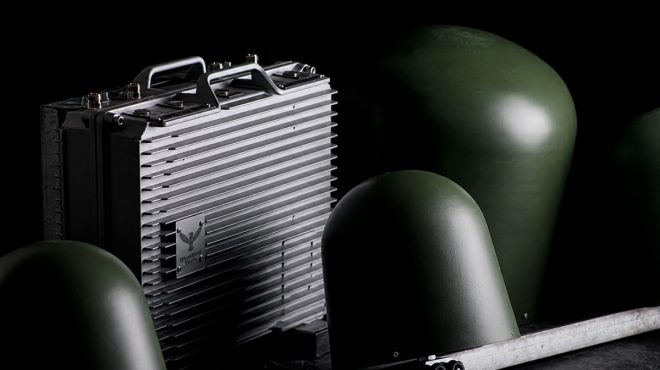
A key role in the reliability of control is played precisely by the antenna system. Even a powerful transmitter will not ensure quality communication without a correctly selected and installed antenna. In this context, an important element is antennas for signal amplification and stable communication from BlueBird Tech. Such solutions make it possible to increase the range and resilience of the radio channel, reduce the impact of interference, and ensure confident control of a drone in difficult conditions — both in the city and in open terrain.
Main Tasks of Radio-Controlled Drones
The field of application of radio-controlled drones is extraordinarily wide. They are used for aerial photo and video filming, the monitoring of territories, mapping, the inspection of infrastructure objects, search-and-rescue operations, agricultural work, sports competitions, the training of operators, reconnaissance, and surveillance.
In the professional and military sphere, radio-controlled drones perform even more functions: reconnaissance of positions, the correction of artillery fire, the escort of units, the engagement of targets by means of FPV systems, the delivery of equipment, the operational control of territories.
It is precisely the versatility and simplicity of application that have made radio-controlled drones a mass tool in civilian, commercial, and professional activity.
Advantages of Drones With Radio Control
Radio-controlled drones have a number of significant advantages. These include the simplicity of design, the possibility of control in real time, relatively low cost, flexibility in settings, high maneuverability, quick operator training, the availability of components, the possibility of modernization, a wide choice of equipment and accessories.
Such drones easily adapt to specific tasks. Replacing the camera, antenna, or software makes it possible to quickly change the functionality of the craft without a complete rebuild of the system.
In addition, radio-controlled drones do not require complex infrastructure for operation. A control panel, charged batteries, and a stable communication channel are sufficient.
Limitations and Vulnerabilities of Radio Control
Despite all the advantages, radio control also has substantial drawbacks. The main ones are: dependence on the quality of the radio channel, vulnerability to interference, limited communication range, the possibility of signal jamming, the impact of terrain and development, the congestion of the airwaves, the risk of losing control.
In real conditions, a drone can lose communication due to buildings, trees, mountains, difficult terrain, or due to the operation of electronic warfare assets. In such situations, safety systems are triggered — auto-return, hovering, or emergency landing.
It is precisely vulnerability to interference that is the main weak point of classic radio-controlled systems. In cases when full resistance to jamming is needed, alternative solutions are used. More about them can be read in the article: «A fiber-optic drone — how does it work?», which examines the principles of controlling drones without the use of a radio channel.
When Radio-Controlled Drones Are Most Effective
A radio-controlled drone demonstrates the greatest effectiveness in a relatively «clean» radio spectrum, at medium distances, and in the presence of direct line-of-sight between the operator and the craft.
Such drones are ideally suited for training flights, civilian tasks, filming from the air, the monitoring of territories, the inspection of objects, work in rural areas, short and medium distances, the training of new operators, and rapid deployment in field conditions.
In the professional sphere, they are often combined with repeaters, directional antennas, signal amplifiers, and other communication stabilization assets, which makes it possible to significantly expand the capabilities of the radio channel.
Conclusions
A radio-controlled drone is the basic and most widespread type of drone, which is used in most modern fields. Simplicity, accessibility, and the possibility of control in real time make it a universal tool for solving a wide range of tasks.
At the same time, the effectiveness of such a drone directly depends on the quality of communication and the conditions of operation. That is precisely why the correct selection of equipment — transmitters, receivers, and antennas — is a key factor of stable operation.