European countries are beginning preparations for a multinational force that could be deployed in Ukraine after the war with Russia ends. From November 9 to 22, the United Kingdom and France will conduct the KOALICJA 26.2 military exercise involving 11 states. The drills are designed to practice the mechanisms for transferring, supplying, and coordinating an international military contingent.
This was announced by the defence ministries of the United Kingdom and France.
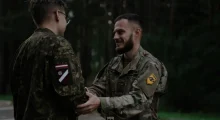
Around 2,800 servicemembers will take part in the exercise. Participating nations include Belgium, Estonia, France, Germany, Lithuania, the Netherlands, Spain, Sweden, Turkey, the United Kingdom, and Poland. US military personnel will not participate in the drills. In addition to foreign units, Poland will contribute nearly 2,000 of its own servicemembers.
The exercise will take place in Poland, France, and Turkey and will encompass land, air, and maritime components. It will form part of the preparation for the Multinational Force-Ukraine (MNF-U) — a multinational force established within the framework of the Coalition of the Willing.
According to the British Ministry of Defence, troops will practise the mechanisms for deploying, protecting, and sustaining a contingent intended to help restore the combat capability of Ukraine’s Defence Forces after hostilities end.
“These exercises demonstrate that the United Kingdom, together with France and our allies, is preparing for the day when peace comes to Ukraine. This is not a hypothetical plan but real forces ready to help Ukraine after the fighting stops,” said UK Defence Secretary Wes Streeting.
What tasks the multinational force will carry out
The future contingent may be assigned several tasks: protecting critical infrastructure, training Ukrainian servicemembers, supporting air-defence operations, and demining the waters of the Black Sea.
Special attention during the exercise will be devoted to command-and-control systems and coordination between units from different countries.
“These exercises will demonstrate that the Multinational Force-Ukraine is a real, capable, and rapidly deployable force, reflecting the serious commitment of Coalition of the Willing nations to Ukraine’s long-term stability and security,” said MNF-U commander British Lieutenant General Tom Beytman.
The United Kingdom will deploy around 300 servicemembers, including units from the British Army’s 7th Light Mechanised Brigade, known as the Desert Rats. They will practise logistical movements.
France will contribute hundreds of troops, including a unit equipped with approximately 50 loitering munitions. Turkey will not send its servicemembers to Poland; instead, it will deploy the maritime component of MNF-U in Istanbul, where procedures for maritime demining will be practised to restore safe commercial shipping to Ukrainian ports.
At the same time, the multinational force will not hold a mandate for peacekeeping activities or ceasefire monitoring. It will not operate under NATO command. Its deployment to Ukraine is possible only after a ceasefire is established and upon an invitation from Kyiv.
Peace Negotiations and Security Guarantees
The preparation of the military contingent is taking place against a backdrop of intensifying diplomatic efforts. On November 10–11, talks between representatives of the United States, Russia, and Ukraine are set to take place in Abu Dhabi. The upcoming meeting was announced by US Special Envoy Steve Witkoff.
The final size of MNF-U has not yet been determined. The United Kingdom and France have previously stated their readiness to contribute approximately 5,000 servicemembers each.
Meanwhile, Russia is categorically opposed to the presence of foreign troops in Ukraine. Putin has previously warned that Western military contingents on Ukrainian territory would be regarded by Moscow as legitimate military targets.
Ukrainian President Volodymyr Zelenskyy called on partners not to delay forming security guarantees, stressing that they must be genuinely effective.
“There is no alternative to peace, and the post-war security guarantees must be truly ironclad,” the head of state declared.
KOALICJA 26.2 will be one of the first practical stages in preparing European militaries for a possible post-war deployment in Ukraine.