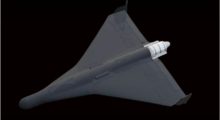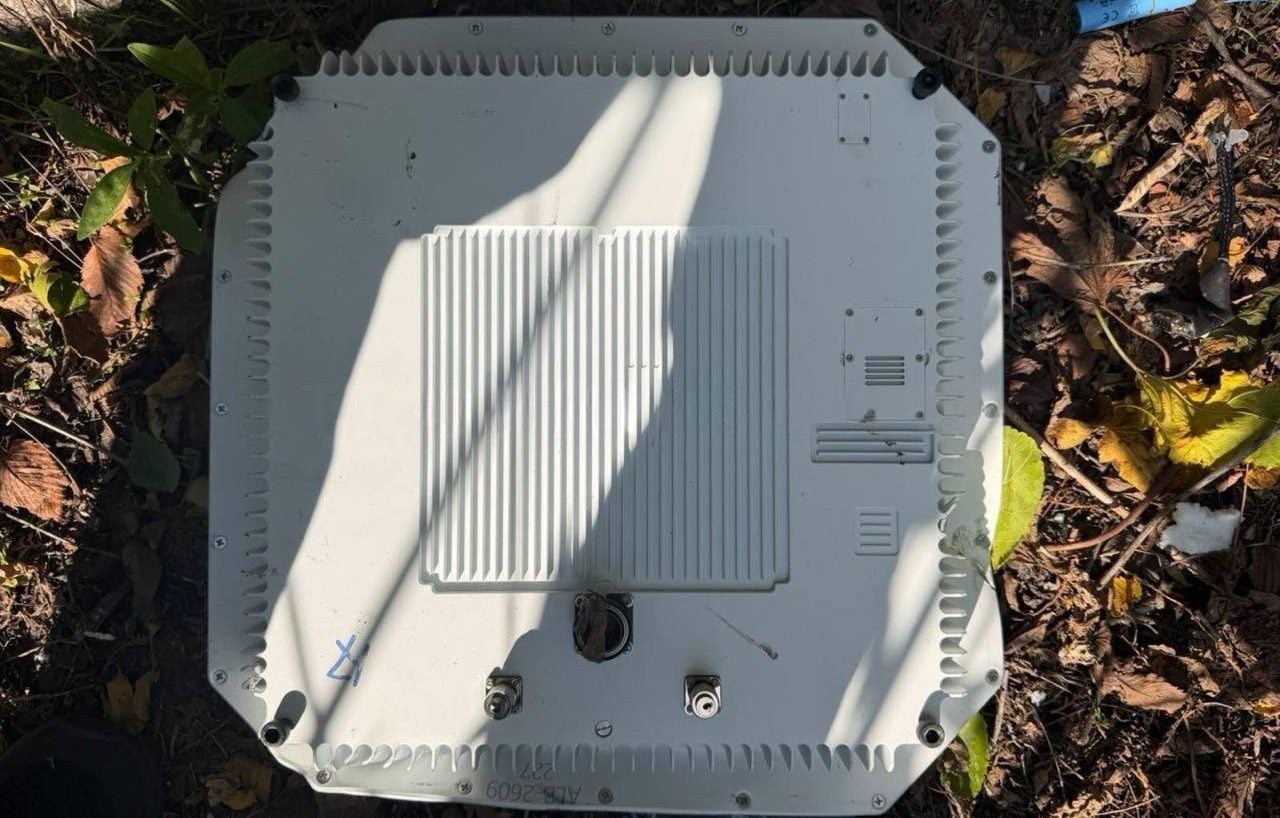
Presidential Advisor on Technological Affairs Serhii “Flash” Beskrestnov published a photo on September 30 of a 32-element CRPA antenna. In his assessment, it is of Chinese manufacture, and the ALB marking indicates the antenna was made for “Alabuga” — that is, for the Shahed. The exact source from which this sample was obtained is currently unknown.
According to Beskrestnov’s post, Russian manufacturers are preparing to deploy 20-element antennas, with 24-element antennas expected to enter production in 2027. He had previously written that 20-element CRPA antennas are set to replace 16-element ones on Shaheds, and that the VNDYR “Progress” institute will begin producing 24-element antennas in 2027. In an interview with Ukrinform, the expert clarified that intelligence provided the data on serial production of 24-element antennas starting next year.
Beskrestnov also outlined the evolution of antennas on Shaheds: initially 4-element, then 8-element, then 16-element, of either Chinese or Russian manufacture. According to him, a greater number of elements creates additional problems for Ukrainian electronic warfare, as such systems are more resistant to satellite navigation jamming.
Notably, earlier this summer the commander of the “Night Watch” unit, call sign Alkhimik, reported the capture of a 32-element antenna from a Shahed. In his words, it is effectively two 16-element antennas in one housing: the first operates in the L1 band, like the “Kometa,” and the second in L2. He also outlined an EW solution: two systems are needed — one for L1 and another for L2/L5 — and such an antenna could then be jammed.
In May, Chinese company Harxon, which manufactures CRPA antennas for Russian kamikaze drones, unveiled a 32-element model at DWC2026:
- 390 × 390 × 52 mm;
- weight under 6.5 kg;
- power consumption up to 90 W;
- simultaneous suppression of up to 31 interference sources.
An investigation by Nordsint shed light on the supply chain delivering antennas to Russian drone manufacturers. Undercover reporters were directed to NavX Technology, affiliated with Harxon. It issued a quote for 200 antennas totaling nearly $1.93 million. A NavX representative stated at the time that the company had supplied antennas to “Alabuga” and that a 32-channel version was in development.