Ukraine plans to reach a production rate of approximately 400 high-speed interceptor drones per month by the end of October, intended primarily to counter Russia’s new jet-powered strike UAVs.
President Volodymyr Zelensky said this in an interview with Financial Times on October 2.
According to the head of state, Ukraine is currently testing five interceptor models. This does not mean producing 400 units of all five types: by the end of October, that production rate is expected to be reached for one of the designs, while the remaining four are still in the testing phase.
Zelensky identified powerplants as the main bottleneck, noting that Ukraine has to import a significant portion of the engines for such drones.
“Engines are key. We really do import a lot of engines,” the president stated.
At the same time, Ukraine has already decided to establish domestic production of jet engines of various types. Zelensky announced this following a Supreme Commander-in-Chief’s Staff meeting on September 25. At that time, the president also stated that testing had already identified the main systems capable of strengthening Ukraine’s air defenses, and that production of these systems is being accelerated.
Zelensky did not officially disclose the names of all five models. However, several developments have already appeared in open sources.
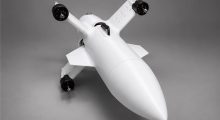
Among them is the P1-SUN Jetkiller by SkyFall — an accelerated version of the P1-SUN capable of reaching up to 370 km/h. According to Reuters, this interceptor has already shot down more than a dozen jet-powered targets and was being prepared for serial production.
Another known development is the STING by Wild Hornets. Some public materials estimate its maximum speed at approximately 280–315 km/h. Ukrainian units are already using it against aerial targets.
Also under testing are the Alexa Spatium — a jet interceptor with a turbojet engine — and the ZIRKA, which features automated detection and targeting systems.
Also mentioned separately are the WIY STRILA, which the military has called one of the fastest interceptors at around 400 km/h, and the Bullet by General Cherry, which its developers plan to push beyond 400 km/h.
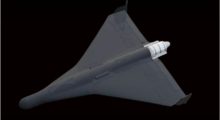
The lack of fast interceptors became a pressing issue due to the rapid proliferation of Russian jet-powered Geraniums. According to Ukrainian military sources, they can exceed 400 km/h, with some modifications reaching even higher speeds. As a result, older interceptors effective against slower piston-engine Shaheds cannot catch up with the target.
According to Volodymyr Zelensky, Russia can launch around 500 drones within a single day, with approximately half of them being jet-powered. Ukraine estimates their interception effectiveness at approximately 57%, whereas for conventional drones this figure stands at 85–90%.