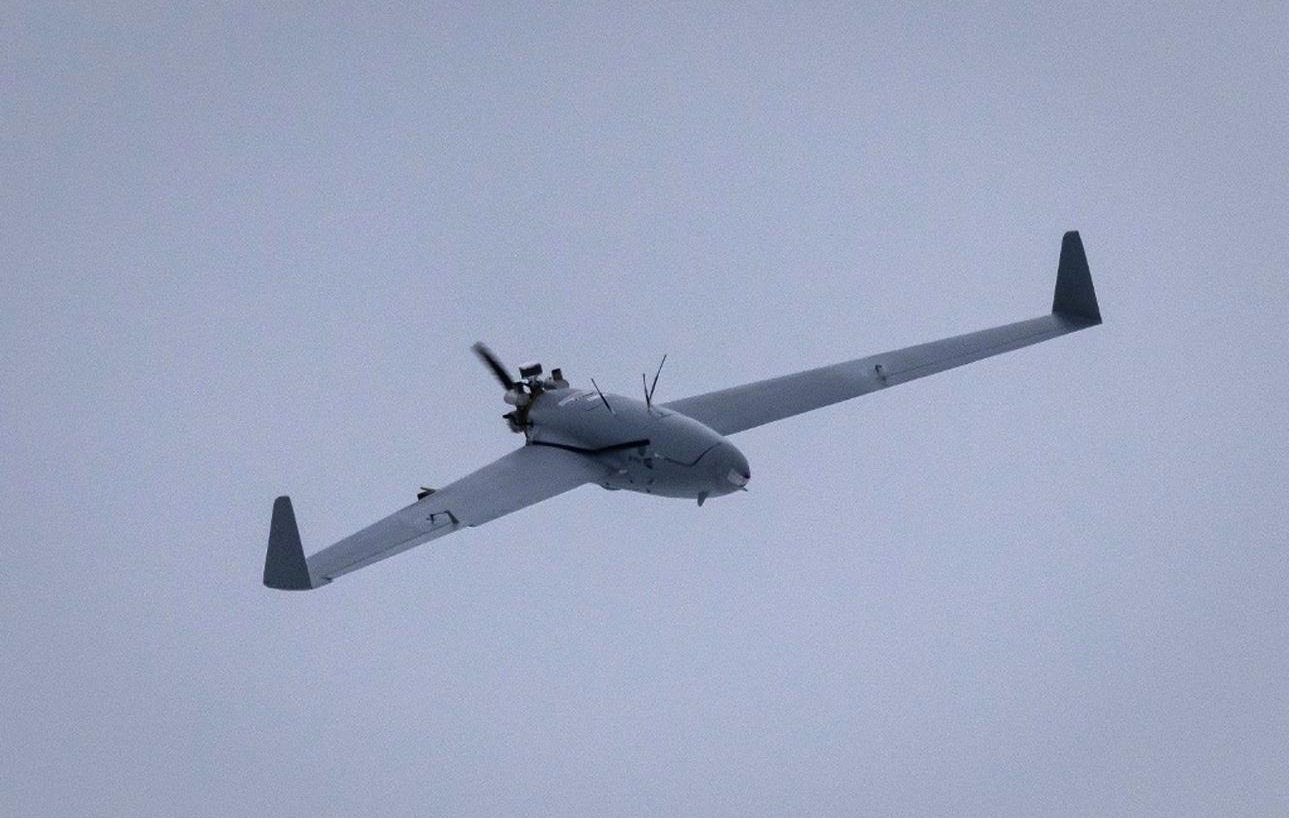
Hornet and Molniya are two wings built on opposite ideas: the Ukrainian Hornet focuses on “smart solutions” and range, while the Russian Molniya focuses on low cost and mass production.
Both belong to a new class of “middle-strike” systems: fixed-wing drones that hit targets 30–200 km from the line of contact. Their task is precision strikes, depleting air defense, making roads dangerous, and forcing the enemy to live under a constant sense of threat. DefPulse compared both platforms.
Hornet: A Bet on Autonomy and Serial Production
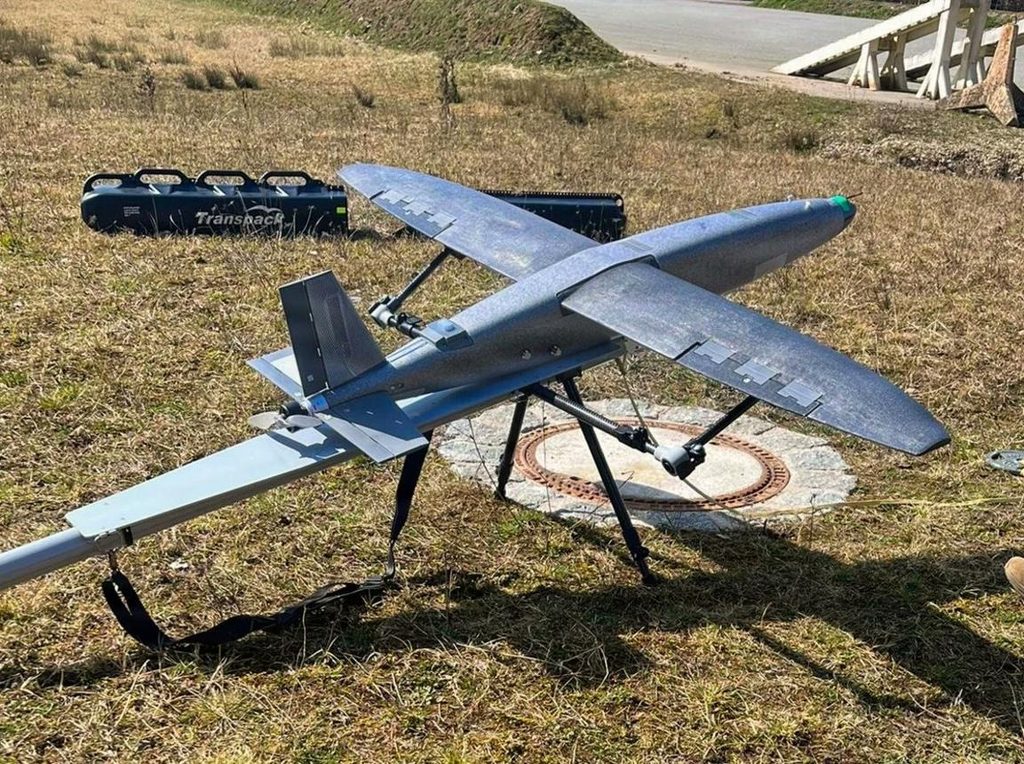
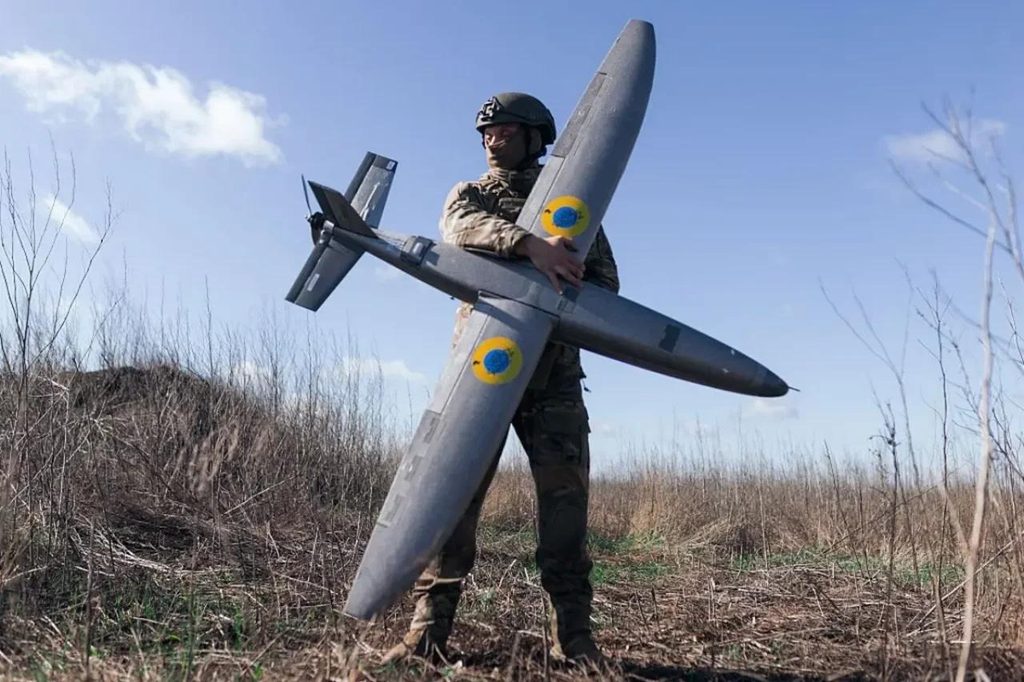
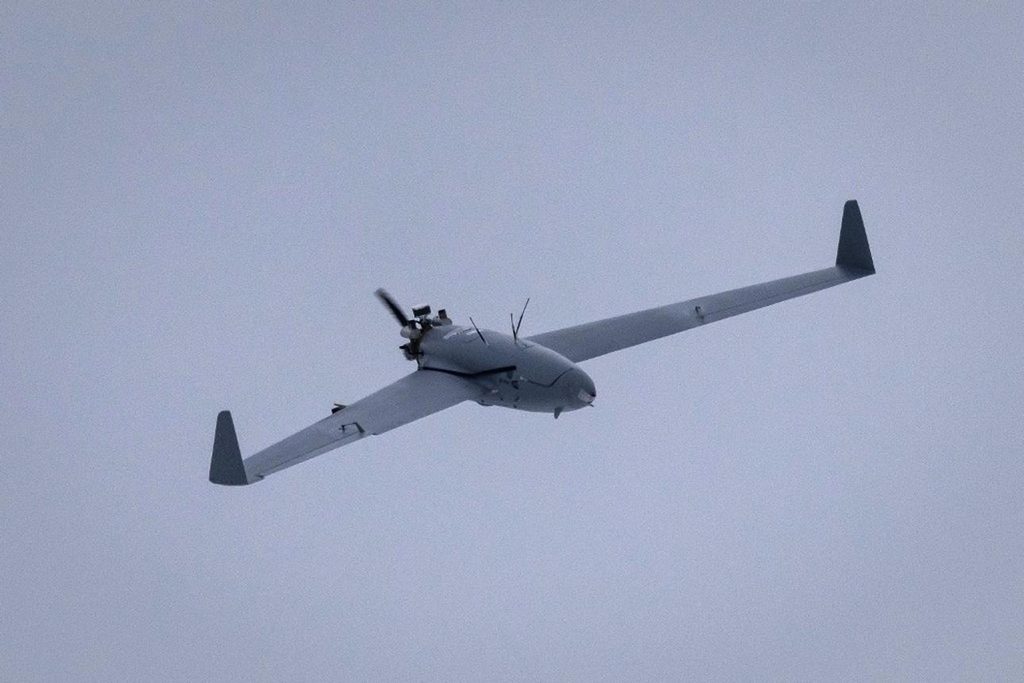
Developed by the American company Perennial Autonomy (Swift Beat LLC), Hornet is an example of how to make high-tech weapons mass-produced. At a price of about $5,000, the aircraft has a precisely molded expanded polypropylene (EPP) wing reinforced with carbon fiber and a powerful computer based on a Qualcomm chip.
Its purpose is deep precision strikes (130–200 km) against fuel trucks, radars, armored vehicles, and logistics hubs. In the summer of 2026 alone, the Armed Forces of Ukraine produced more than 10,000 such UAVs, effectively paralyzing the enemy’s land supply routes.
Molniya: A Loitering Munition at the Price of a Smartphone
The Russian “Molniya” from Atlant Aero is an asymmetric answer to a shortage of precision weapons. At a price of $300 to $1,000, its design resembles a school aeromodeling club project: a plywood center wing section, aluminum parts, and foam outer wing panels.
The task of the Molniya is to create a high density of launches at ranges of up to 30–50 km, deplete scarce anti-aircraft missiles, and destroy fortifications.
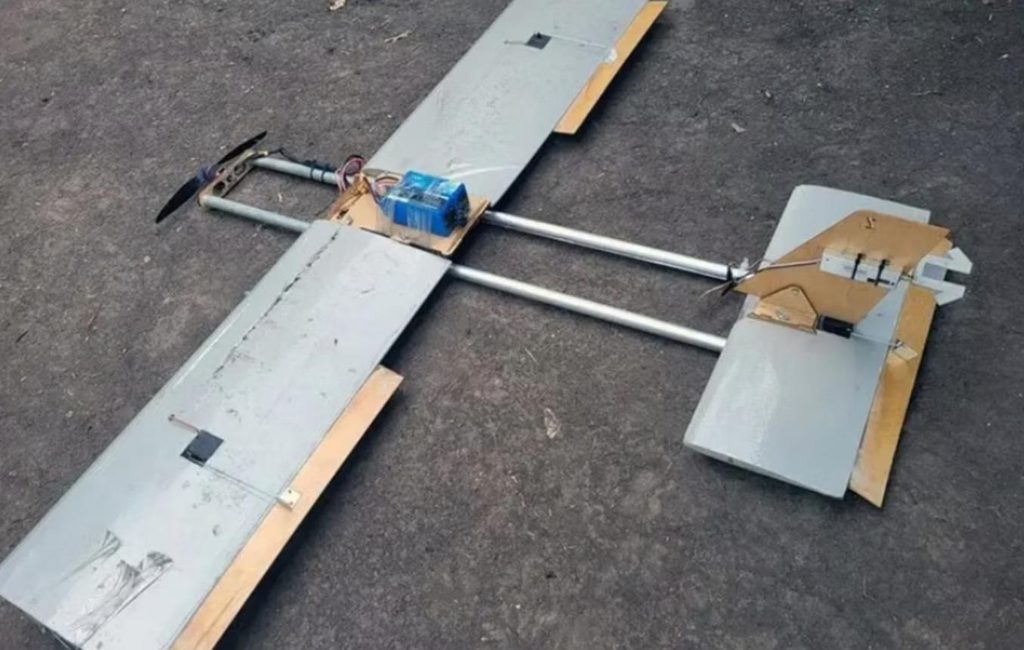
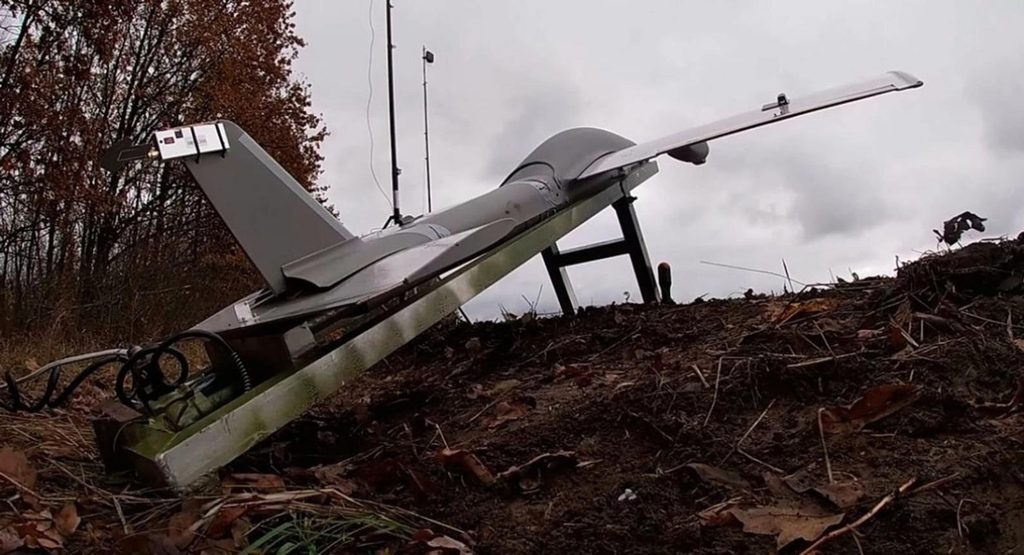
Unlike many quadcopters, the Molniya uses a wing for horizontal flight. This design makes it possible to carry a warhead over a distance unreachable for a significant share of ordinary FPV copters and to use the aircraft against vehicles, positions, and support facilities.
The family has several configurations:
- Molniya-1 — the basic strike variant.
- Molniya-2 — a modification with two engines and a modified airframe for greater range and payload.
- Molniya-2R — a reconnaissance version.
Hornet vs. Molniya
| Parameter | Hornet | Molniya-1 / Molniya-2 |
| Developer | Perennial Autonomy / Swift Beat LLC (USA/Ukraine) | Atlant Aero (Russia) |
| Approximate cost | ~$5,000 | ~$300 – $1,000 |
| Materials | EPP foam, carbon fiber, molded plastic | Plywood, aluminum profile, foam |
| Takeoff weight | ~15 kg (airframe ~5 kg) | Up to 10 kg (Molniya-1) / 10–12 kg (Molniya-2) |
| Warhead | Up to 5 kg (fragmentation, shaped-charge, thermobaric) | 3–5 kg (Molniya-1) / up to 10 kg or TM-62 mine (Molniya-2) |
| Wingspan | 2.2 m | 1.2–1.5 m |
| Cruise / Max speed | 100–120 / up to 300 km/h (in a dive) | 72–90 / up to 190 km/h |
| Operational range | 130–150 km (up to 200+ km with a balloon) | 30–40 km (Molniya-1) / up to 50 km (Molniya-2) |
| Navigation / Communications | AI auto-lock, optical odometry, WFB-NG, Starlink | FPV (ELRS), fiber optic, computer vision |
Battle of Technologies: AI and Optical Odometers vs. Fiber Optics
Electronic warfare near the front line is so intense that classic GPS signals and analog video channels are almost completely jammed. The designers of both drones had to look for radical technological solutions.
How Hornet Works
- Onboard communication runs on a modified WFB-NG protocol in non-standard bands (2.0–2.3 GHz and 3.3–3.8 GHz). Standard EW spectrum analyzers do not see these frequencies. For ultra-long-range flights, compact Starlink satellite terminals are integrated.
- The drone’s downward-facing optics analyze the ground surface and autonomously calculate the aircraft’s displacement in space. Quite literally the way birds do it.
- The UAV’s non-volatile memory stores a database of vehicle signatures. Descending in the target area, the drone uses its forward camera with 10x zoom to independently recognize a fuel truck or armored vehicle, lock onto it, and dive at speeds of up to 300 km/h.
- Thanks to the pairing with KettleTech Labs balloons, the drone rises to an altitude of 8,250 m. After detaching, it glides silently for more than 40 km with the engine off, saving the battery for the attack.
The Evolution of Molniya: From FPV to Fiber Optics
The first Russian “Molniya” drones, using a standard ELRS channel, were easily intercepted by Ukrainian EW systems. However, by autumn 2026 the Russians had carried out several upgrades. Worst of all, a fiber-optic version has appeared. This makes jamming by EW or radar detection via the communication channel impossible.
In this form, the Molniya is increasingly used as a carrier that delivers 1–2 small FPV copters deep into the Ukrainian rear and releases them before an attack.
How to Shoot Down Something That Costs “Pennies”?
The use of relatively cheap strike UAVs poses a difficult challenge for air defense. If an expensive anti-aircraft munition is used to destroy the target, the cost of the interception will be disproportionate to the cost of the drone itself.
A targeted approach is needed: when calculating the cost of a shootdown, additional weight is given to the importance of the protected object, the probability of a kill, the availability of other means of interception, and the possible consequences of missing the target.
A multi-layered approach is used to counter drones:
- electronic warfare systems;
- radar and optical surveillance;
- mobile fire groups;
- specialized interceptor drones.
Two Different Models of Unmanned Warfare
The Ukrainian Hornet was among the first to shape new approaches to the use of combat drones: artificial intelligence, optical navigation, and thoughtful aerodynamics make the drone an effective weapon at the operational-tactical level.
The enemy’s use of the “Molniya,” for its part, proves that even an aluminum rail with plywood and a spool of fiber optic cable can be a deadly instrument of attrition (especially if they are launched by the hundreds).
The evolution of these drones shows the vector of near-term technological development: a complete abandonment of satellite navigation and radio frequencies, a transition to autonomous AI vision, and further movement toward organizing “drone swarm” flights.