Unmanned aerial vehicles have become one of the key tools in military affairs, reconnaissance, logistics, and many civilian fields over recent years. However, under the concept of «drone» today are united systems that can differ fundamentally in capabilities and tasks. Therefore, without a clear classification of UAVs, it is difficult to correctly choose equipment and apply it effectively.
What the Classification of UAVs Is and Why It Is Important
The classification of UAVs is a system of dividing drones by key parameters: purpose, range, method of control, level of autonomy, and technical capabilities. It makes it possible to organize a huge number of models and quickly understand which drone is suitable for a specific task.
In practice, classification is needed in order to avoid mistakes when choosing equipment. For example, a drone for civilian aerial filming is not suitable for combat conditions, and a drone with a short range will not be able to carry out deep reconnaissance. A clear division by class makes it possible to assess the capabilities of a craft in advance and not to place on it tasks that it is not able to perform.
Classification helps to correctly form UAV fleets, plan operator training, and build maintenance logistics. That is precisely why it is a basic tool for any structure that works with drones.
Classification of UAVs by Purpose
The most understandable and practical way of dividing drones is by their functional purpose. It is precisely this criterion that most quickly answers the question of what a specific craft is needed for.
Reconnaissance UAVs are applied for surveillance, the detection of targets, the correction of artillery, and the collection of information. Strike drones are intended for engaging equipment, fortifications, and the enemy’s positions. Kamikaze drones work as a single-use precision engagement asset. Logistics craft are used for the delivery of ammunition, medicines, and other useful cargo. Specialized UAVs can perform narrow tasks: the relaying of communication, electronic warfare, demining, or technical monitoring.
In peacetime conditions, drones are applied for various tasks: aerial filming, the compilation of terrain maps, the monitoring of agriculture, the inspection of infrastructure, and participation in search-and-rescue missions. The purpose itself forms the set of requirements for the characteristics of a UAV, so this approach to classification is considered the main one.
Classification of UAVs by Range and Flight Duration
Range and time spent in the air determine in what conditions a drone can work and what tasks it is really able to perform.
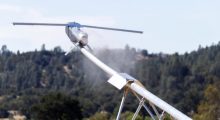
Short-range UAVs are usually applied at a distance of up to 5–10 kilometers and work directly on the front line. Tactical drones are effective at distances of tens of kilometers and support mid-level units. Operational drones can act at 100–200 kilometers and more, carrying out deep reconnaissance. Strategic systems are designed for multi-hour flights and work at a significant distance from the control point.
Flight duration differs substantially depending on the type of craft. Quadcopters usually work 20–40 minutes, while fixed-wing UAVs can stay in the air from 2 to 6 hours and even more. An understanding of these parameters makes it possible to assess in advance whether a specific drone is suitable for a planned mission.
Classification of UAVs by Method of Control
The method of controlling a drone directly affects its resistance to interference, its operating range, and the complexity of operation.
The most widespread drones are controlled by an operator through a radio channel in real time. Such craft are known as a «drone on a controller» and require constant control. Semi-autonomous systems can fly along a route and independently perform part of the actions but allow the operator to intervene in the process. Fully autonomous UAVs are able to act according to a program without continuous communication with a human.
A separate category is made up of drones on a fiber-optic cable. They do not use radio communication, which makes them practically invulnerable to electronic warfare assets. There are also combined control systems that combine several communication channels to increase reliability. In combat conditions, it is precisely the method of control that often determines the real effectiveness of a UAV.
Classification of UAVs by Level of Autonomy
The level of autonomy shows how capable a drone is of acting without the participation of an operator during the execution of a task.
The first level is fully manual control, when all actions are performed by a human. The second level involves basic automation: flight stabilization, position holding, automatic return. The third level is the execution of a mission according to a pre-set program with minimal operator intervention. The fourth level is a high degree of autonomy, when a drone can independently react to changes in the situation within the bounds of embedded algorithms.
For simple and mass tasks, drones with a low or medium level of autonomy are usually used, where the speed of deployment and ease of operation are important. Highly autonomous systems are more often applied in complex operations, where long-term work without constant human control is needed.
Why Correct Classification Is Important for Choosing and Applying Drones
The incorrect determination of the class of a UAV almost always leads to a loss of effectiveness. A drone with a short range will not be able to carry out deep reconnaissance, a craft without a stable communication channel will be quickly suppressed, and an overly complex system may turn out to be unsuitable for field conditions.
Classification helps to objectively compare models with each other, plan operator training, and build logistics and a maintenance system. It makes it possible to form technical specifications for procurement, correctly equip units, and avoid non-targeted expenses.
For a deeper understanding of the practical differences between different types of drones, we recommend the article: «Types of drones: main kinds and areas of application».
A clear understanding of classification makes it possible to assess risks in advance, choose the optimal format of UAV for specific tasks, and make the use of drones as productive as possible.
Conclusions
The classification of UAVs is not a theoretical scheme but a practical tool for making decisions. It helps to quickly assess the capabilities of drones, correctly choose equipment, and plan its use in real conditions.
Division by purpose, range, method of control, and level of autonomy makes it possible to understand which drone is needed for a specific task and what results can be expected from it. The competent use of classification simplifies the training of operators, the formation of UAV fleets, and the organization of their technical maintenance.