The French Army’s Command for Future Combat Systems is working on a package of camouflage and deception measures — ranging from inflatable CAESAR howitzer mockups to electromagnetic spoofing of command posts. The goal is to restore troops’ ability to maneuver under conditions of effective drone reconnaissance.
This was reported by General Bruno Baratz, who heads the command. According to him, the combination of persistent drone surveillance and precision long-range weapons has created a “kill zone” along the front line.
The general compared the current situation to the positional deadlock of World War One, when machine guns and artillery made massed attacks suicidal. He also cited the example of the war in Ukraine, where maneuvering has effectively stopped, as neither side can move significant forces undetected.
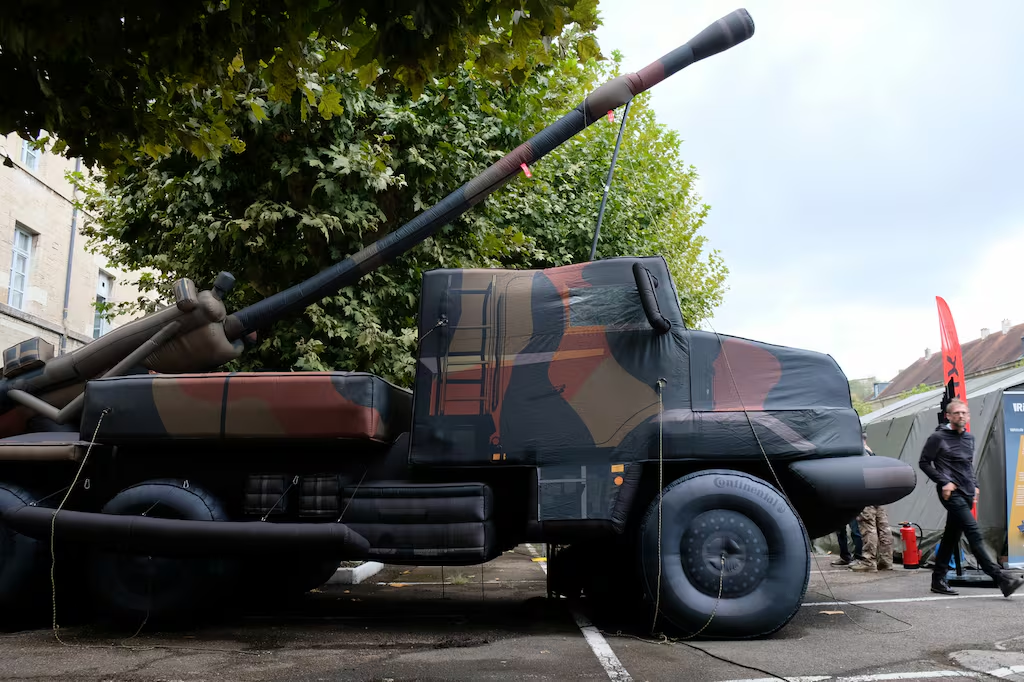
During the 7th Armored Brigade’s “innovation days” in Besançon, physical decoys were already demonstrated — inflatable replicas of the CAESAR self-propelled howitzer and the VBL armored vehicle, designed to “overload” enemy reconnaissance and strike assets with fake targets.
In parallel, the electromagnetic deception domain is being developed: simulating command post activity in the radio spectrum, jamming, and comprehensive EW/cyber warfare. This is intended to “blind” enemy sensors and create a temporary window of vulnerability to regain offensive initiative.
The command also noted that it is exploring other promising directions:
- quantum technologies — for secure communications and new types of sensors;
- multispectral image analysis, enabling “seeing” equipment under trees and camouflage netting;
- “frugal” artificial intelligence optimized for minimal power consumption;
- scooters, motorcycles, and ATVs for covert unit movement.
Notably, the army is moving away from a purely hierarchical approach to innovation: each year, every regiment receives €150,000 for its own development projects or procurement of off-the-shelf solutions. The overall budget of this program — €20 million — will grow by an additional €35 million in fiscal year 2027.