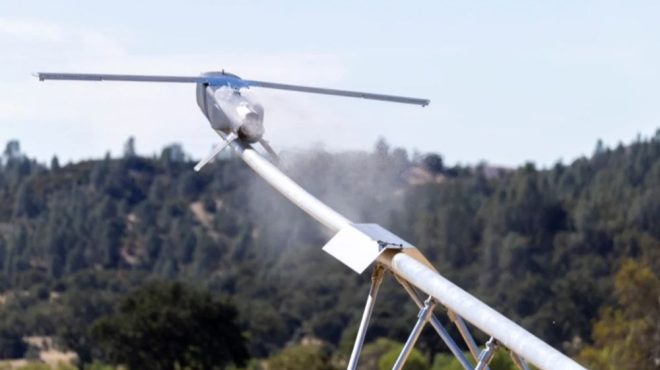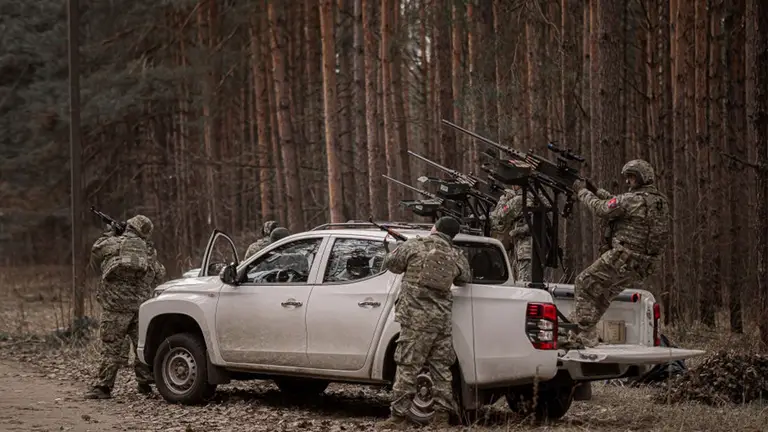
On July 27, 2026, the manufacturer of strike FPV drones and interceptor drones “General Chereshnya” announced that it had become the first among Ukrainian defense-tech companies to receive a permit to organize a private air defense unit. This grants it the official right to use state-approved air target interception means to protect private facilities and critical infrastructure in the rear.
The company promises a “comprehensive full-cycle solution”: its own pilots, mobile teams, and systems for countering enemy drones, as well as readiness to train and supply equipment to other businesses.
In fact, since the announcement of the private air defense project’s launch, several dozen companies from Kharkiv, Odesa, Kyiv, Poltava, Zakarpattia, and other oblasts have joined it. However, the entry of one of Ukraine’s largest FPV drone manufacturers into this sphere can be called symbolic — previously, the sector had been dominated mainly by security companies.
A question arises: how did the right to independently shoot down aerial targets emerge in a country with a traditional state monopoly on the use of weapons? We explore this in our article.
The Legal Basis of Private Air Defense
Private air defense in Ukraine is a military experiment in which the state retains the authority to authorize the use of weapons. Businesses have been delegated the right to fund operations, manage part of the operator chain, and provide infrastructure.
Back in June 2025, the government launched an experiment involving volunteer air defense groups based on territorial community formations, and in July — a separate experiment on electronic warfare protection of critical infrastructure facilities. The focus then shifted toward the needs of business.
The legal foundation was laid by Cabinet of Ministers of Ukraine Resolution No. 1506 of November 19, 2025. It introduced a project allowing enterprises of any ownership form to create their own air defense groups: equipped with radars, interceptor drones, anti-aircraft artillery, and even surface-to-air missile systems.
On March 2, 2026, the subsequent Resolution No. 290 permitted the temporary transfer of weapons and ammunition from military unit stockpiles to the air defense groups of critical infrastructure enterprises. These enterprises were also given the ability to replenish expended ammunition through a simplified procedure.
The experiment’s upper time limit is also known: November 22, 2027 (unless martial law ends earlier). After that, the Ministry of Defense, as coordinator, is required to submit a report and proposals to the government regarding further regulatory frameworks for the sector.
How Does Private Air Defense Work?
Legally, an air defense group is a structural subdivision of an authorized enterprise. A company wishing to establish such a group goes through several stages:
- Obtains approval from the Air Force of the Armed Forces of Ukraine.
- Trains personnel, purchases or receives air defense equipment for temporary use.
- Ensures access to air situational awareness information and constant coordination with military command.
The decision to engage a specific target is made by the Air Force command: the private group merely executes the order within the unified command-and-control system.
To obtain clearance, an enterprise must meet one of several conditions:
- hold a Ministry of Internal Affairs permit for handling explosives;
- conduct licensed or declared security activities;
- be listed in the Ministry of Defense’s registry of state contract executors.
The company must not be under sanctions, and its owners, beneficiaries, or executives must not include citizens or legal entities of the aggressor state. Air defense operators are subject to separate requirements — age restrictions, legal capacity, absence of an unexpunged criminal record, and absence of medical conditions that would prevent them from performing such work.
Private air defense groups are joined primarily by citizens who are not subject to conscription into the Defense Forces. Therefore, participation in the project does not grant exemption from mobilization.
The list of permitted means is broad: interceptor drones, small arms, unmanned systems, surface-to-air missile weapons, anti-aircraft artillery, radar stations, and electronic warfare systems.
Nevertheless, most companies that have already joined the project are placing their bets specifically on interceptor drones. In April 2026, the Air Force officially reported the first confirmed shootdown of a jet-powered Shahed at speeds exceeding 400 km/h by a private group, and earlier — the interception of enemy UAVs of the Shahed and Zala types in the Kharkiv region.
Funding comes exclusively from the enterprises themselves. The state does not finance the creation of private air defense groups; instead, it provides them with access to the command-and-control system, coordination, and the ability to temporarily receive weapons from military unit stockpiles.
The resolution permits the use of a wide range of air defense means — from small arms to surface-to-air missile systems. At the same time, most private operators are betting on a multi-layered protection system. It consists of radar stations for target detection, electronic warfare systems, interceptor drones, and mobile command posts.
Air Force representatives emphasize that the military only recommends a basic equipment set, but without specifying particular manufacturers or models: companies assemble their own configurations based on their budget and needs.
Who Has Already Joined the Project?
Alongside weapons manufacturers such as General Chereshnya, which enters the niche with its own products and training programs, security companies are also joining the project. For example, a representative of the company “Triarius” stated that after the private air defense mechanism appeared, the company underwent restructuring to focus on this direction. It independently selects and procures technical solutions for which it is prepared to bear responsibility. According to him, the team consists exclusively of veterans with combat experience operating drones.
Large players in the security sector are also entering the market: notably the SHERIFF holding, which traditionally provides physical security, humanitarian demining, and cash-in-transit services. It is now developing a dedicated aerial protection division with its own command center and operational structure.
Another company — the security service “Hvardiya” (Guard) — received its permit in February 2026 and is training interceptor drone operators. The company acknowledges that businesses are still approaching the new service with caution.
The greatest interest in private air defense groups is shown by enterprises in the east of the country, where the threat of strikes is most immediate. Industry experts believe that private groups can add flexibility to the military by covering specific facilities that the armed forces cannot always prioritize given available resources.
This Is Not a “Private Army”: Legal Caveats
Experts caution potential service users against misreading the legislation.
Yevhen Shevchenko, CEO of the SHERIFF holding, noted that Resolution No. 1506 does not create “private air defense” as an independent actor, but rather a state-managed private capability. That is, the business pays, hires personnel, and maintains equipment, but the order to use weapons in each instance is given exclusively by the military.
Experts also identify several risks for companies joining the project. These include:
- use of unapproved weapons or unauthorized personnel;
- accidental engagement of civilian targets;
- friendly fire incidents due to communication failures or uncoordinated actions with air defense units, and use of electronic warfare means without authorization.
A separate challenge remains the absence of clear insurance mechanisms and liability frameworks toward third parties.
It is therefore important to document every operation: maintain command logs, telemetry data, video recordings, and equipment transfer certificates. In the event of an incident, these materials will help prove that actions were carried out lawfully and within the scope of granted authority.
Is Ukraine’s Private Air Defense Model Original?
In most countries not at war, the right to neutralize aerial threats is reserved exclusively for the state.
In the United States, for instance, a private individual cannot independently shoot down drones over their own property. In the United Kingdom, even jamming frequencies without a special license is defined as a separate criminal offense.
The updated European Commission plan for countering drones, presented in February 2026, focuses on strengthening threat detection, coordinating responses, and developing the defense industry. However, no pan-European norms exist that would allow private companies to independently neutralize drones.
Ukraine is thus among the first to involve the private sector in active air defense tasks. However, this is not a market right: it is only a strictly time-limited experiment. Nevertheless, it opens a rare window of opportunity for Ukrainian companies.
Whether the experiment becomes a permanent industry after November 2027, or remains a temporary wartime measure, depends on how successfully the state manages to absorb the practices developed and adopt a separate regulatory model.