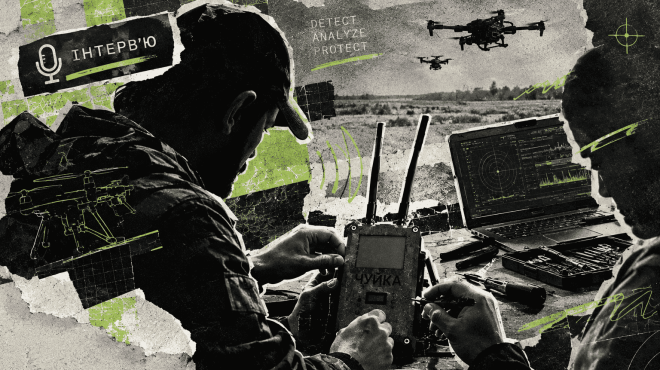
Electronic warfare has become one of the key elements of modern warfare. Most modern equipment — drones, navigation systems, communication assets — depends on the stable operation of radio signals. That is precisely why EW systems are used to disrupt or completely block such signals.
EW assets make it possible to create radio interference, intercept signals, or change the operating conditions of the enemy’s electronic systems. As a result, equipment that depends on radio communication or satellite navigation can lose control or work unstably.
What EW Systems Are and How EW Works
EW systems are technical complexes intended for affecting the enemy’s radio-electronic systems. These include radio interference transmitters, electronic reconnaissance systems, antennas, and signal control assets.
The operating principle of such systems is based on the control of the radio spectrum. EW assets can detect signals, determine their parameters, and create interference that hampers the normal operation of equipment. In many cases, this makes it possible to disrupt the control of drones or complicate data transmission.
In modern combat conditions, EW systems are used to counter drones, hamper the enemy’s radio communication, and disrupt navigation signals.
The Operating Principle of EW and Methods of Signal Suppression
The operating principle of EW lies in creating an electromagnetic impact on the signals used by the enemy’s equipment. This can be blocking the signal, creating radio noise, or distorting data.
One of the most widespread methods is jamming. In this case, the EW transmitter generates a powerful signal in the same frequency band as the communication or control system. As a result, the receiver cannot correctly recognize the control signal.
Another method is the suppression of data transmission channels or navigation signals. For example, EW systems can affect GPS or other navigation systems, which leads to the loss of orientation of equipment.
The effectiveness of such methods depends on the power of the transmitter, the frequency of the signal, and the conditions of radio wave propagation.
EW Assets in Combat Conditions
EW assets in combat conditions are used to solve several main tasks. Most often they are applied to counter unmanned aerial vehicles, which actively use radio channels for control and video transmission.
In such situations, EW systems can block the control channel of a drone or create interference for the transmission of the signal between the operator and the drone. This forces the craft to lose control or return to the launch point.
In addition to countering drones, military EW can be used to disrupt communication between the enemy’s units. In the difficult conditions of the front, this makes it possible to reduce the effectiveness of action coordination.
More about the tactical approaches to using such systems can be read in the article: «The tactics of using EW against FPV drones in modern warfare», which examines practical scenarios of using EW against drones.
Military EW: Types of Systems at the Front
At the front, different types of electronic warfare systems are used. They can differ in mobility, power, and purpose.
Some systems are intended for the stationary cover of positions, others are installed on transport platforms and can quickly change their location. Mobile complexes make it possible to adapt the operation of EW to changes in the situation.
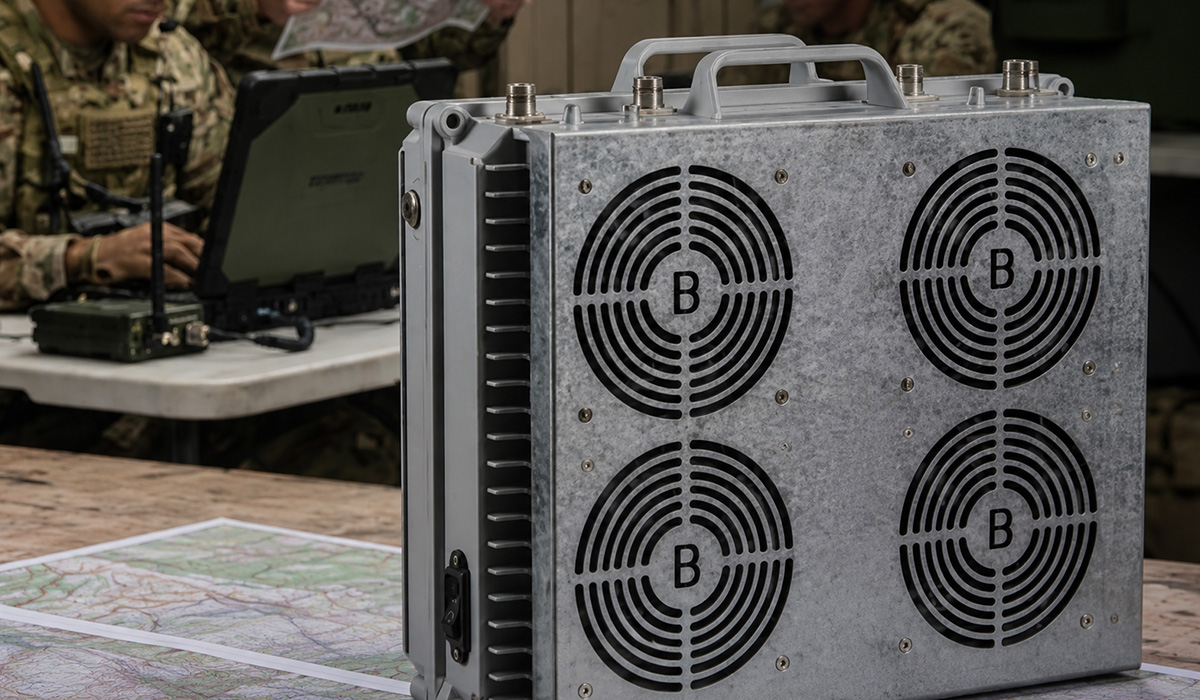
An example of such a solution is the vehicle-mounted modular EW system “Hrets XL”. It is a mobile electronic warfare system that is installed on a transport platform and used to cover units from drones.
The complex consists of transmitting modules, antenna systems, and a control unit. Its modular design makes it possible to change the configuration depending on the tasks. The “Hrets XL” is not a separate communication asset or a standalone device but acts as a comprehensive EW system that creates a protective radio-electronic field around a position or equipment.
Limitations of EW Systems in Combat Conditions
Despite their effectiveness, EW systems have certain limitations. Their operation depends on many factors, in particular the terrain, the range of the signal, and the characteristics of the enemy’s equipment.
For example, in difficult terrain the interference signal can weaken or propagate unevenly. This can create so-called «dead zones», where the EW effect is significantly reduced.
In addition, the enemy can use alternative communication channels or change the frequencies of controlling equipment. In such conditions, EW systems require constant configuration and adaptation.
Integrating EW Assets Into the Structure of a Unit
In modern warfare, EW systems are rarely used in isolation. They show the greatest effectiveness as part of a comprehensive defense system of a unit.
EW assets can work together with electronic reconnaissance systems, surveillance drones, and communication assets. Such integration makes it possible to detect threats and react to them faster.
As a result, military EW becomes part of the overall battle management system. Its task is not only to suppress signals but also to create conditions in which the enemy loses the ability to effectively use electronic systems.
Conclusions
EW systems play an important role in modern combat operations. They make it possible to affect the enemy’s radio-electronic systems, block drone control channels, and disrupt the operation of navigation systems.
The operating principle of EW is based on creating electromagnetic interference that hampers the transmission of signals. In combination with reconnaissance and other technical assets, EW systems significantly increase the effectiveness of units’ actions.