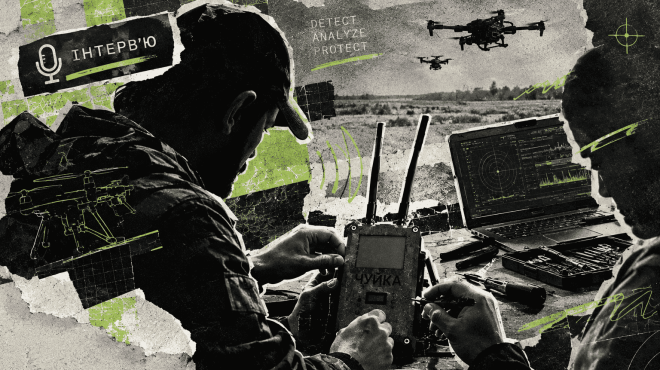
The scaling of projects in the field of defense tech and military tech substantially differs from the growth of classic technology startups. Even with the availability of demand and investment, defense solutions face a number of limitations connected with production, regulation, and security.
What Scaling Means in the Field of Defense Tech and Miltech
In defense tech and military tech, scaling is not only the increase of production volumes or sales. This is about the ability to systematically expand the output of technologies without losing quality, reliability, and security, while maintaining compliance with the requirements of the defense sector.
Unlike civilian products, defense solutions are often developed for specific application scenarios. Therefore, scaling here means the adaptation of a technology to new conditions, units, or types of tasks, and not the simple copying of a finished product.
Production and Technological Limitations of Scaling
One of the key challenges of scaling defense tech and miltech projects is production and technological limitations. Even with the availability of demand and funding, hardware defense solutions require complex production infrastructure, stable supply chains, and a high level of quality control.
This is well illustrated by the example of the dome EW «Hrets» 4M with quadrifilar antennas — a system that creates a protective radio-electronic field over a position. Such solutions require the precise configuration of antennas, the coordination of frequencies, and the stability of characteristics in various conditions of operation. At the scaling stage, this means the need to ensure the repeatability of the parameters of each product, which significantly complicates serial production.
For defense tech projects, the transition from individual or small batches to large-scale production often becomes a critical point of growth. It is precisely at this stage that the difference between a technological idea and the team’s ability to turn it into a systemic product manifests. For investors, such examples are illustrative, since they make it possible to assess not only the effectiveness of a solution but also the realism of its scaling in conditions of war.
Regulatory and Security Factors That Affect Scaling
The scaling of defense tech and miltech projects is impossible without taking into account regulatory and security factors. Defense technologies work in an environment of increased sensitivity, where any expansion of production or functionality requires control on the part of the state and compliance with established rules.
At the same time, regulatory requirements perform not only a restrictive but also a stabilizing function. For investors, they serve as an indicator that a project is able to work within the bounds of the defense ecosystem and integrate into already existing systems without creating additional risks.
This especially concerns areas connected with reconnaissance and data collection. Such solutions affect not only the effectiveness of combat operations but also information security and the interaction between units. The essence of electronic reconnaissance, its areas, and modern challenges are examined in more detail in the article: «Electronic reconnaissance (ER): essence, areas, and modern challenges», which helps to understand why the security context plays a decisive role in the pace of scaling defense tech and miltech solutions.
Operational and Personnel Challenges of Projects
In addition to technologies, a serious challenge of scaling is the operational component. It is difficult for defense tech companies to quickly build up teams, since specialists with narrow technical expertise and a deep understanding of the defense context are needed.
A personnel shortage, the high load on key specialists, and the need for quick adaptation to the changing conditions of war affect the ability of projects to grow stably. Scaling without well-established internal processes often leads to the loss of control over quality, timelines, and the effectiveness of solutions.
The Role of Investors in the Process of Scaling Defense Tech
In the field of defense tech, investors play the role not only of a source of funding but also of strategic partners. They expect from projects a realistic growth plan, an understanding of limitations, and readiness for phased scaling.
Investors for business in this segment pay attention to the team’s ability to work with complex production processes, build supply chains, and adhere to security requirements. It is precisely these factors that often become determining when making decisions regarding the further support of a project at the scaling stage.
Conclusions
The scaling of defense tech and miltech projects is a complex and multi-level process that goes far beyond funding. Production limitations, regulatory requirements, personnel challenges, and the security context substantially affect the pace of growth even with the availability of investment. It is precisely an understanding of these limitations that distinguishes viable defense tech projects from solutions that remain at the prototype stage.