No navy, communications jammed, shells running short, and partners banning strikes on Russian rear areas. We explain how five such problems in Ukraine and NATO turned into results no one had planned.
1. No Navy: How Ukrainian Drones Drove the Black Sea Fleet Out of Sevastopol
At the start of the full-scale war, Ukraine had no fleet capable of standing up to Russia’s. The Black Sea Fleet was launching cruise missiles at Ukraine and blockading Odesa, halting exports of grain, metals, and manufactured goods.
The idea of naval drones grew out of necessity, not a years-long strategy. Within a few months, manufacturers for the Ministry of Defense and the SBU presented several designs, the most well-known of which are Magura V5 and Sea Baby.
On February 14, 2024, the Magura V5 was used to destroy the large landing ship Tsezar Kunikov, and on March 5 the GUR confirmed that Magura V5 drones had struck the Project 22160 patrol ship Serhiy Kotov. Notably, a Magura costs approximately $250,000, while the Serhiy Kotov was estimated to have cost the enemy around $65 million.
In January 2025, modified Magura V5 drones equipped with heat-seeking missiles shot down aircraft for the first time in history using a naval drone: two Russian Mi-8 helicopters.
According to USNI, Ukrainian naval drones have sunk or damaged around a dozen Russian warships since 2022 and forced the Black Sea Fleet to relocate its main operations to Novorossiysk. They have also significantly reduced Russia’s capacity to transport crude oil in the Azov and Black Seas.
Sea Baby drones have since become a launch platform for FPV drones.

2. Jamming: How Ukrainians Taught Drones to “See”
Dense electronic warfare in the combat zone and over strategically important Russian facilities made operating radio-controlled drones nearly impossible.
There were two responses. The first was fiber optic cable. The enemy introduced it first, but this quickly evolved into a mutual cycle of innovation.
The second was artificial intelligence on board the drone. In particular, the Vyriy-10-TFL-1 terminal guidance module costs around $448 — only slightly more than a conventional FPV. According to the developers, the system increased strike effectiveness by 2–4 times while raising costs by only 10%.
According to a Ministry of Defense statement from September 8, 2026, the number of successful strikes using AI-guided systems had grown tenfold since the start of the year. The military is already using more than 70 different AI- and computer-vision-based systems. The ministry aims to equip 100% of drones with machine vision, and 200 domestic companies are already manufacturing AI drones.
Such a drone can autonomously acquire a target and continue moving toward it even after losing contact with the operator.

3. Air Defense Missile Shortages: How the FrankenSAM Project Was Born
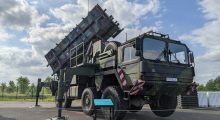
In the autumn of 2023, Ukraine faced a critical problem: stocks of missiles for Soviet-era systems (Buk SAM, S-300) were running out, and Western systems such as Patriot and NASAMS were too few to cover all cities and the front line. Without missiles, Russian aviation and drones gained a significant advantage.
The solution emerged from the need to combine the incompatible. Ukrainian and American engineers integrated Western missiles into Soviet launchers. This gave rise to the FrankenSAM program (from “Frankenstein” and Surface-to-Air Missile). Several hybrids were created: RIM-7 Sea Sparrow missiles were adapted for the Buk SAM system, AIM-9M air-to-air missiles were integrated into other Soviet platforms, and Patriot missiles were eventually paired with older Ukrainian radar stations.
The result: the hybrid systems enabled dozens of non-operational launchers to be returned to service and bolstered air defenses ahead of the winter 2023–2024 energy infrastructure strikes. Ukraine was able to draw on the large stockpiles of older surface-to-air missiles held by allies’ warehouses.

4. The Ban on Strikes Deep into Russia: How Ukraine Created Its Own Strategic Weapons
Political restrictions from allies on the use of long-range missiles (ATACMS, Storm Shadow/SCALP) against Russian territory left Ukraine’s border and rear areas vulnerable. Russia could freely mass troops, strike from airfields, and use oil refineries to fund the war.
The inability to purchase ready-made solutions forced Ukraine to develop its own. In 2023–2024, Ukraine experienced a boom in the development of long-range strike drones (Liutyi, Bober, Morok). On August 24, 2024, the first official announcement was made of the use of the Palianytsia drone-missile — a jet-powered unmanned vehicle that costs significantly less than conventional cruise missiles but performs similar functions.
As a result, a strategic campaign of strikes against Russian oil refineries in the spring of 2024 caused Russian refining output to fall by more than 10%, while attacks on strategic aviation airfields (such as Olenya, some 1,800 km from the border) forced Russia to pull air defense assets from the front to the deep rear. Ukraine gained a tool of influence that does not depend on partners’ political hesitations.
By 2026 the scale had grown: according to the International Energy Agency, in the first eight months of the year a Russian refinery was struck on average once every three days. In June, Russian refining volumes fell to 3.8 million barrels per day — roughly 30% less than a year earlier — with gasoline production down 20% and diesel output down nearly 30%. The fuel shortage forced Moscow to restrict its exports.
In July, Ukrainian drones reached the Omsk refinery — Russia’s largest, approximately 2,700 km from Ukrainian territory. The facility, with a capacity of around 460,000 barrels per day, came under attack. In September, strikes continued to affect production: following a hit on September 20, the Moscow refinery halted crude processing, with both primary distillation units sustaining damage. On September 25, the Novoshakhtinsk refinery, with a capacity of around 100,000 barrels per day, was also temporarily shut down following an attack.

5. Vulnerability of Evacuation and Logistics: How the Ground Drone Boom Began
The dominance of reconnaissance drones and FPV kamikaze drones made the “last mile” to front-line positions lethally dangerous. Any armored vehicle or infantry group advancing to deliver ammunition, lay mines, or evacuate the wounded was detected and destroyed within minutes.
The answer was mass robotization. What in 2023 looked like isolated engineering experiments had, by 2025–2026, grown into production series. Dozens of Ukrainian developments appeared: logistics platforms (such as Volya-E), combat robots with turrets (such as ShaBlia), and kamikaze robots for destroying bridges and fortifications (such as Ratel S).
As a result, ground drones took over the most hazardous work. According to the Brave1 defense cluster, robotic platforms reduced casualties among evacuation teams and combat engineers, since losing an iron cart with an electric motor worth a few thousand dollars became a wholly acceptable price for lives saved.

All five cases began with constraints. Ukrainians responded by changing their approach: new solutions, rapid iterations, and the search for cost-effective alternatives. What looked at the outset like an unbroken string of tactical failures was thus transformed into a strategic advantage.