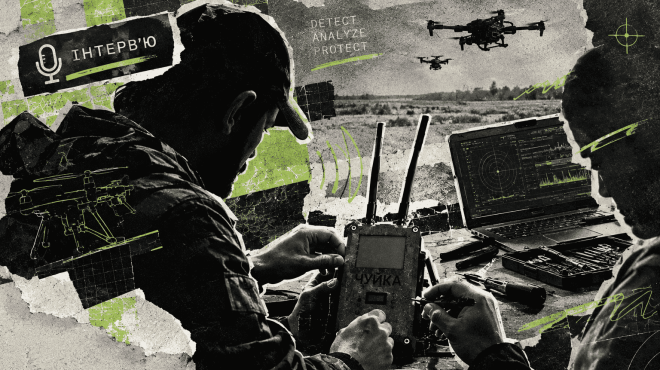
Stable communication is one of the key conditions for the controllability of a unit in battle. It is precisely the military radio station that ensures coordination between soldiers, the transmission of commands, the correction of actions, and the exchange of critically important information in conditions where civilian networks are unavailable or unstable.
With the development of technology, both analog radios and digital radio stations are used simultaneously on the battlefield. Each of these types has its own technical features, advantages, and limitations, which directly affect the effectiveness of communication.
What a Military Radio Station Is and Its Role in Combat Conditions
A military radio station is a tactical communication asset intended for working in conditions of active interference, limited infrastructure, and a high risk of signal loss. Unlike civilian radios, it is designed for long-term operation, physical loads, and an unstable radio situation.
In combat conditions, a radio for the military is the main control tool. The speed of transmitting commands, the synchronization of actions, and the safety of personnel depend on its reliability. Therefore, the choice of the type of radio station has not only technical but also tactical significance.
Analog Military Radios: Operating Principle and Features
An analog radio works on the principle of the direct transmission of a voice signal in the form of a continuous radio wave. Such a communication format is simple to implement and does not require complex signal processing.
The main advantage of analog military radios is their predictability in difficult conditions. Even when the signal deteriorates, the operator can partially make out the voice, which is sometimes critical during battle. Such radios are quickly put into operation, do not require lengthy configuration, and are compatible with a wide range of equipment.
At the same time, analog communication is less protected from interception, has limited capabilities for filtering interference, and depends more strongly on the overall level of noise in the airwaves.
Digital Military Radios: Capabilities and Functionality
A digital radio transmits voice in the form of digitized data packets, which are encoded and processed before transmission. This makes it possible to use encryption, error correction, and additional communication services.
Digital military radio stations ensure more stable communication quality at the edge of the coverage zone, make it possible to work with group channels, transmit service data, and reduce the level of extraneous noise. In modern units, they are often used as part of a single control system.
At the same time, digital communication is more sensitive to the complete loss of the signal. With an insufficient level of reception, communication can disappear abruptly, without gradual deterioration, which must be taken into account during work planning.
Signal Quality and Resistance to Interference
In combat conditions, the quality of communication is affected by terrain, development, the operation of EW assets, and the density of frequency use. An analog radio usually behaves more stably in conditions of strong interference, although with a reduction in intelligibility.
Digital radios filter noise better and ensure cleaner sound but require a more stable channel. During active radio-electronic influence, it is precisely the type of interference and its intensity that determine which communication format will be more effective at a specific moment.
The practical aspects of organizing communication between units are discussed in more detail in the article: «Military communication on the front line», which examines the impact of different types of signals on controllability in battle.
Choosing a Radio for the Military Depending on Tasks
The choice between an analog and a digital radio for the military depends on the tasks of the unit, the level of training of personnel, and the expected radio situation. For simple tactical actions and backup communication channels, analog solutions are often used.
Digital military radio stations are expedient for units that need protected communication, group control, and integration with other systems. In real combat conditions, both types are often applied in parallel, complementing each other.
Trends in the Development of Military Radio Stations
Modern trends in the development of military communication are aimed at combining digital technologies with the increased survivability of systems. Attention is growing toward adaptive operating modes, compatibility with EW, and the use of interchangeable antenna solutions.
In this context, specialized components are applied, in particular the HELIX Lite 5.8/15 antenna — a lightweight high-frequency antenna intended for working as part of radio communication and unmanned systems. It is not a standalone radio but is used as an element of the antenna-feeder path, improving the stability of signal reception and transmission in compact and mobile configurations.
Such solutions make it possible to adapt communication to the conditions of modern battle without significantly complicating the system.
Conclusions
Analog and digital military radio stations have different technical characteristics and tactical advantages. Analog solutions are distinguished by their simplicity and predictability, while digital radios ensure a higher level of protection and functionality.
Effective communication in combat conditions is achieved not by choosing one format but by a competent combination of technologies taking into account tasks and the radio situation.