In modern warfare, logistics has long ceased to be a secondary function. The combat capability of units depends not only on the training of personnel or the quantity of equipment but on whether ammunition, fuel, spare parts, and other critical resources arrive in time. A failure in logistics very quickly turns into a problem directly on the front line.
This article has been prepared by BlueBird Tech for the military who are involved in the planning and support of units, commanders, staff officers, as well as civilian specialists who work with defense topics. The material explains how the command of the logistics forces of the AFU is organized, how management decisions regarding supply are made, and why the effective management of resources is critically important in conditions of war.
The Logistics Forces of the AFU in the Management System of the Armed Forces
The Logistics Forces of the AFU are part of the overall management system of the Armed Forces of Ukraine and are responsible for the continuous supply of the troops with resources. They work in close interaction with combat units, headquarters, and other support services.
In practice, logistics is planned in parallel with combat operations. The volumes of supply, routes, warehouses, reserves, and delivery timelines are determined taking into account the operational situation. Without such planning, even a well-prepared unit quickly loses the ability to carry out the set tasks.
The Structure of the Logistics Forces Command
The Logistics Forces Command of the AFU is built on a hierarchical principle with a clear distribution of responsibility. Management is carried out in accordance with the current legislation of Ukraine, the regulatory documents of the AFU, and the decisions of the General Staff.
The command system has defined levels responsible for the strategic planning of supply, the operational distribution of resources, and the organization of supply directly to units. Such a structure makes it possible to make decisions centrally but adapt them to the specific conditions on the ground, where the situation can change very quickly.
How Decisions Are Made in the Logistics Command System
In combat conditions, decisions regarding logistics are made on the basis of the current needs of units, available resources, and the real situation. This is not only about volumes but also about priorities — what exactly needs to be delivered as a first priority and where.
The command determines the order of supply, the distribution of reserves, the change of routes in case of threats, and also controls the execution of decisions. It is important that responsibility here is not formal: mistakes or delays in logistics have direct consequences for the capabilities of units to carry out combat tasks, so most decisions are made taking into account risks, and not «ideal» plans.
The Coordination of Logistical Units in Combat Conditions
The coordination of logistical units in the combat zone directly depends on the timely receipt of information about threats and changes in the situation. Supply, the movement of convoys, the deployment of warehouses and supply points require not only preliminary planning but also the constant control of the situation on routes and in work areas.
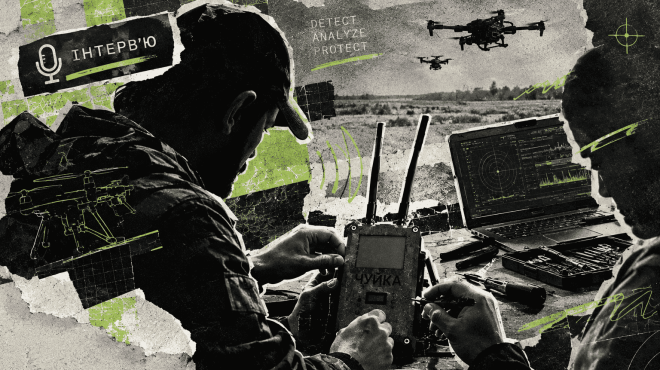
In practice, one of the key problems is the detection of threats from the air, in particular drones that are used for reconnaissance or the correction of fire on logistical targets. To reduce such risks, drone detectors can be applied in the logistics management system, in particular complexes such as the «Chuika 3.0» from BlueBird. They make it possible to record the appearance of a UAV in advance, transmit information to responsible officials, and adjust decisions regarding the movement, stopping, or camouflage of logistical elements in time.
It is important that such assets do not replace the command or well-rehearsed procedures but strengthen the information management system, reducing the dependence of decisions on chance or belated reports. It is precisely timely warning that often makes it possible to avoid losses without the application of active impact assets.
The general logic of the operation of the logistics system in conditions of combat operations is examined in more detail in the article: «Military logistics».
The Role of the Logistics Forces Command in Ensuring the Combat Capability of the Army
The combat capability of the AFU directly depends on the effectiveness of the logistics command. Timely supply makes it possible for units to maintain the pace of actions, plan operations, and avoid forced pauses.
The Logistics Forces Command is responsible not only for the delivery of resources but also for the resilience of the entire support system. In war, this means constant adaptation, control, and readiness to quickly react to changes in conditions.
Conclusion
The Logistics Forces of the AFU are a key element of the troop management system. On the clarity of command, coordination, and the timeliness of decisions depends not only supply but also the army’s ability to carry out combat tasks in conditions of war. The greatest risks arise when the management of logistics does not keep up with real events at the front.