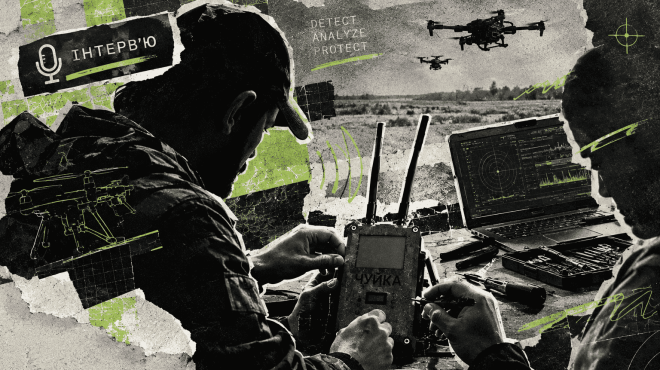
Investment in defense tech and military tech in conditions of full-scale war has ceased to be exclusively a financial instrument. The wartime context changes the logic of decision-making, increases the level of responsibility, and places different requirements on investors and developers than in peacetime.
How War Changes the Investment Climate in Defense Tech
War radically changes the investment climate in defense tech. Instead of classic business models with long planning cycles, the speed of decision-making, applied usefulness, and the ability of a technology to work in real combat conditions come to the fore. Investing during war takes place in an environment of constant changes — from logistics to regulatory requirements.
For investors, this means less trust in abstract forecasts and a greater focus on actual results. Projects are assessed by how quickly they can be implemented, whether there is feedback from users at the front, and how the technology adapts to changes in tactics and threats. In defense tech, war becomes not an external factor but the main environment for checking investment decisions.
Key Risks and Limitations for Investors
Investment in military tech during war is accompanied by increased risks. Among the key ones are regulatory limitations, dependence on state decisions, the complexity of export control, and limited access to international markets. Defense products in most countries fall under special licensing regimes, which directly affects the investment strategy.
Operational risks play a separate role. Production, the supply of components, and the testing of technologies often take place in conditions of unstable logistics and limited resources. Investors also take into account reputational and ethical aspects, since military technologies require control over use and compliance with international law. This makes investing during war more difficult but at the same time increases the requirements for the quality and maturity of projects.
Why Military Technologies Remain Attractive for Investors
Despite the high risks and the complex regulatory environment, defense tech and military tech remain attractive for investors even in wartime. The main reason is the stable demand for solutions that cover the basic operational needs of modern warfare and do not depend on short-term trends.
Investors increasingly assess not individual devices but entire categories of technological solutions without which the effective work of units is impossible. Such areas include aerial repeaters for stable video communication at a distance, ground relaying stations for managing unmanned systems and transmitting data in difficult field conditions, as well as charging stations created for the continuous powering of military equipment and EW systems in situations where energy becomes a critical limitation.
That is precisely why it is important for investors to see products that work in understandable and repeatable scenarios. As an example of a solution from the power supply category, one can cite the charging station «Genera-1200» 220 V — a product that covers the basic need for stable powering of equipment in field conditions and can be part of a systematic approach to the autonomy of units.
Such categories form the technological foundation of modern combat operations. They have a clear application scenario, applied value, and remain relevant regardless of the specific phase of war. For investors, this means a lower risk of the product losing relevance and a higher predictability of demand.
How Investment Decisions Are Made in Wartime
Investment decisions in wartime are made according to a logic that substantially differs from civilian markets. The key factor becomes not the maximization of profit but the combination of practical effectiveness, the reliability of solutions, and a responsible attitude toward the consequences of their use.
Investors assess projects through the prism of real or near-combat application, the team’s ability to work in conditions of uncertainty and rapid changes. An important role is played by the transparency of processes, the origin of components, the control of supply chains, and compliance with the current legislation. Preference is given to projects that already have practical experience of operation and the confirmed ability of the team to make decisions in crisis conditions.
Prospects for Development in Defense Tech and Military Tech
Despite the high level of risks and limitations, defense tech and military tech remain one of the few technological areas where war did not stop development but, on the contrary, accelerated it. The constant need for adaptation, the rapid renewal of solutions, and the increase of effectiveness force companies and investors to think not in short cycles but strategically.
For investors, the prospects of this market are determined not only by demand but also by the ability of projects to move from individual solutions to systemic production and implementation. It is precisely at this stage that key challenges arise, connected with production capacities, supply chains, standardization, and security requirements.
These limitations are examined in detail in the article «Scaling defense tech and miltech», which helps to understand why, even with the availability of investment, the growth of defense projects often takes place more slowly than in civilian technologies.
In the medium- and long-term perspective, the interest of investors shifts toward projects capable of withstanding the load of war, adapting to changing conditions, and at the same time laying the basis for postwar recovery and international cooperation. It is precisely such a logic that makes defense tech and military tech not a temporary phenomenon but a resilient investment area.
Conclusions
Investment in defense tech and military tech during war has a special logic in which financial, security, and strategic factors are combined. War increases the risks but at the same time creates unique conditions for the development of applied technologies that have a real impact on defense capability.